카드 1 / 8
How to Export Korean Processed Food to the US: FDA Registration, FSVP, and HARPC Step-by-Step (2026)
TL;DR
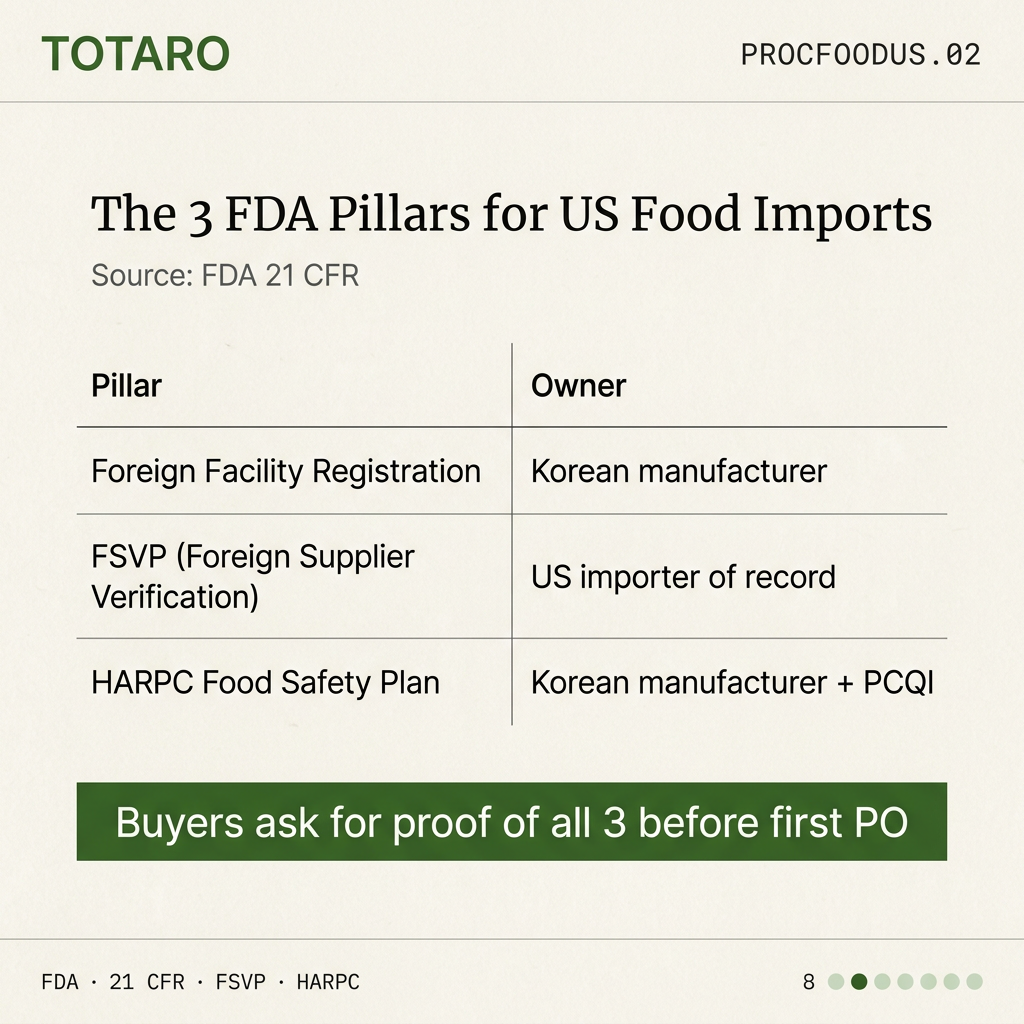
Korean processed food (sauces, snacks, frozen meals, retort packs) cannot enter the US without three FDA pillars in place: (1) Foreign Food Facility Registration, (2) the importer's Foreign Supplier Verification Program (FSVP), and (3) a Food Safety Plan under HARPC. Buyers ask for proof of all three before a first PO. Miss one, and the shipment sits at the port.
1. Foreign Food Facility Registration (FDA Reg)
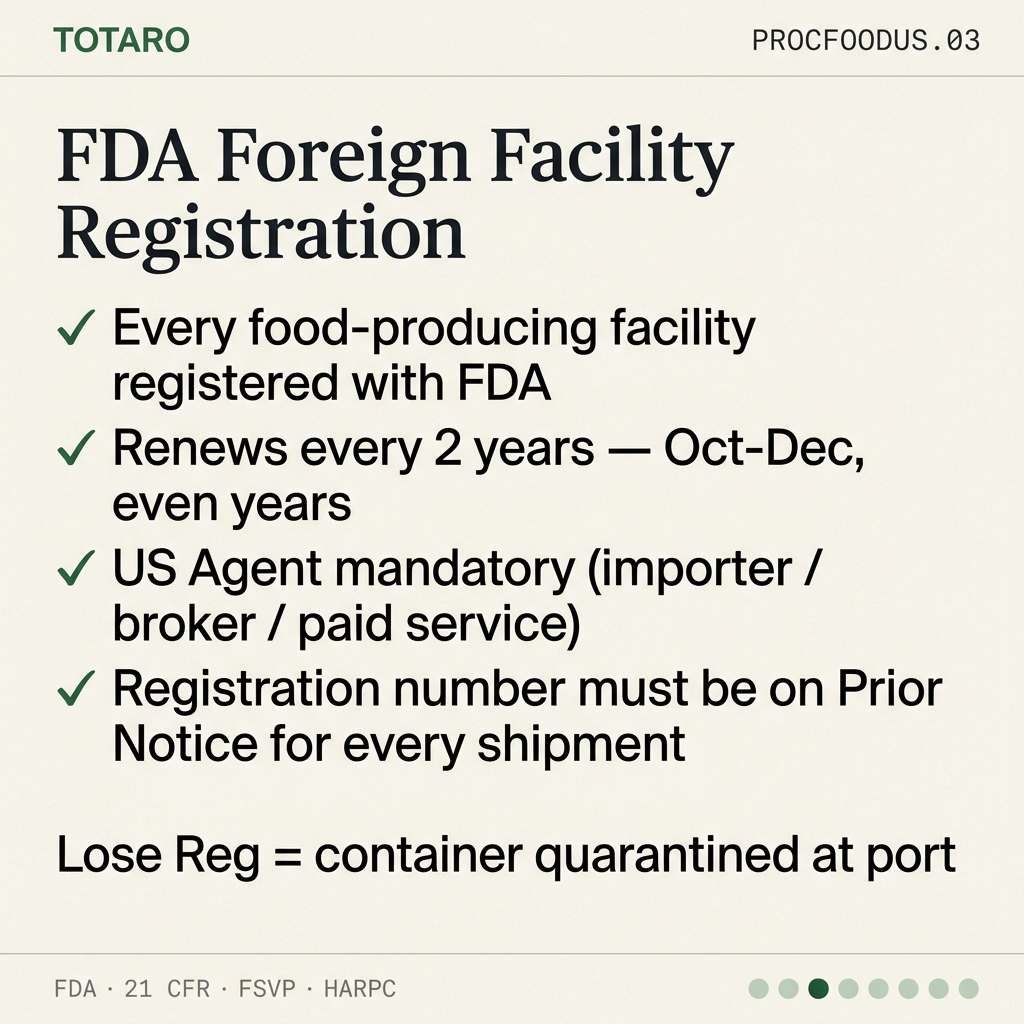
Every manufacturing facility that produces food consumed in the US must be registered with the FDA. Registrations renew every two years between October and December of even-numbered years. The US FDA Foreign Facility Registration is the gate (FDA — Online Registration of Food Facilities). A US Agent is mandatory for foreign facilities; this can be the importer, the broker, or a paid service.
2. FSVP — The Importer's Verification Burden
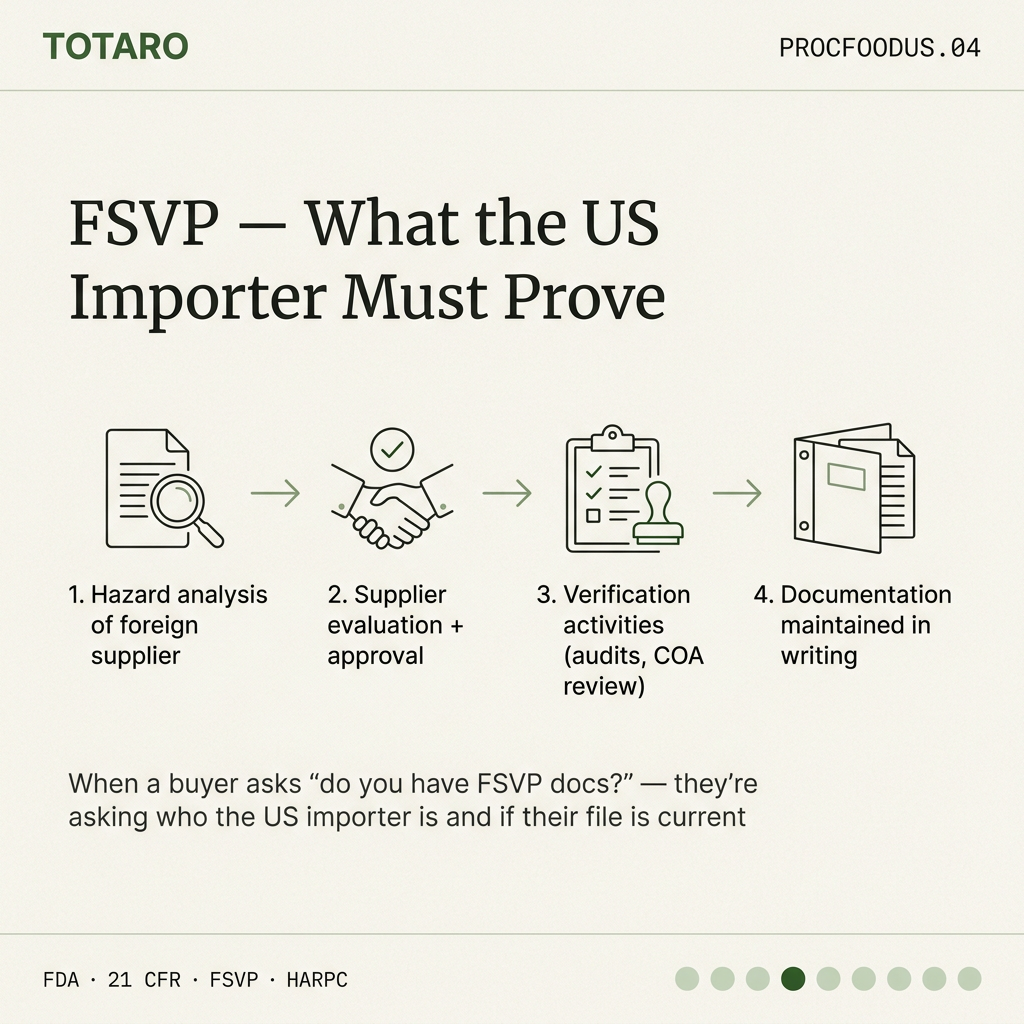
The importer of record (almost always a US-based entity) is responsible for proving the foreign supplier produces food at the same level of public health protection as a US domestic supplier. This means risk-based hazard analysis, supplier evaluation, and verification activities documented in writing (FDA — FSVP final rule). When a buyer asks "do you have FSVP documentation we can audit?" — they are asking who the importer is and whether their FSVP file is current.
3. HARPC — The Food Safety Plan
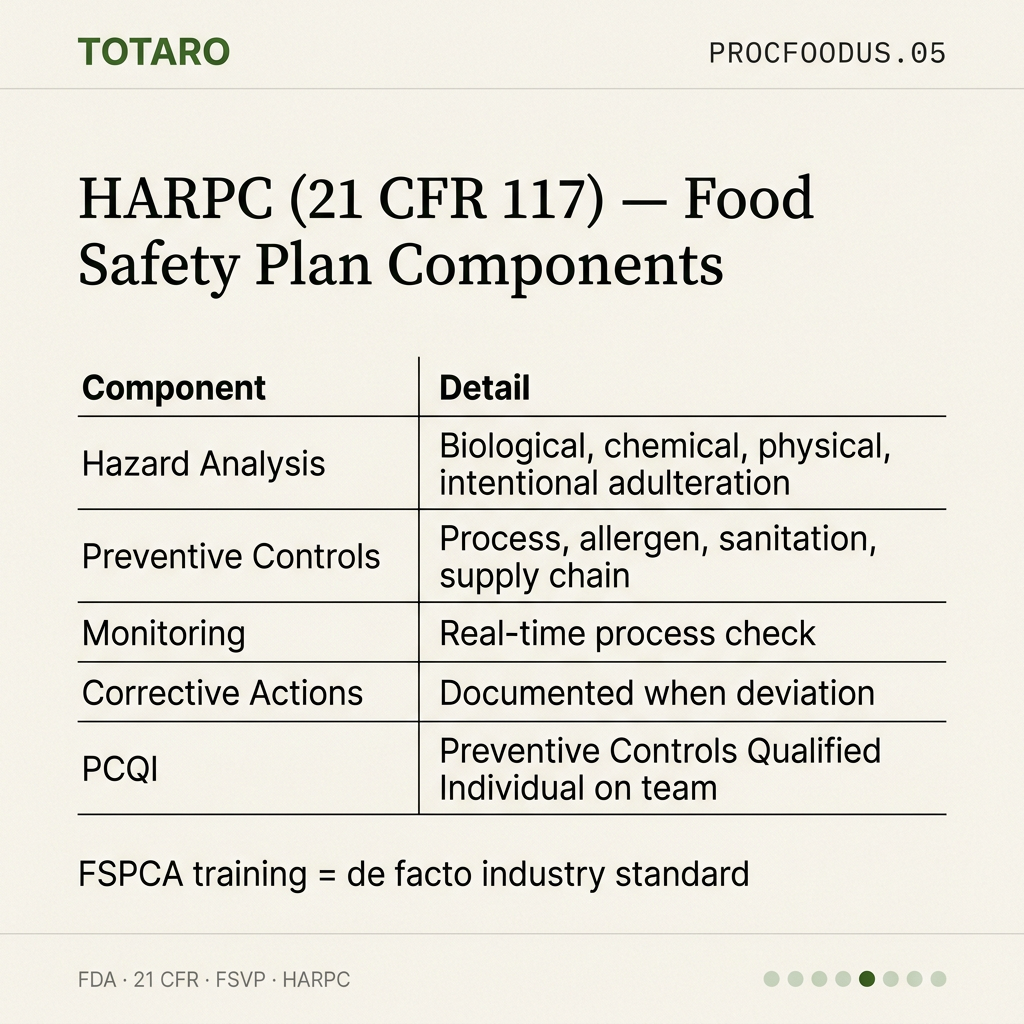
HARPC (Hazard Analysis and Risk-Based Preventive Controls) under 21 CFR 117 is the Food Safety Plan itself. It identifies biological, chemical, physical, and intentional adulteration hazards, then sets preventive controls, monitoring, corrective actions, and verification (21 CFR 117). A PCQI (Preventive Controls Qualified Individual) must be on the team — formal training (FSPCA course) is the de facto standard.
4. Labels: Big 9 Allergen and Nutrition Facts Panel
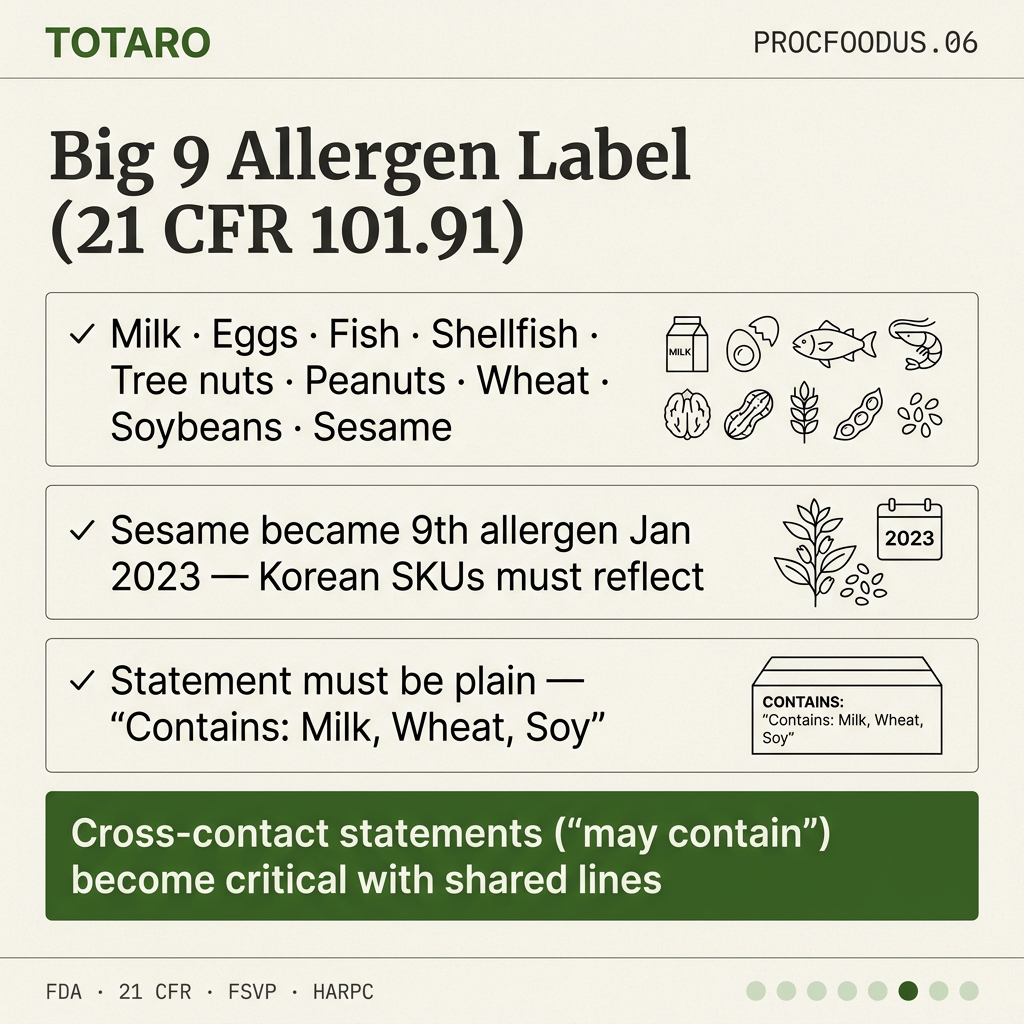
21 CFR 101 governs the Nutrition Facts Panel format, ingredient declaration, and the Big 9 Allergen Statement (milk, eggs, fish, crustacean shellfish, tree nuts, peanuts, wheat, soybeans, sesame) (21 CFR 101.91). Sesame became the 9th major allergen on January 1, 2023 — Korean sauce, sesame oil, and seasoned banchan SKUs must reflect this.
5. Pricing Reality (MOQ / FOB)
Industry estimate for a first US-bound container of Korean processed food: MOQ around 1×40' FCL (~22 metric tons), FOB Busan to USWC (Long Beach / LA) typically lands USD 1.80–2.40 per kilo for shelf-stable items in early 2026 — actual numbers require a direct RFQ from the supplier. Buyers always RFQ; suppliers without a published price sheet still win deals.
What to Do This Week
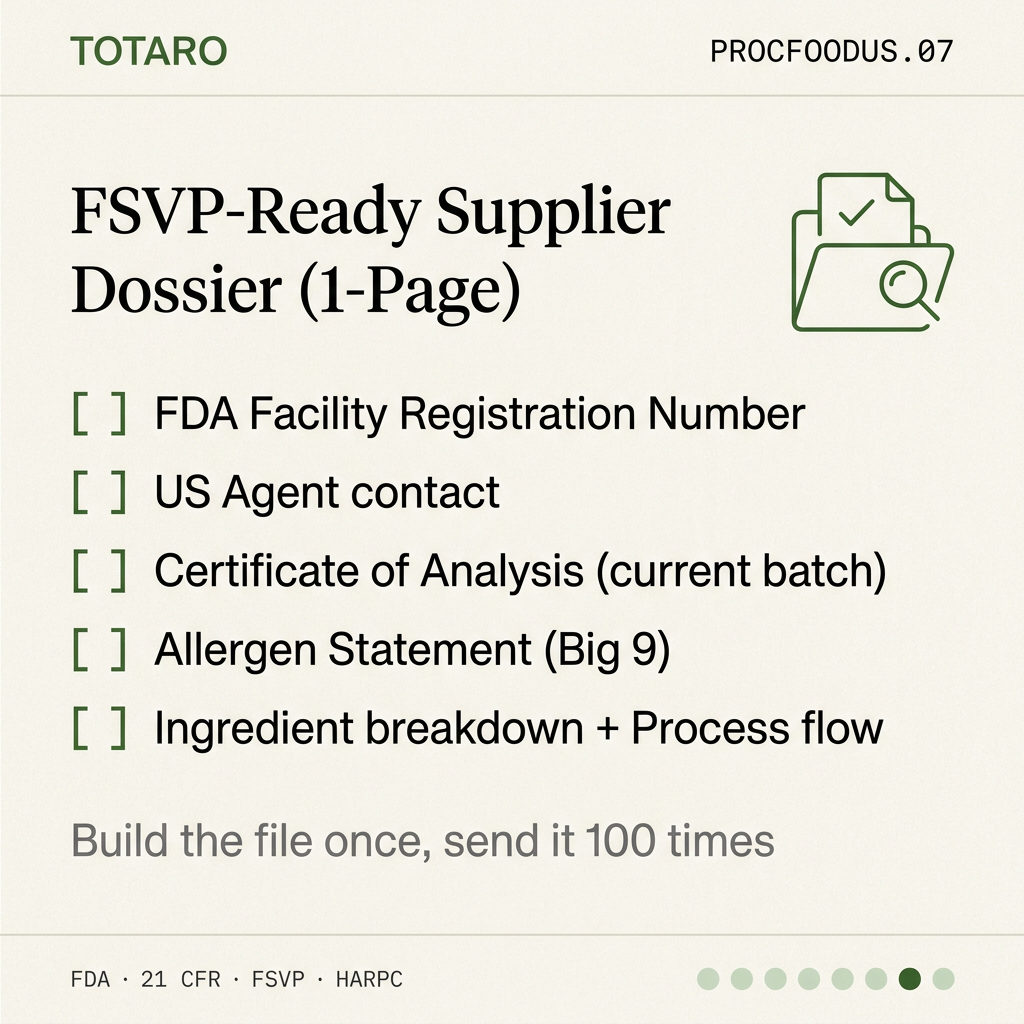
If you are a Korean processor reading this and have export ambitions: (1) Confirm or renew your FDA Facility Registration. (2) Pick a US Agent. (3) Prep a 1-page FSVP-ready supplier dossier (Cert of Analysis, allergen statement, ingredient breakdown, process flow). Buyers screen on these before sample requests. Build the file once, send it 100 times.
Sources
Related Guides
Ask AI to find your Korean food supplier
Describe what you need in plain language — get matched with verified suppliers in seconds.
Try AI Supplier Search