카드 1 / 8
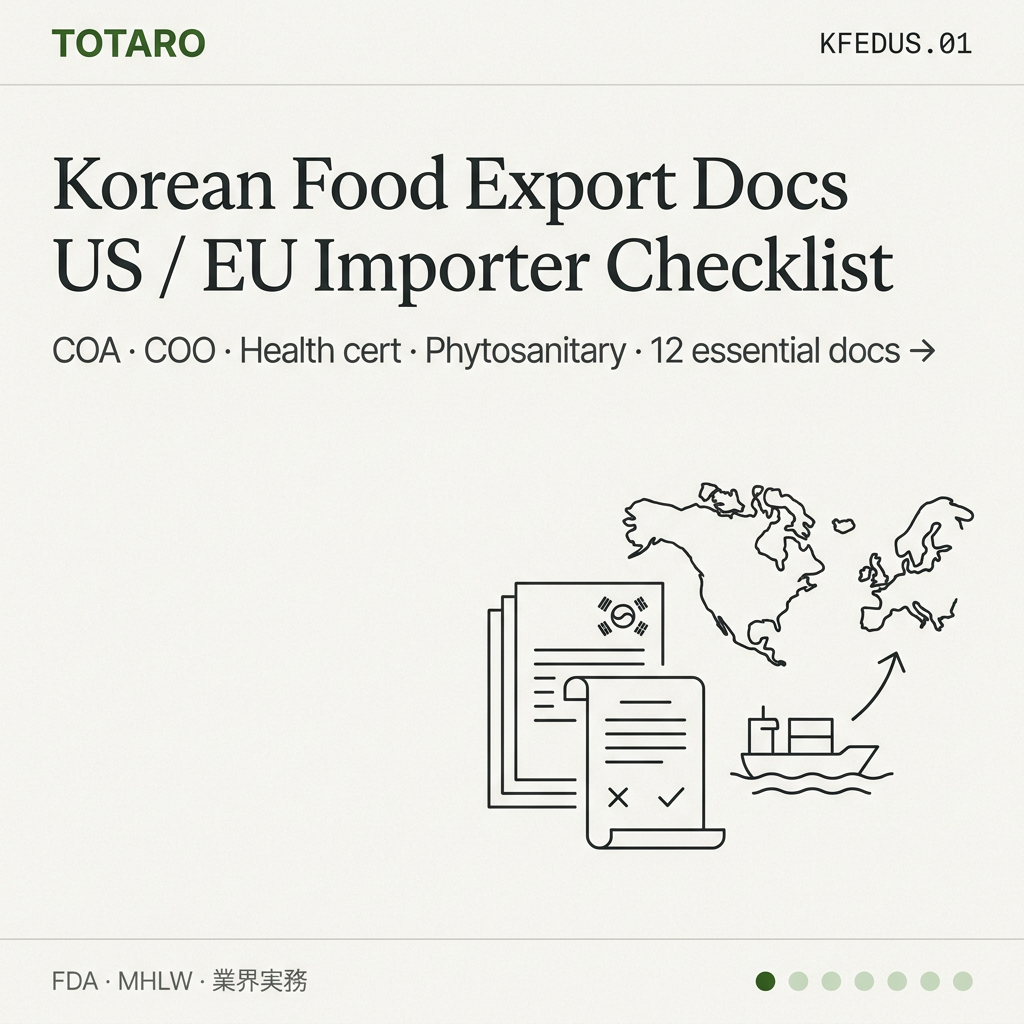
Korean Food Export Docs — US/EU Importer Checklist (2026)
Korean Food Export Documentation Checklist
Importing Korean food without complete paperwork is the fastest way to get a container stuck at port. This checklist covers exactly what your supplier needs to provide and what you need to file with FDA, EU, or your local authority.
The 8 essential documents
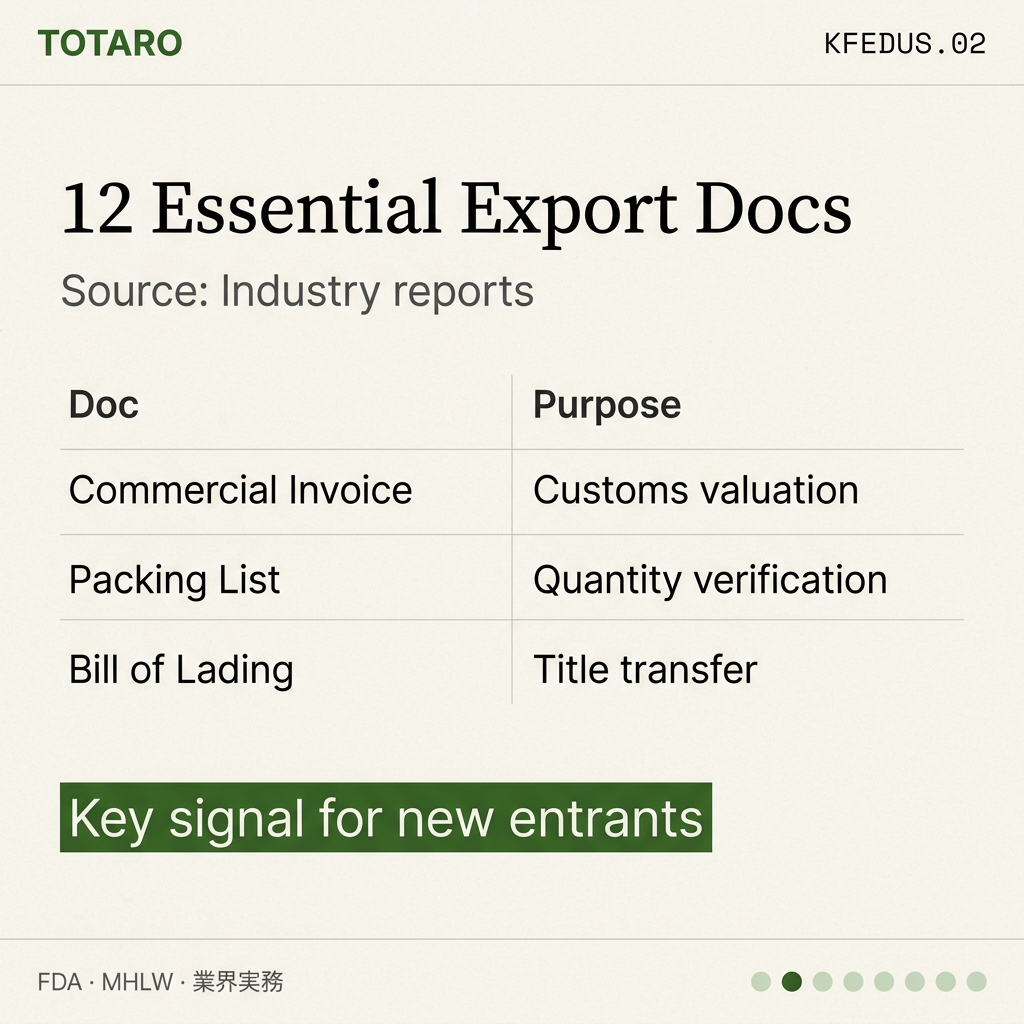
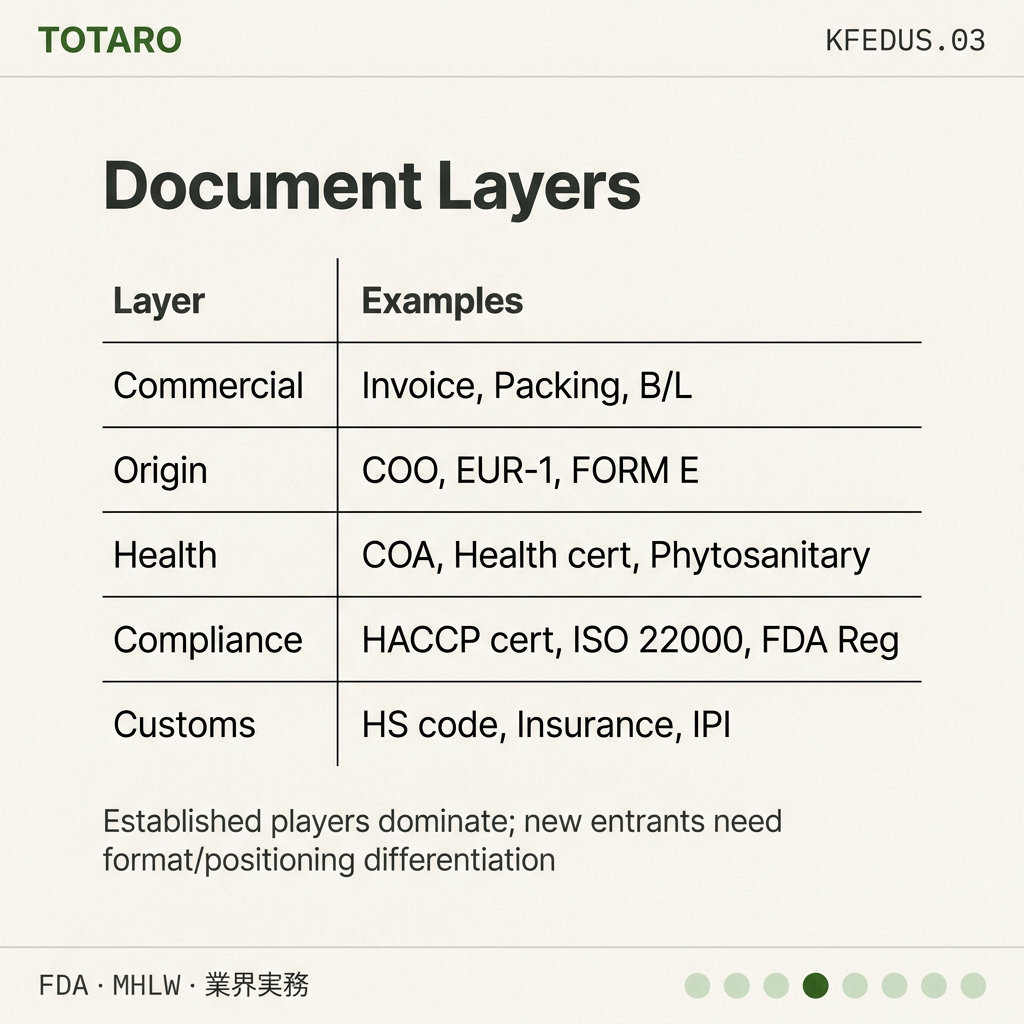
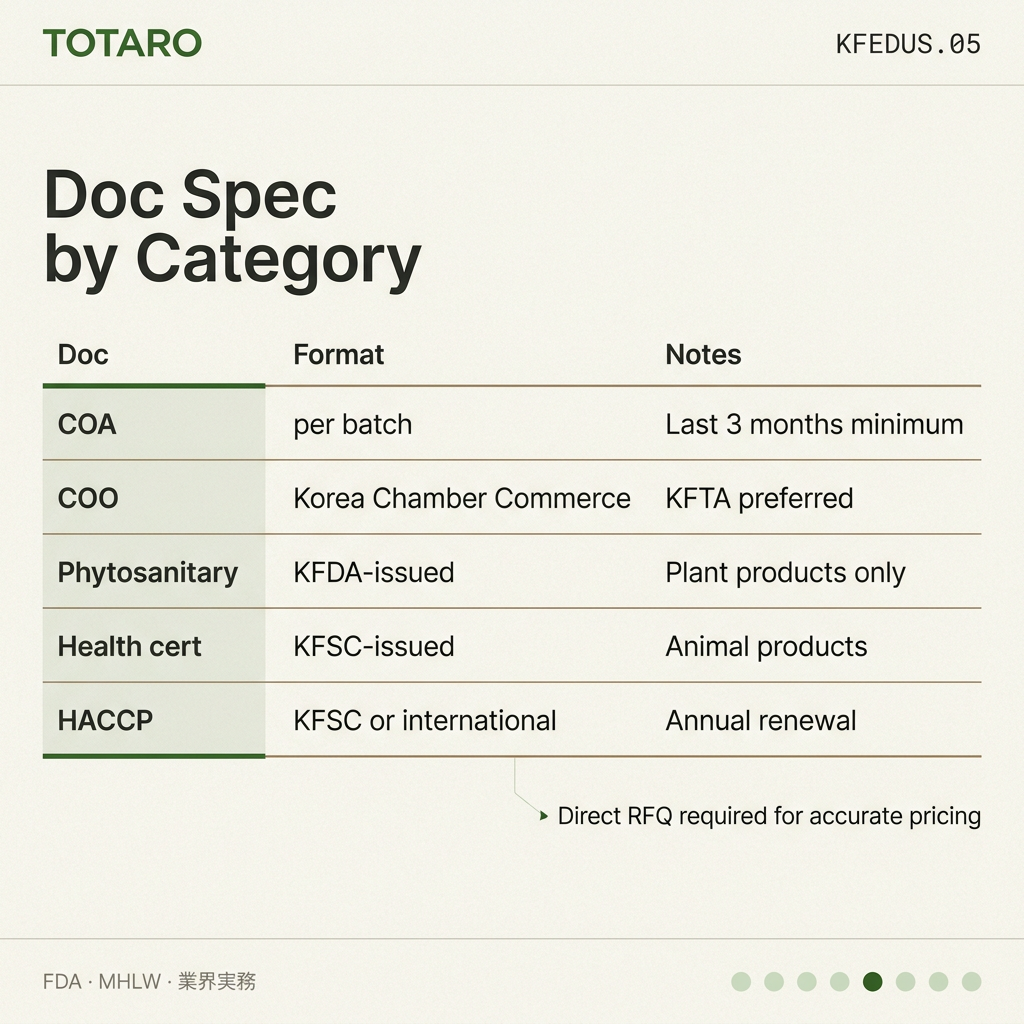
- Commercial Invoice — supplier-issued, lists each line item with HS code, FOB value, country of origin
- Packing List — itemized container contents, weight, volume per SKU
- Bill of Lading (B/L) — issued by shipping line; ocean freight contract
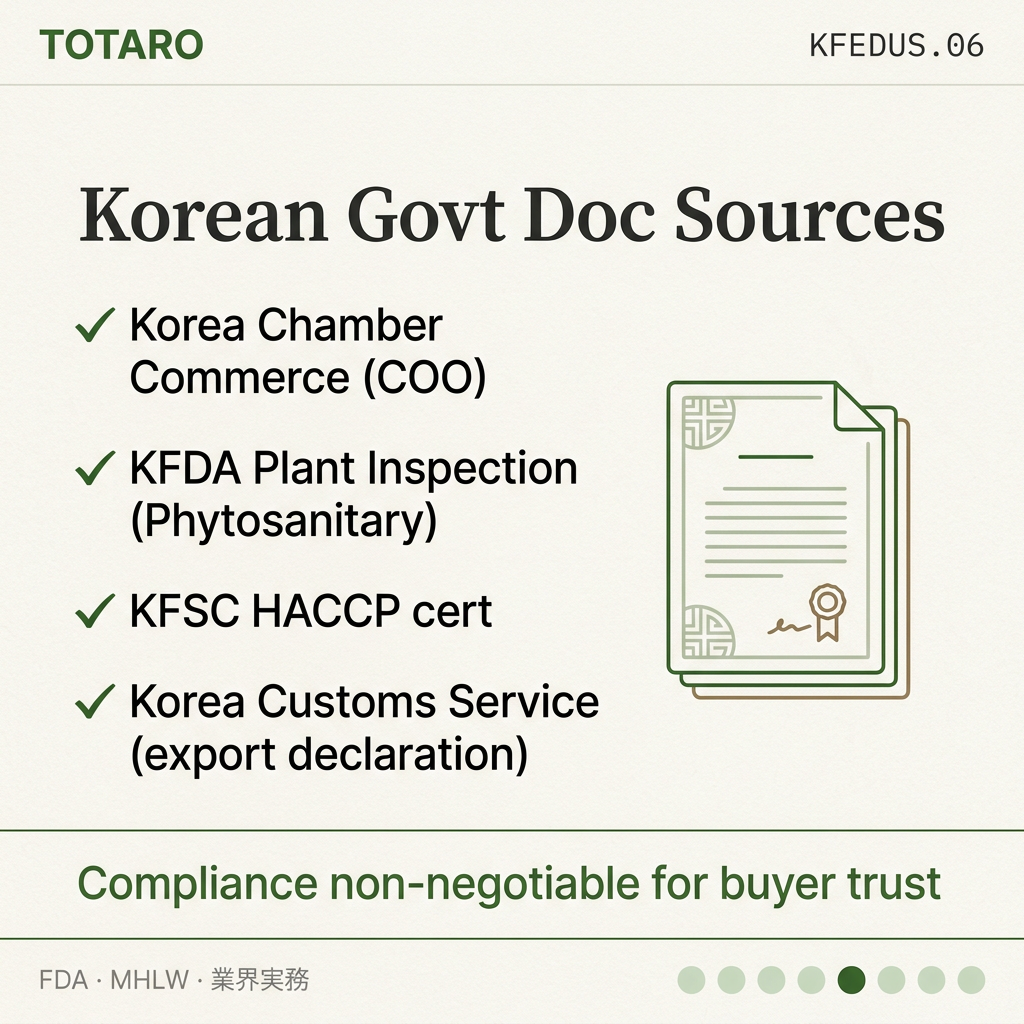
- Certificate of Origin (CO) — confirms Korean origin (essential for US-Korea FTA tariff benefits)
- Phytosanitary Certificate — for plant-based products (kimchi, vegetables, processed grain)
- Health Certificate — Korean MFDS-issued, confirms food safety compliance
- HACCP / FSSC22000 Certificate scan — proof of supplier safety system
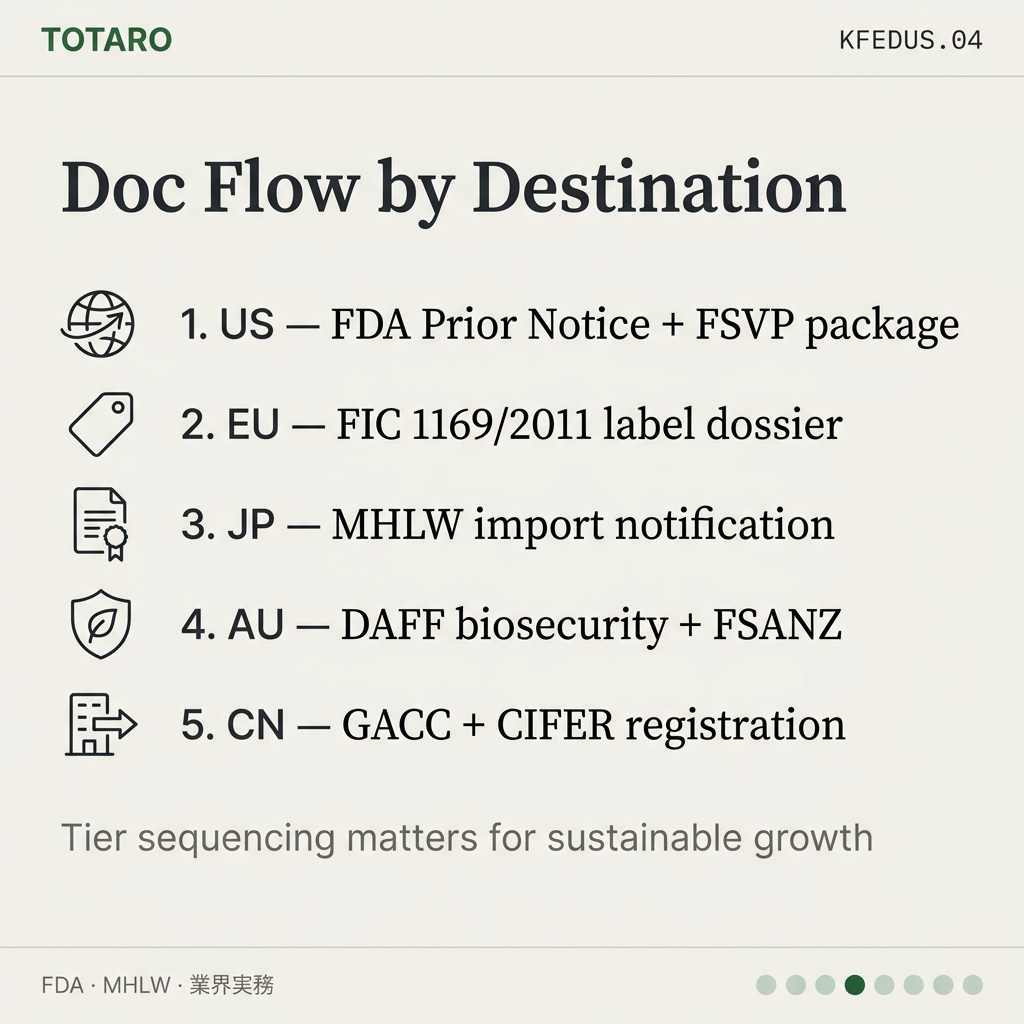
- FDA Prior Notice (USA) — submitted before shipment arrival, electronic filing
US-specific: FSVP (Foreign Supplier Verification Program)
Since 2017, importers (not foreign suppliers) carry the legal obligation to verify their Korean suppliers comply with US food safety law. The FSVP package includes:
- Hazard analysis (HACCP equivalent)
- Supplier verification activities (audits, sampling)
- Corrective action procedures
- Documentation of all of the above for 2 years minimum
Outsource to a "Qualified Individual" if your team lacks food safety expertise. Cost: $2,000-8,000 per supplier annually.
EU-specific: TRACES NT
EU imports require electronic notification through TRACES NT (TRADE Control and Expert System). Your Korean supplier must be EU-recognized; verify via the EU's official list.
Japan-specific: Food Sanitation Law notification
Japan Ministry of Health requires pre-notification to local quarantine. Less stringent than FDA but stricter than most Asian markets.
Common documentation failures
- Missing HS code on invoice — customs can't classify, container held
- Country of origin discrepancy — Korean supplier ships partly Chinese-origin ingredients without declaration; this is fraud
- Expired health certificate — must be valid through arrival date, not just shipment date
- HACCP cert wrong scope — facility certified for one product, but invoice lists another
What to do this week
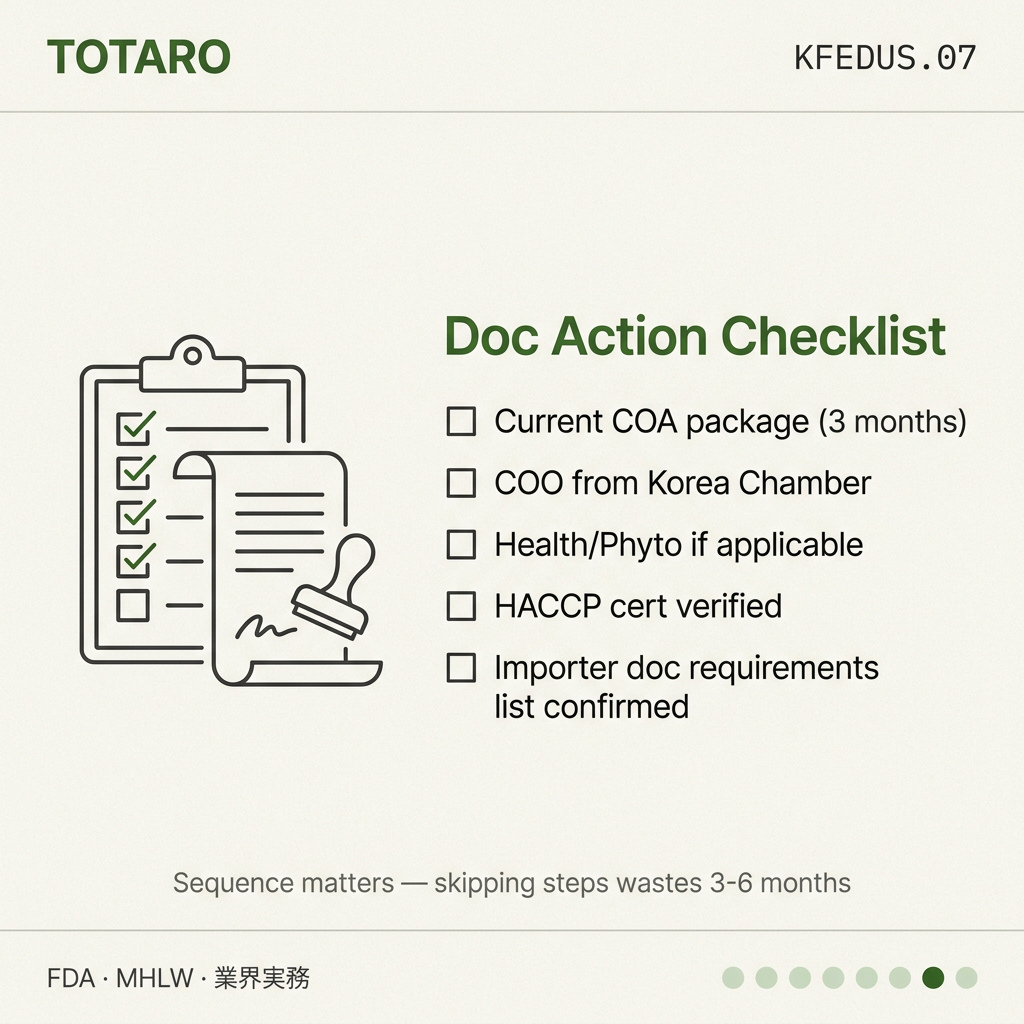
- Build a document template per supplier. Standardize your supplier's documentation expectations upfront.
- Subscribe to FDA email alerts. Regulation changes 2-3x per year; updates are free.
- Pre-clear with customs broker. Send sample invoice/packing list before first shipment.
- Photograph cert + signature. PDF + photo backup catches most fraud.
How TOTARO can help
TOTARO suppliers come with structured certification metadata + export experience flag. We pre-validate documents during the verification step, saving you 1-2 days per onboarding.
Verified Korean exporters: TOTARO →
Related Guides
Ask AI to find your Korean food supplier
Describe what you need in plain language — get matched with verified suppliers in seconds.
Try AI Supplier Search