카드 1 / 8
FSSC22000 vs HACCP in Korean Food Sourcing — Which to Require
FSSC22000 vs HACCP in Korean Food Sourcing
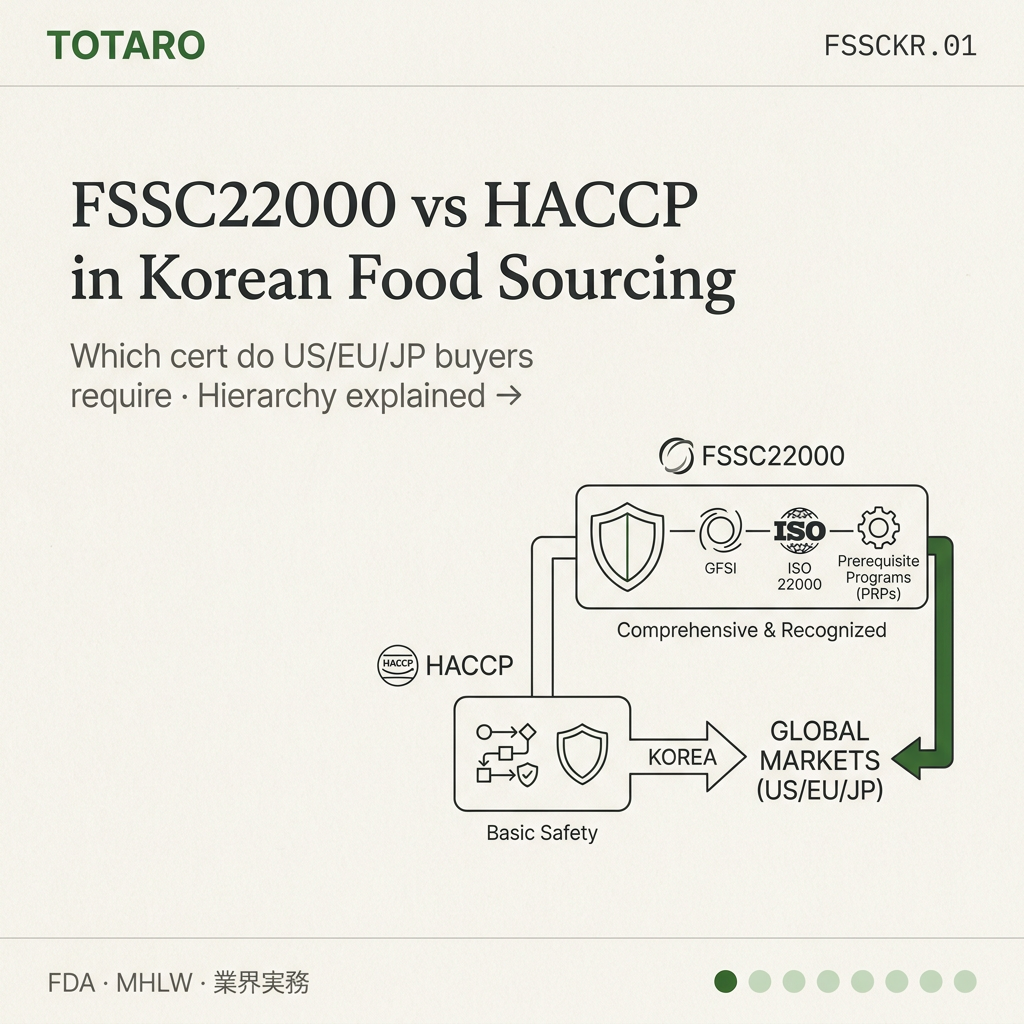
Two acronyms come up in every Korean supplier conversation: HACCP and FSSC22000. They sound interchangeable. They are not. Choosing the wrong one costs you time, margin, and sometimes customers.
This guide is the practical answer: when does each matter, what you should require, and how to verify Korean suppliers.
What each certification means
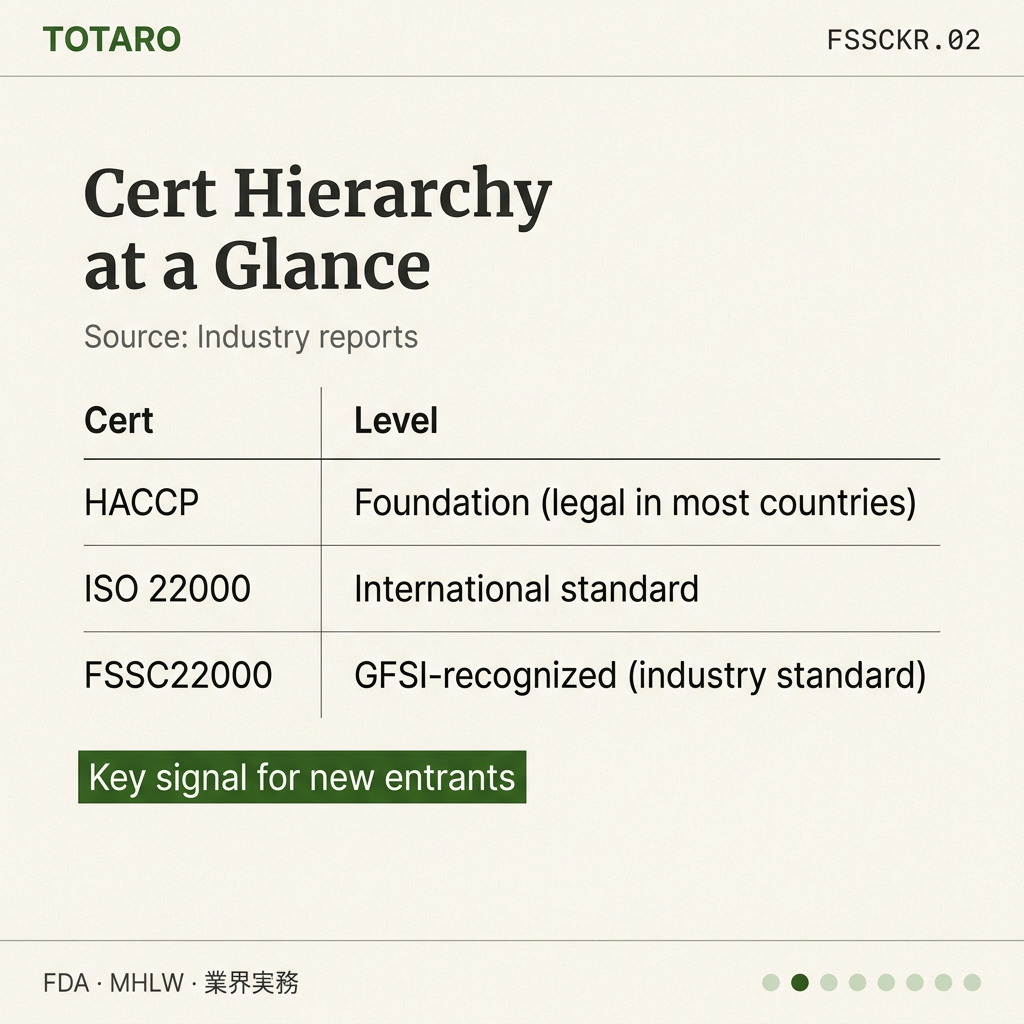
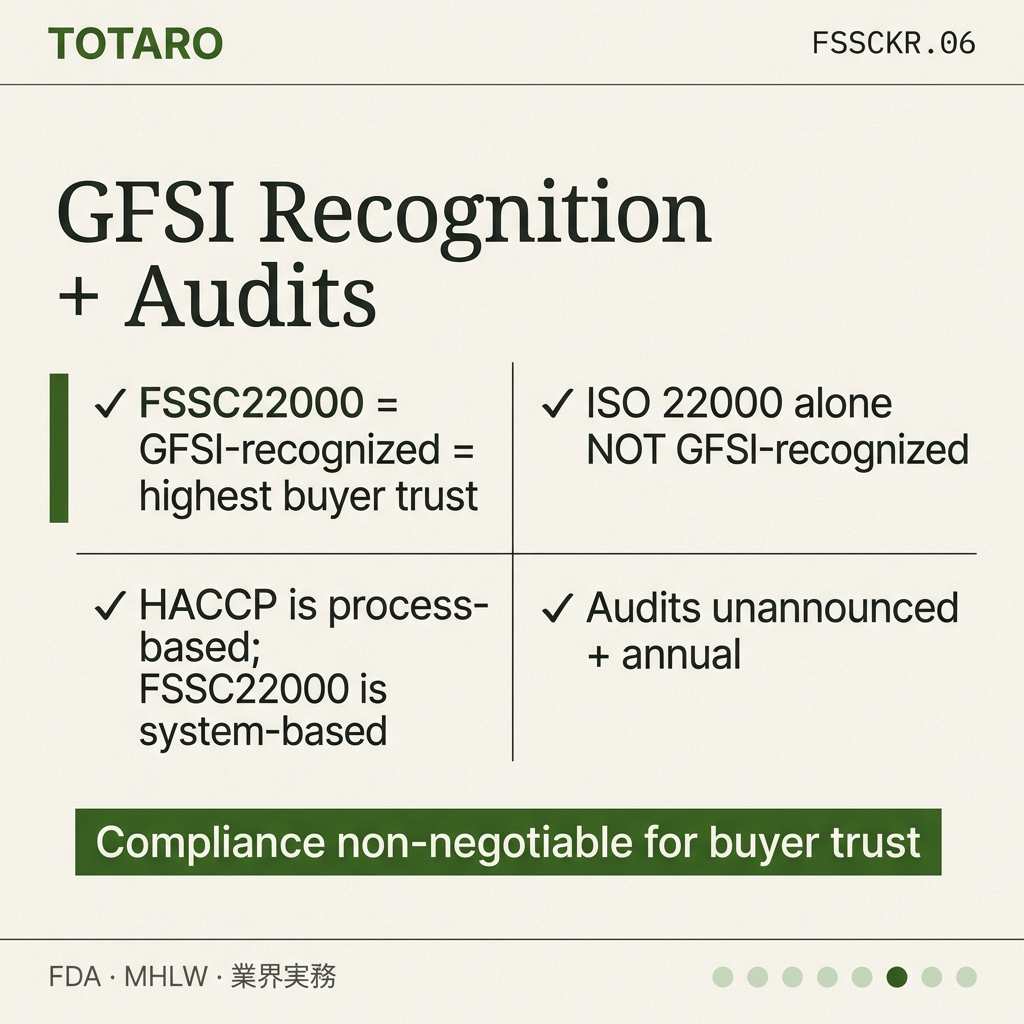
HACCP (Hazard Analysis Critical Control Points) — Korean Ministry of Food and Drug Safety (MFDS) certification, mandatory for all major Korean food manufacturers since 2020. Process-focused: identifies hazards and sets control points.
FSSC22000 — International ISO-based food safety management system. Built on top of ISO22000 + sector-specific PRPs. Recognized by GFSI (Global Food Safety Initiative).
When to require each
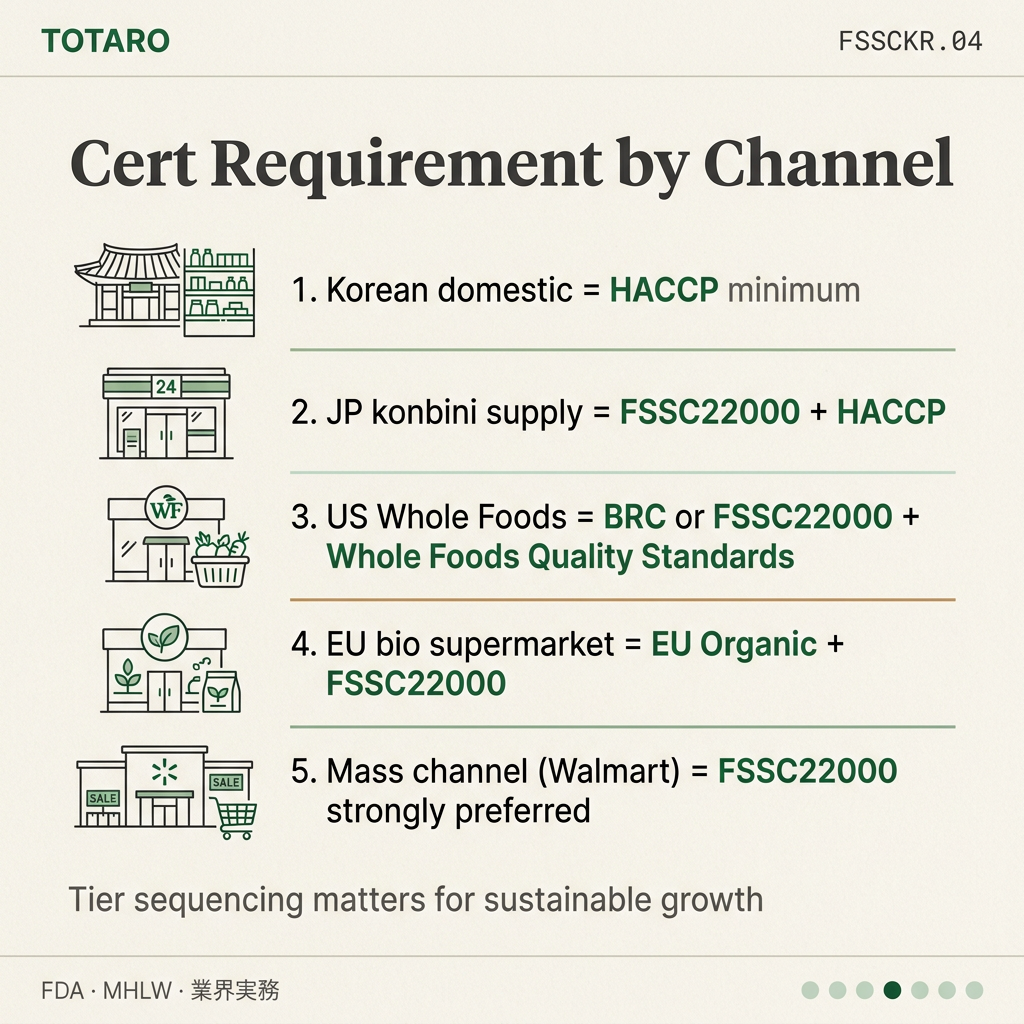
| Buyer scenario | Minimum cert | Better |
|---|---|---|
| Small US wholesaler / distributor | HACCP | FSSC22000 |
| Whole Foods / Costco / mainstream US retail | FSSC22000 | + GFSI scope |
| EU buyers | FSSC22000 (BRC also OK) | FSSC22000 |
| Japan major chains (Aeon, 7-Eleven) | FSSC22000 | + JFS-C |
| Direct importer / e-commerce | HACCP | FSSC22000 |
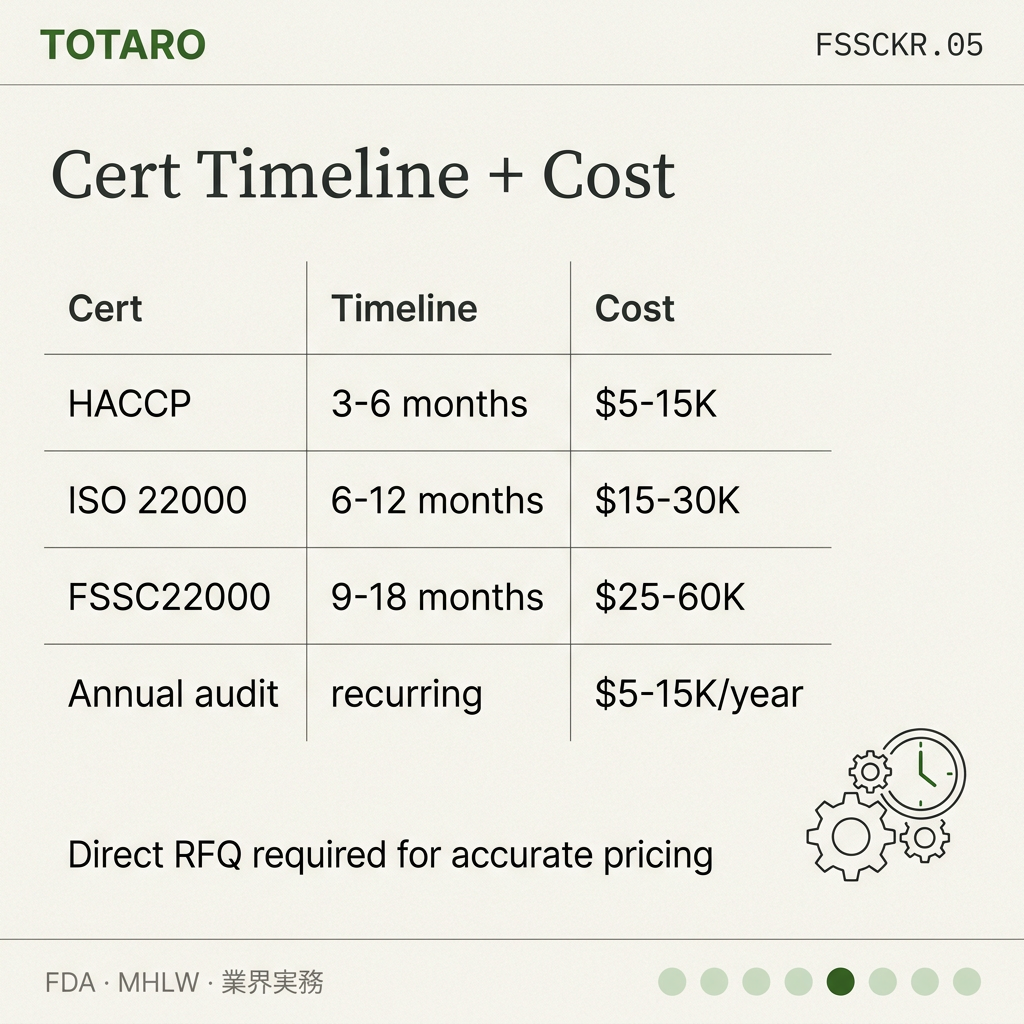
Cost & timeline
HACCP (Korea, MFDS):
- Cost: $5,000-15,000 (manufacturer investment, not buyer)
- Timeline: 6-12 months for a new facility
- Renewal: every 3 years
FSSC22000:
- Cost: $20,000-50,000 (significantly higher)
- Timeline: 12-18 months
- Renewal: annual surveillance, full audit every 3 years
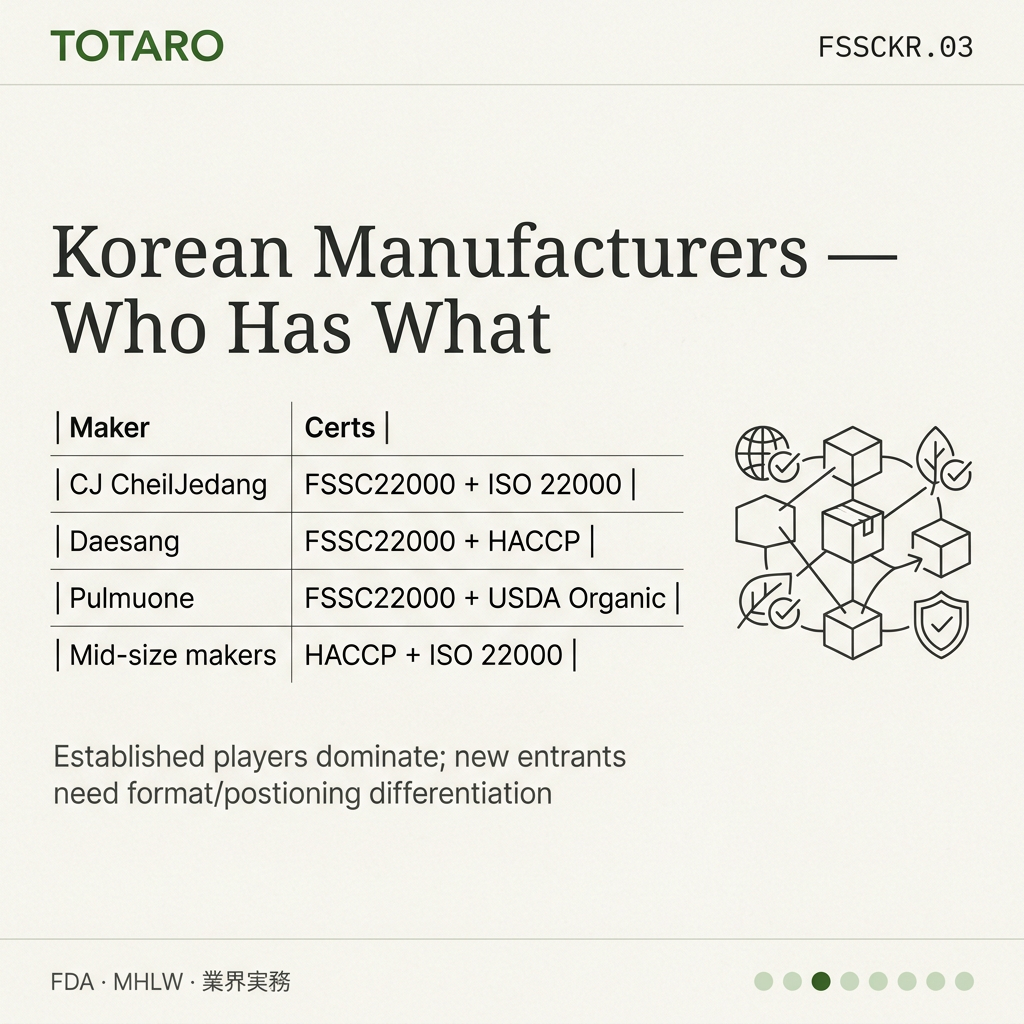
For Korean OEM partners, FSSC22000 typically signals a top-100 manufacturer (large enough to justify the investment).
How to verify
- Request certificate scan — full PDF with audit body name (DNV, Bureau Veritas, SGS, etc.) and certificate number.
- Cross-check on certifier's website. Audit bodies publish active certificates.
- Check expiration date. Some Korean suppliers send expired certs; don't assume.
- Verify scope. Cert may cover one product line but not others. Match scope to your purchase.
Common red flags:
- Cert lists generic "food products" with no specific scope
- Audit body not GFSI-recognized
- "HACCP self-declared" — this isn't a certification
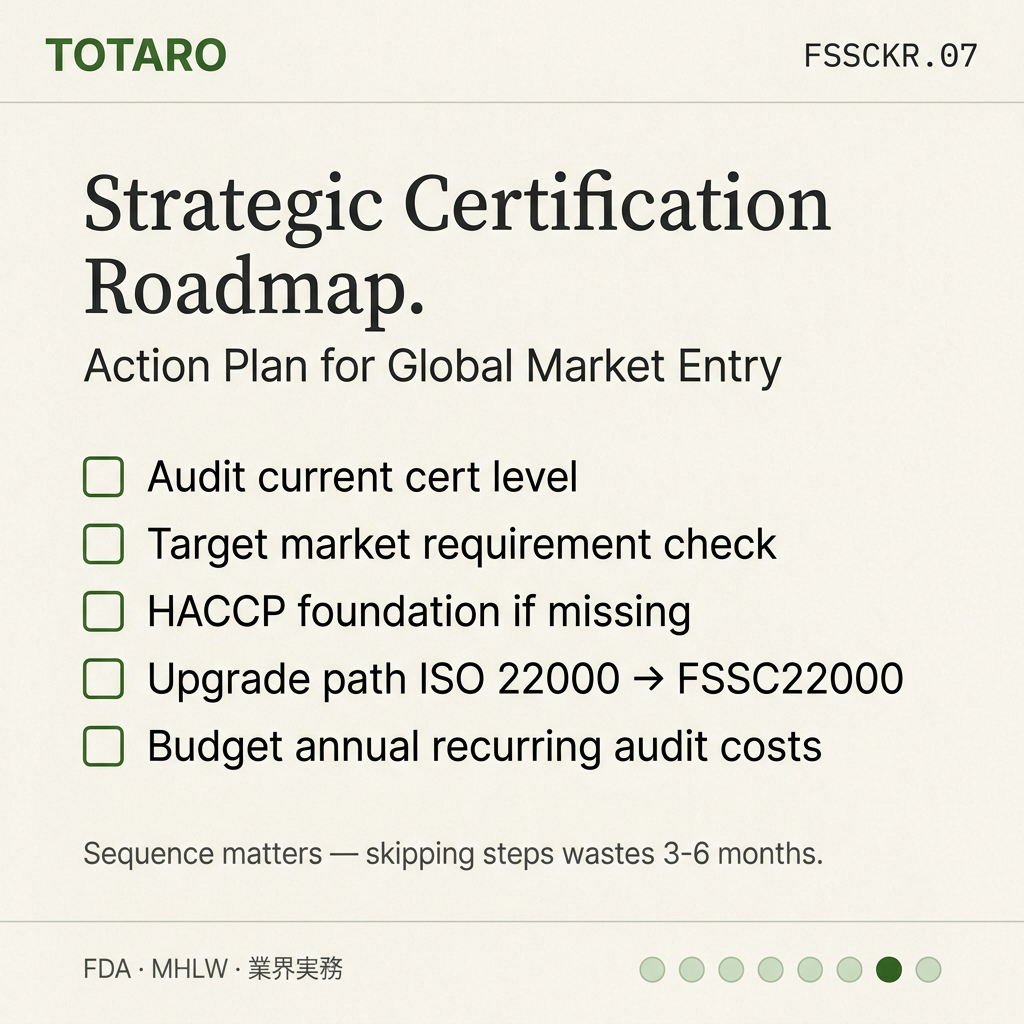
What to do this week
- Define your minimum cert standard before contacting suppliers (don't negotiate down later).
- Ask suppliers to upload certs to Drive/Dropbox with read access — better than email attachments.
- Verify before sample order, not after. Sample testing without cert verification is wasted time.
- Match cert scope to product. Gochujang facility cert ≠ snack facility cert.
How TOTARO can help
TOTARO's supplier verification structures HACCP/FSSC22000/ISO22000 metadata for every supplier in our database. Search by exact certification — not by guessing from PDFs.
Free supplier verification (24h): TOTARO →
Related Guides
Ask AI to find your Korean food supplier
Describe what you need in plain language — get matched with verified suppliers in seconds.
Try AI Supplier Search