카드 1 / 8
HACCP Certification Korea — B2B Buyer Verification Guide
HACCP Certification for Korean Food Suppliers
HACCP certification is the foundational food safety credential for Korean exporters. Mandatory since 2020, but the 2025 MFDS differential registration scheme made verification more nuanced. Here's what buyers need to know in 2026.
What HACCP means in Korea
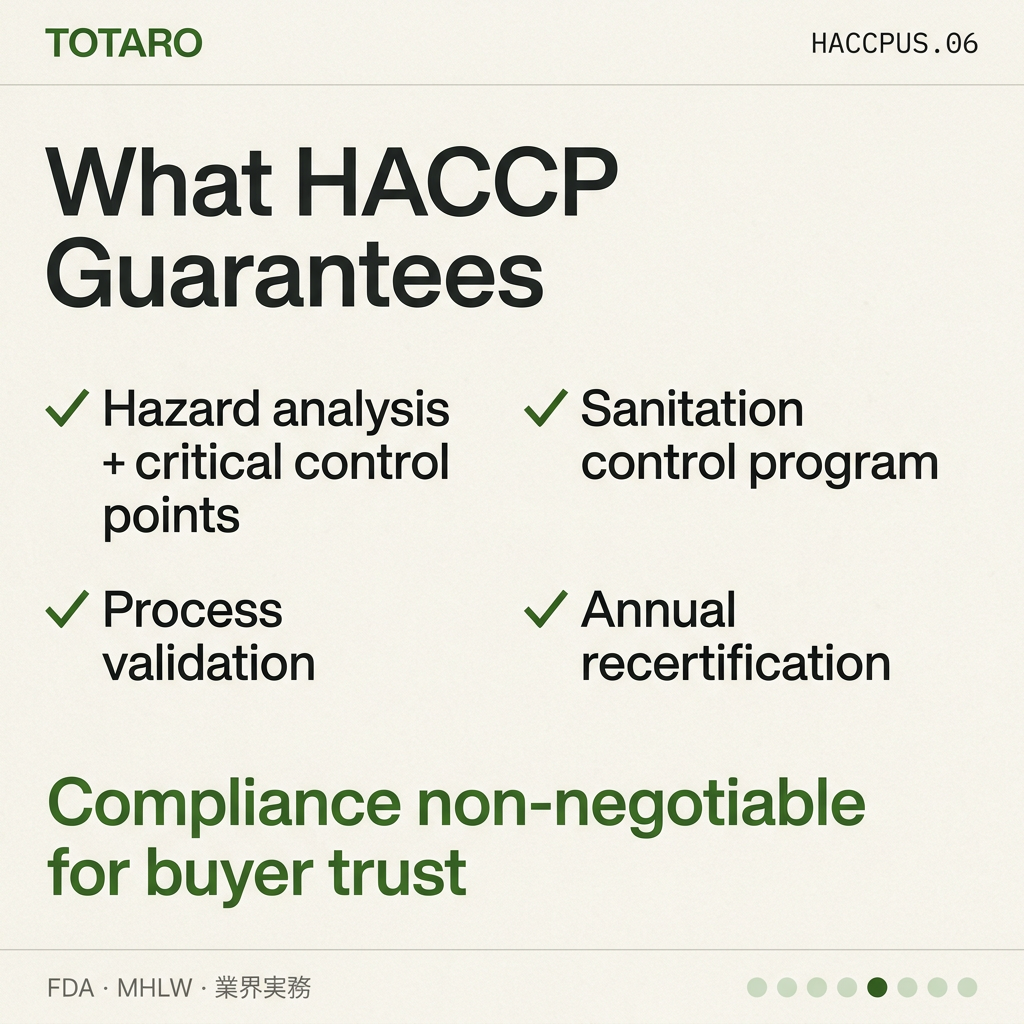
Korea's HACCP system, governed by the Korea Ministry of Food and Drug Safety (MFDS), is mandatory for all licensed food manufacturers. It's process-focused: identify hazards, set control points, monitor, document, and verify.
For exports, HACCP is the absolute minimum. Most premium retail (Whole Foods, Costco) requires FSSC22000 in addition.
The 2025 differential registration scheme
In 2025, MFDS introduced a tiered system:
- Standard HACCP — baseline; all licensed manufacturers
- HACCP Differential Registration — for sauces, seasonings, and processed foods
- Mandatory for new product launches
- Adds traceability requirements
- Increases inspection frequency
For buyers: if your supplier is in the sauces/seasonings category and their cert isn't differential-registered, they may be operating with grandfathered status. Verify their renewal timeline.
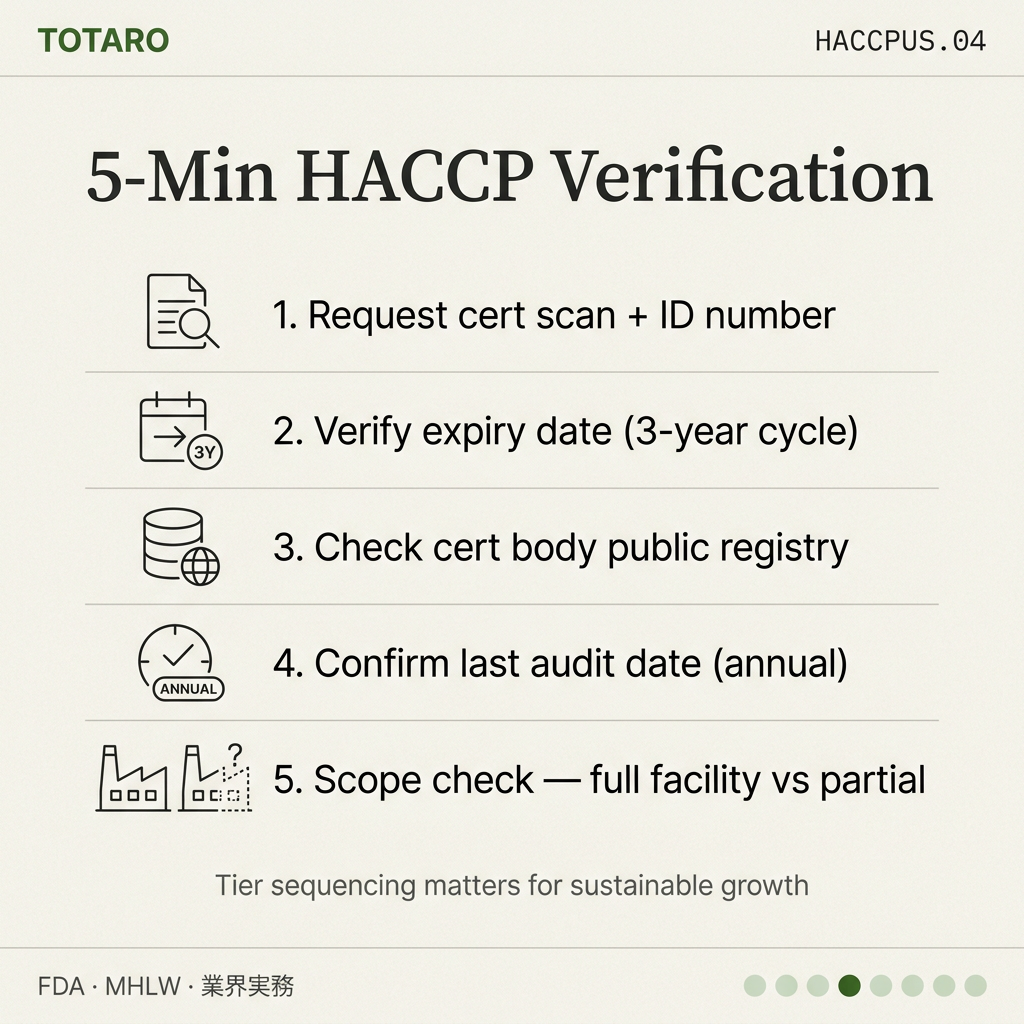
How to verify a Korean HACCP certificate
-
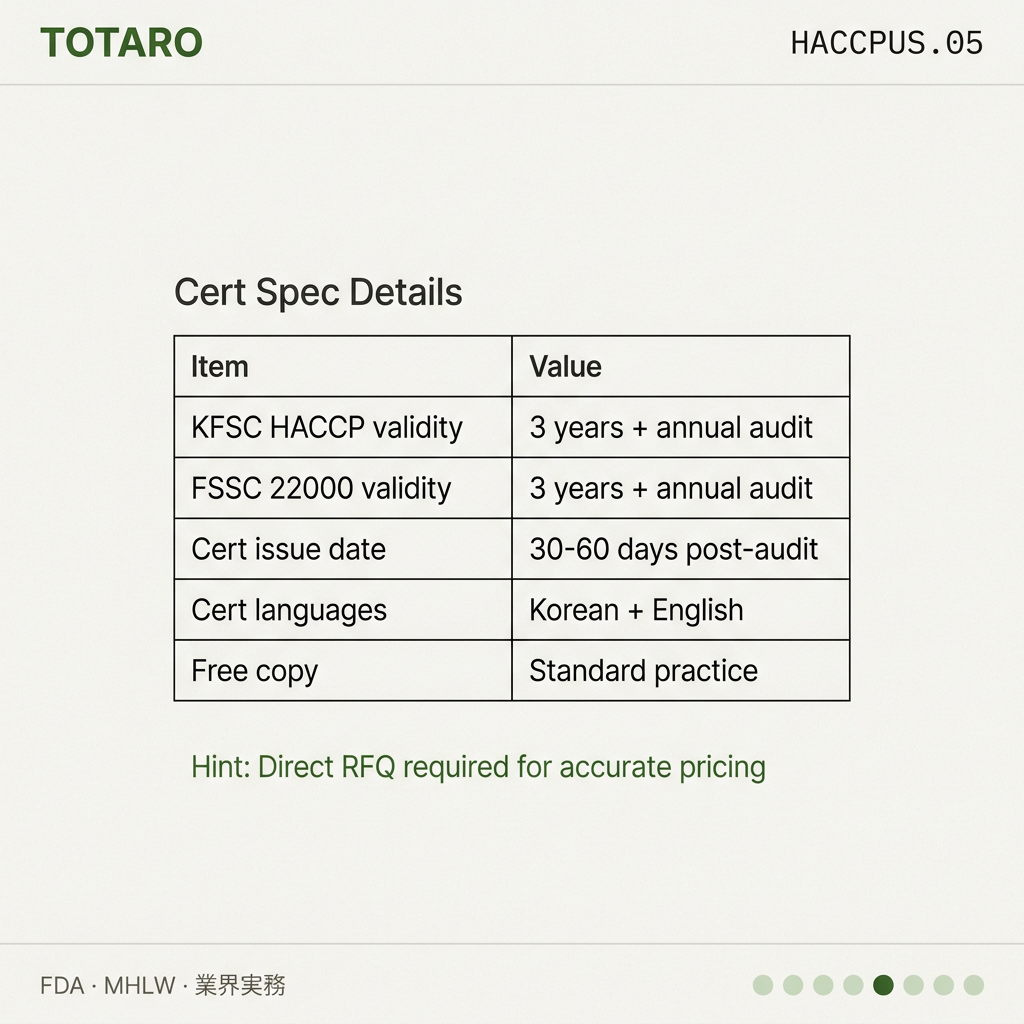
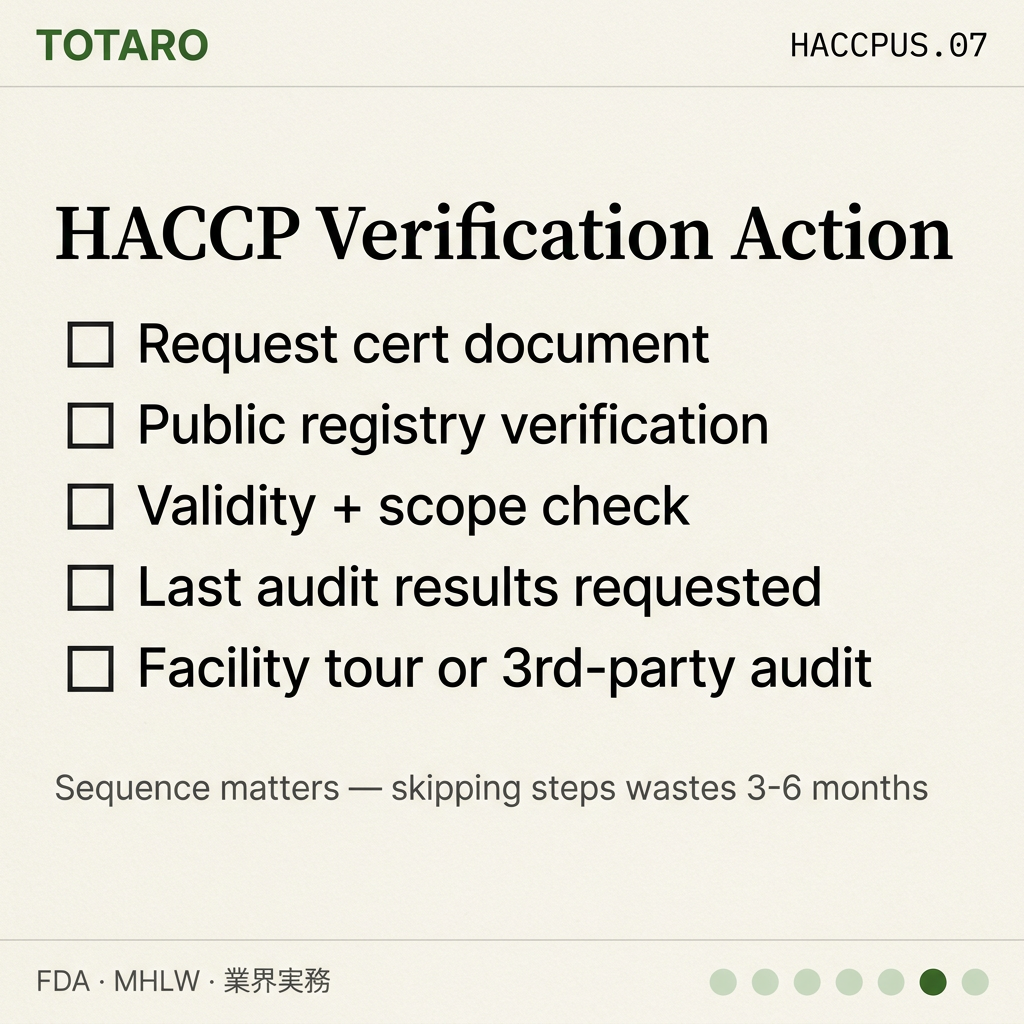
Request the full PDF — must show:
- Certificate number
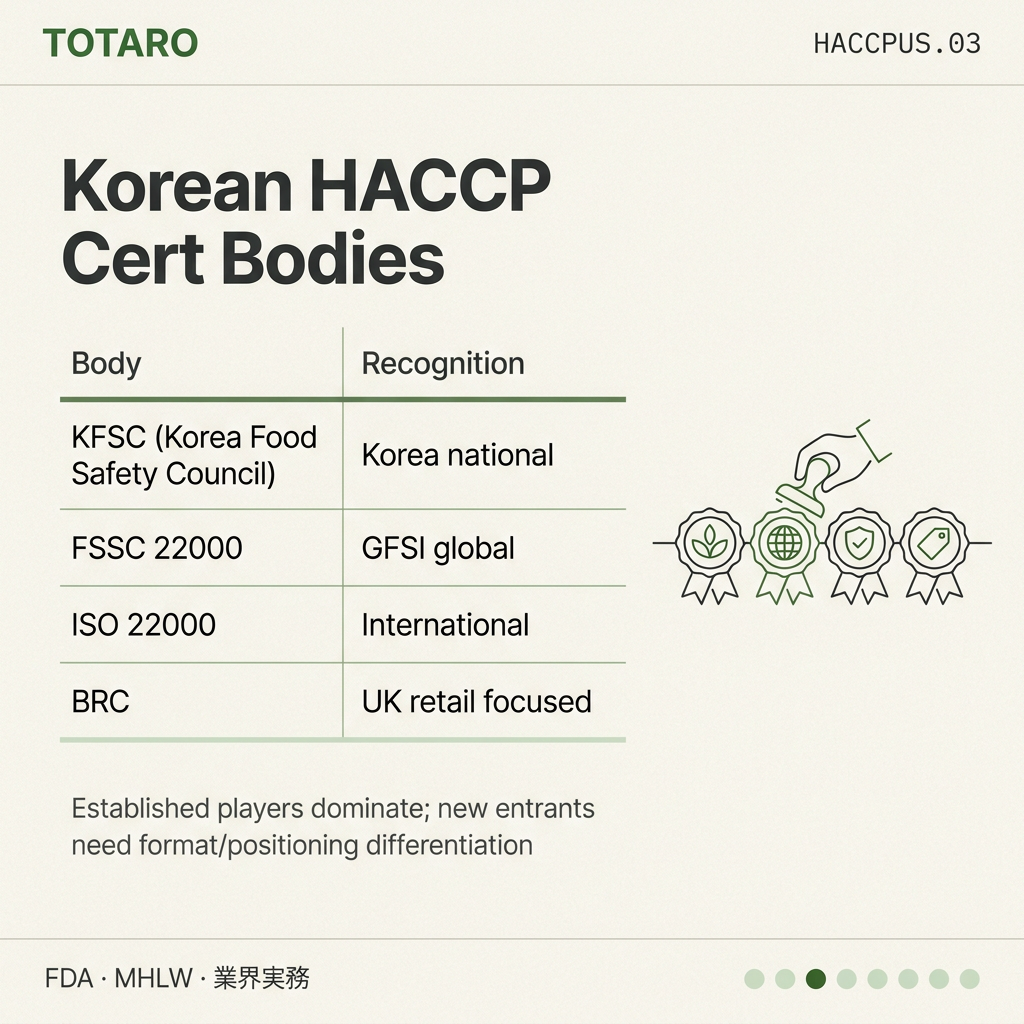
- Issuing body (MFDS or accredited regional body)
- Facility address (must match invoice)
- Product scope
- Issue date and expiration date
-
Cross-check on MFDS database — Korean MFDS publishes a public list of HACCP-registered facilities at mfds.go.kr.
-
Verify scope matches your purchase. Cert may cover one product line at one facility, not your specific SKU.
-
Check expiration. HACCP certs renew every 3 years; some Korean exporters send expired certs hoping buyers don't check.
Fraud red flags
- Cert with no audit body name
- Generic "food products" scope (no specific category)
- "Self-declared HACCP compliance" — this isn't a certification
- Manufacturer claims HACCP but isn't on MFDS public database
- Cert older than 3 years without renewal evidence
Why HACCP alone isn't enough for major US retail
Whole Foods, Costco, Trader Joe's typically require:
- HACCP (Korean) — baseline
- FSSC22000 — additional
- Sometimes BRC or SQF (US standards)
Mid-tier retail (Asian grocery, specialty) accepts HACCP only.
Common buyer questions
Q: Can a small Korean supplier get HACCP-certified? A: Yes. Mid-size OEMs (5-50 employees) routinely have HACCP. Cost: $5K-15K, timeline: 6-12 months for a new facility.
Q: Is HACCP enough for FDA importation? A: For standard food: yes, paired with FSVP (Foreign Supplier Verification Program). For high-risk food (low-acid canned, infant formula): no, requires additional FDA registration.
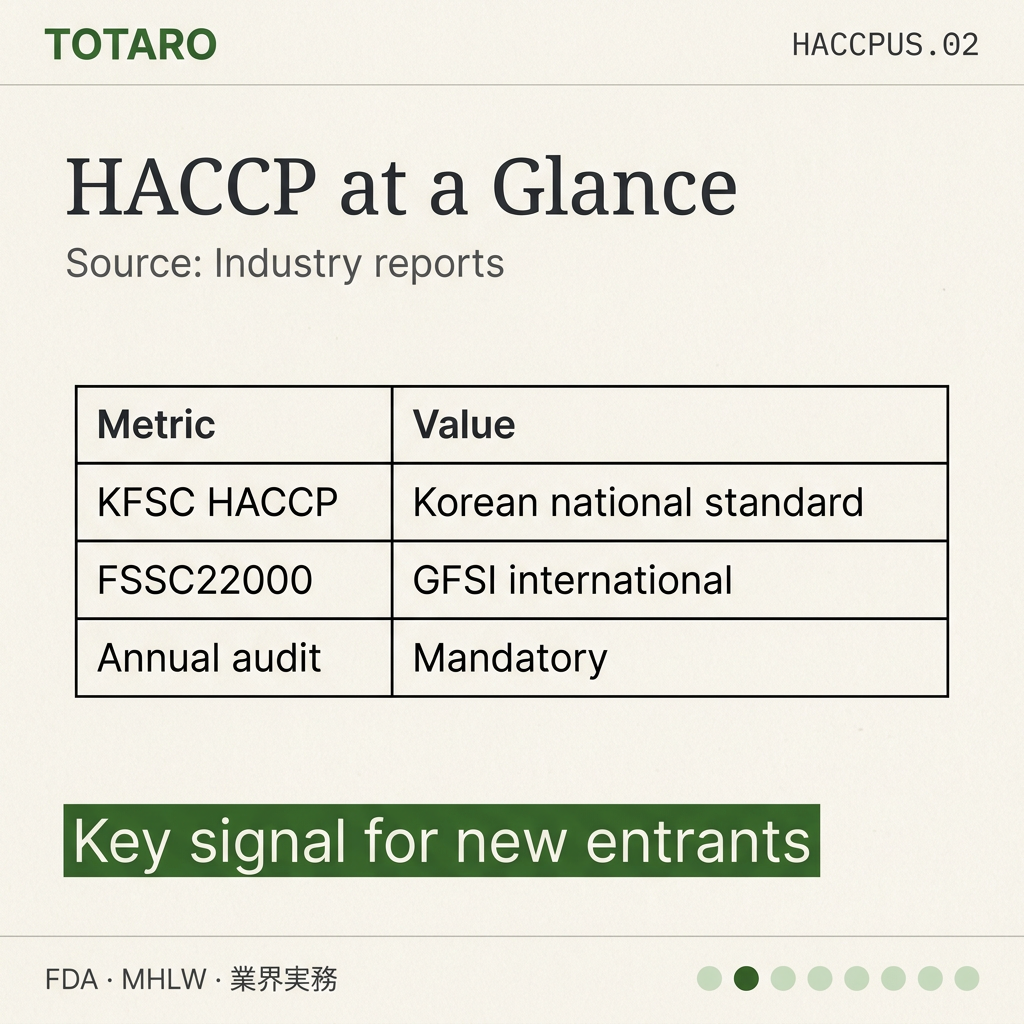
Q: How does HACCP differ from ISO22000? A: HACCP is process-focused (Korea's mandatory). ISO22000 / FSSC22000 is system-focused (international, GFSI-recognized). FSSC22000 builds on top of HACCP + ISO22000.
What to do this week
- Request HACCP scan from every prospective Korean supplier before sample order.
- Cross-check on MFDS database. 5-minute verification.
- Match cert scope to invoice. Common point of fraud.
- Set renewal calendar. Track expirations across multiple suppliers.
How TOTARO can help
TOTARO automatically structures HACCP metadata for Korean suppliers — issue date, expiration, scope, and audit body. Filter to verify in seconds, not days.
Verify Korean HACCP suppliers: TOTARO →
Related Guides
Ask AI to find your Korean food supplier
Describe what you need in plain language — get matched with verified suppliers in seconds.
Try AI Supplier Search