카드 1 / 8
Korean Halal HFF in Malaysia: JAKIM Certification — The Gold Standard and the 12-Month Application Path (2026)
TL;DR
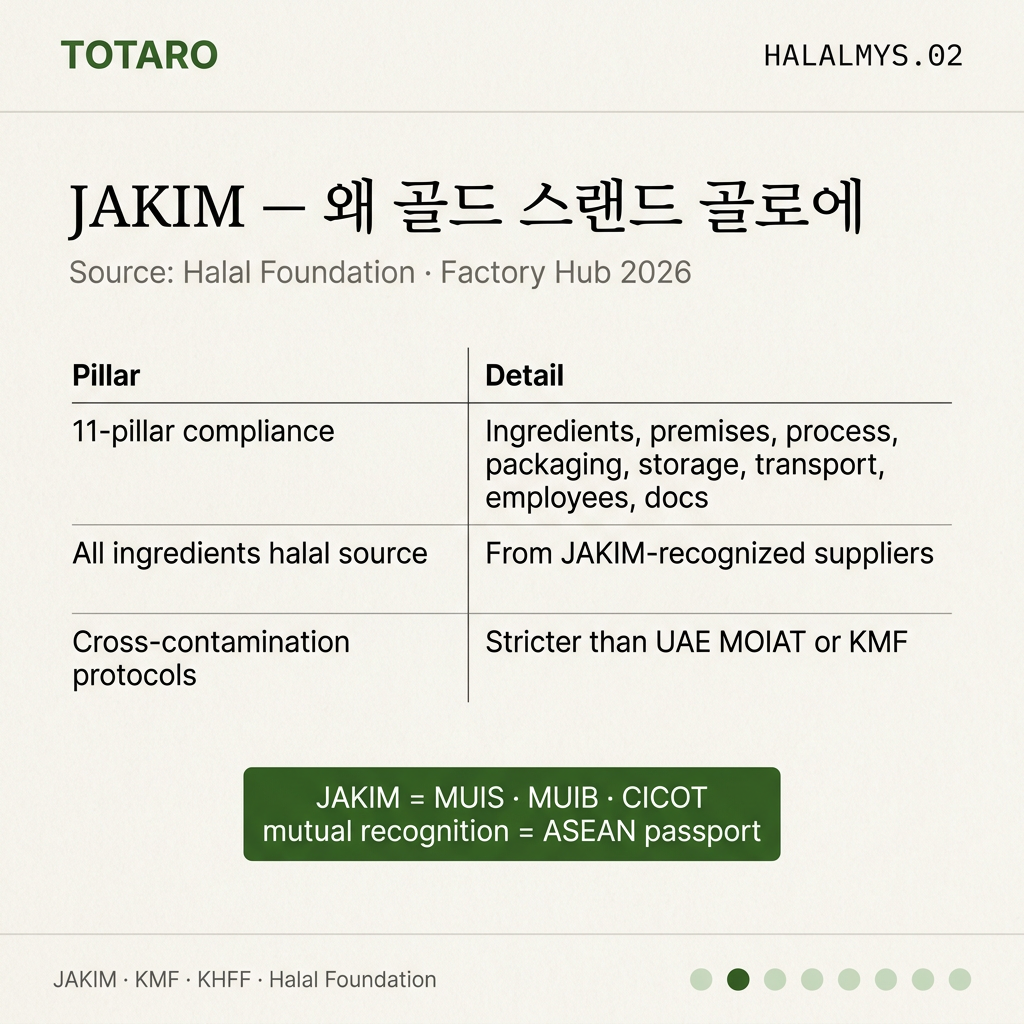
Malaysia's JAKIM (Department of Islamic Development Malaysia) halal certification is considered the gold standard globally (Halal Foundation — JAKIM Export). For Korean HFF (Health Functional Food), JAKIM unlocks ASEAN access via mutual recognition with Singapore (MUIS), Indonesia (BPJPH path), Brunei (MUIB), and Thailand (CICOT). KMF (Korea Muslim Federation) is recognized by JAKIM, making the Korean → Malaysia path more direct than Korea → UAE or Korea → Saudi.
1. Why JAKIM Is the Gold Standard
JAKIM's rigor comes from: (1) Halal Hub Malaysia 11-pillar compliance (Factory Hub — JAKIM 2026) covering ingredients, premises, processing, packaging, storage, transport, employees, document control. (2) All ingredients from JAKIM-recognized halal sources. (3) Stricter cross-contamination protocols than UAE MOIAT or KMF. JAKIM cert effectively pre-clears most other halal markets.
2. KMF → JAKIM Recognition
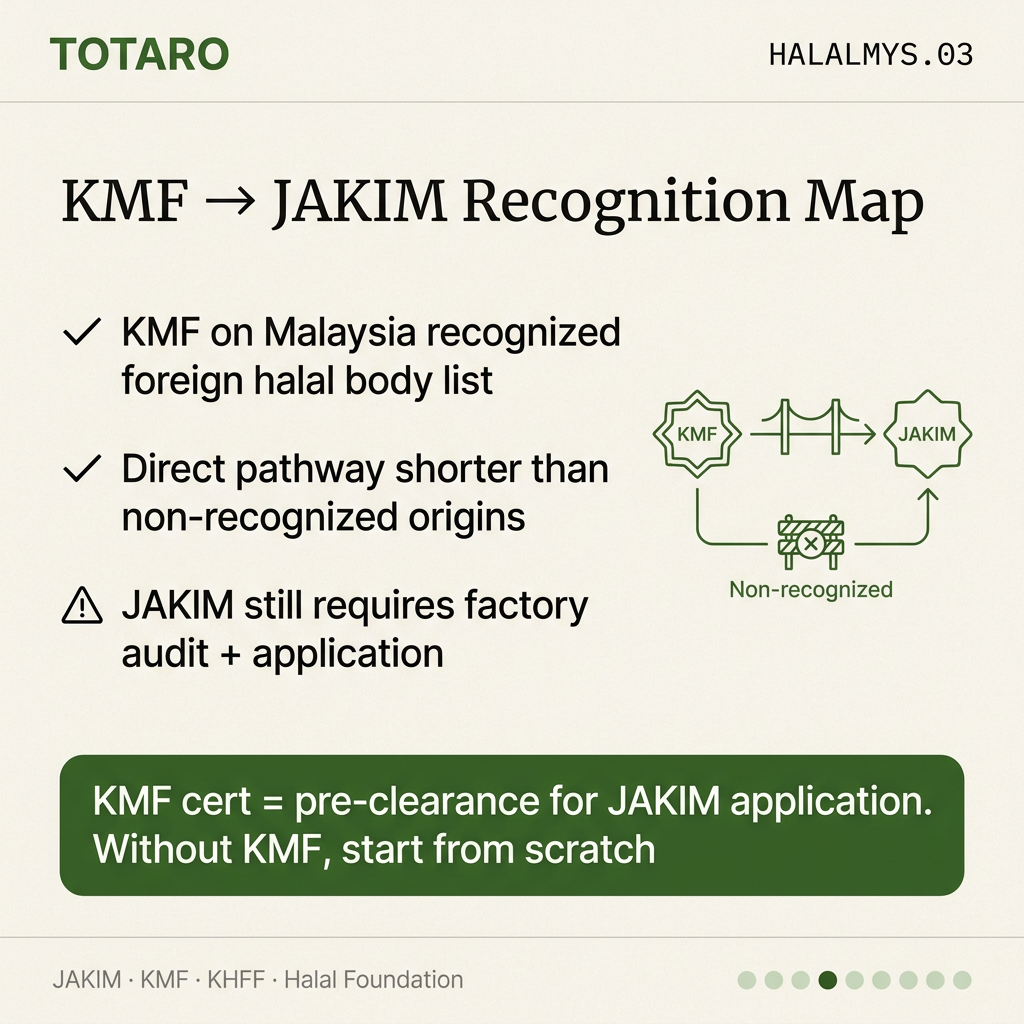
KMF is on Malaysia's recognized foreign halal certification body list (ChemLinked — Malaysia Recognized Bodies). This means a Korean facility with KMF certification can apply directly for JAKIM's import recognition (Halal Mark Import). The application path is shorter than for non-recognized origins.
3. Korean HFF Categories With Malaysia Edge
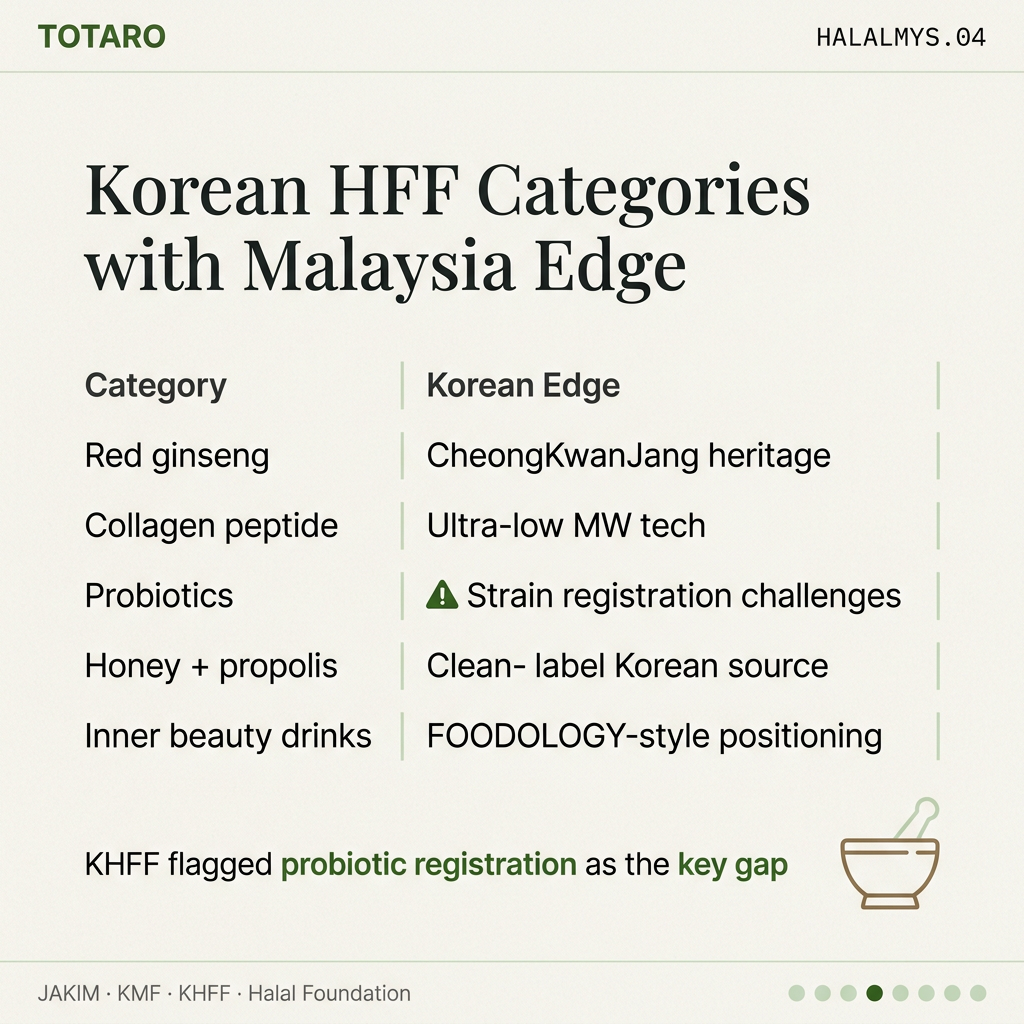
(1) Red ginseng — Korean heritage premium, well-known in Malaysian middle class. (2) Collagen peptide — ultra-low molecular weight tech is competitive. (3) Probiotics — but KHFF (Korea Health Functional Food Association) flagged probiotic registration as the key challenge (NutraIngredients — KHFF 2026 Discussion). (4) Honey + propolis — clean-label Korean source story. (5) Inner beauty drinks — Sapnu Puas / FOODOLOGY positioning.
4. Probiotic-Specific Registration Challenges
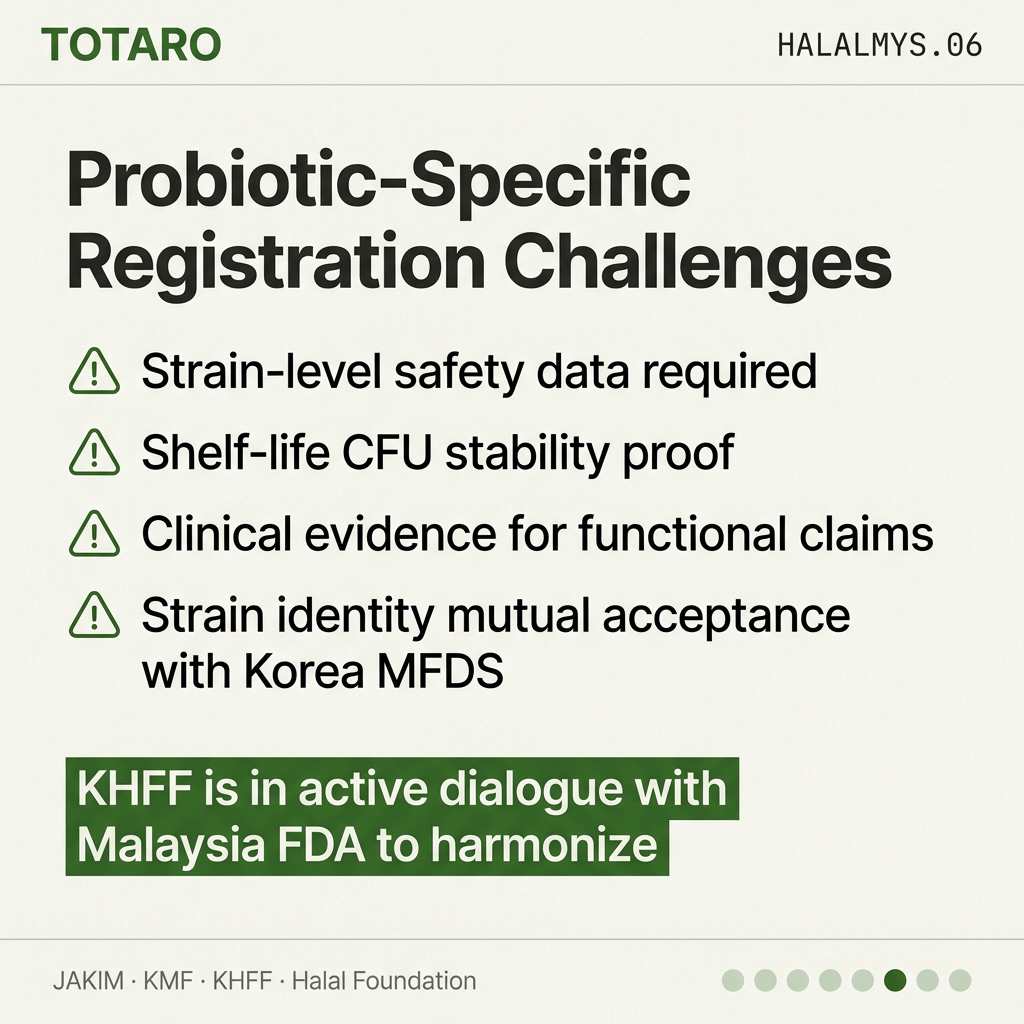
Malaysia's probiotic registration requires (1) strain-level safety data, (2) shelf-life CFU stability proof, (3) clinical evidence for functional claims, (4) cross-acceptance of strain identity by Malaysia FDA. Korean probiotic exporters have faced delays due to registration system differences with Korea MFDS standards. KHFF is in active dialogue with Malaysia FDA to harmonize — exporters should monitor.
5. JAKIM Application Process
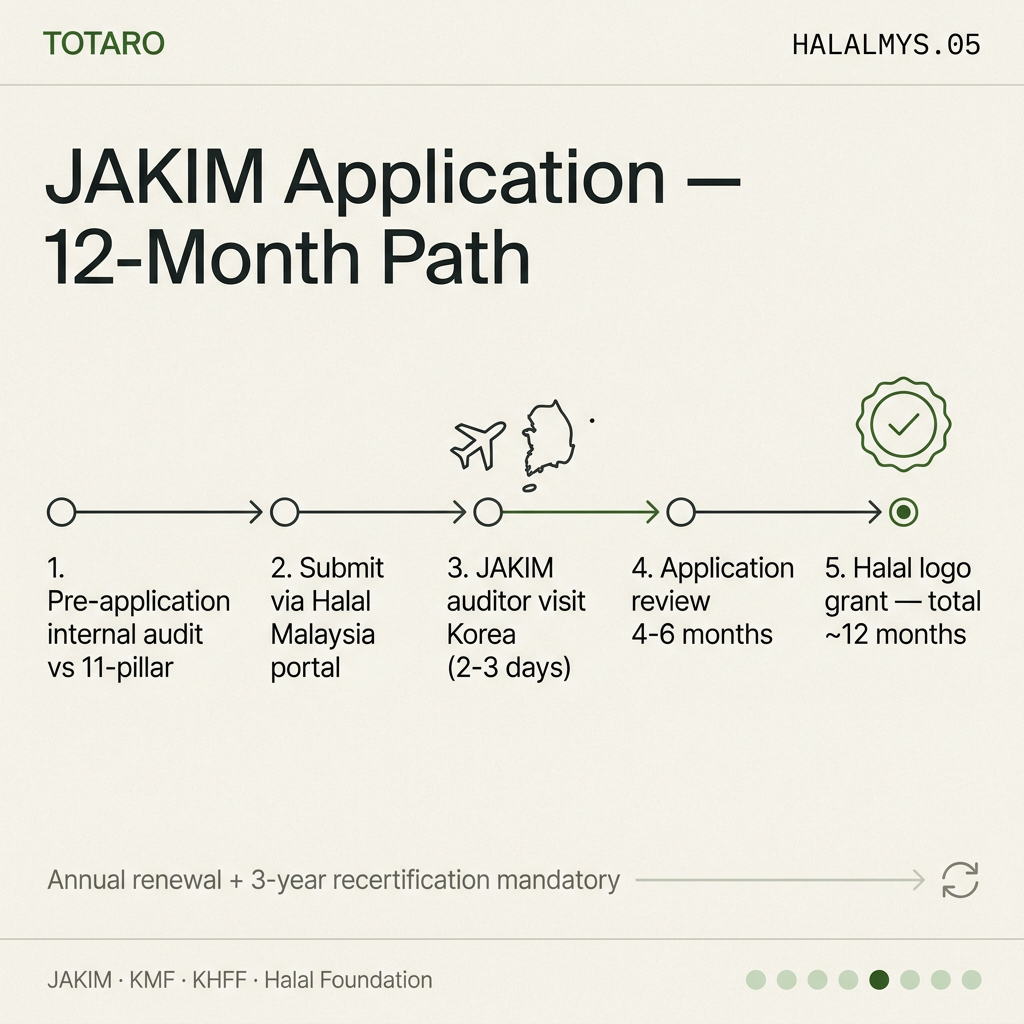
(1) Pre-application — Korean facility audits internal compliance against JAKIM 11-pillar checklist. (2) Submit application via Halal Malaysia portal with KMF cert, product specs, ingredient sourcing docs. (3) JAKIM auditor visit to Korean facility (typically 2-3 days). (4) Application review — 4-6 months. (5) Halal logo grant — total timeline 12 months from kickoff. (6) Annual renewal + 3-year recertification.
6. Pricing Reality (MOQ / FOB)
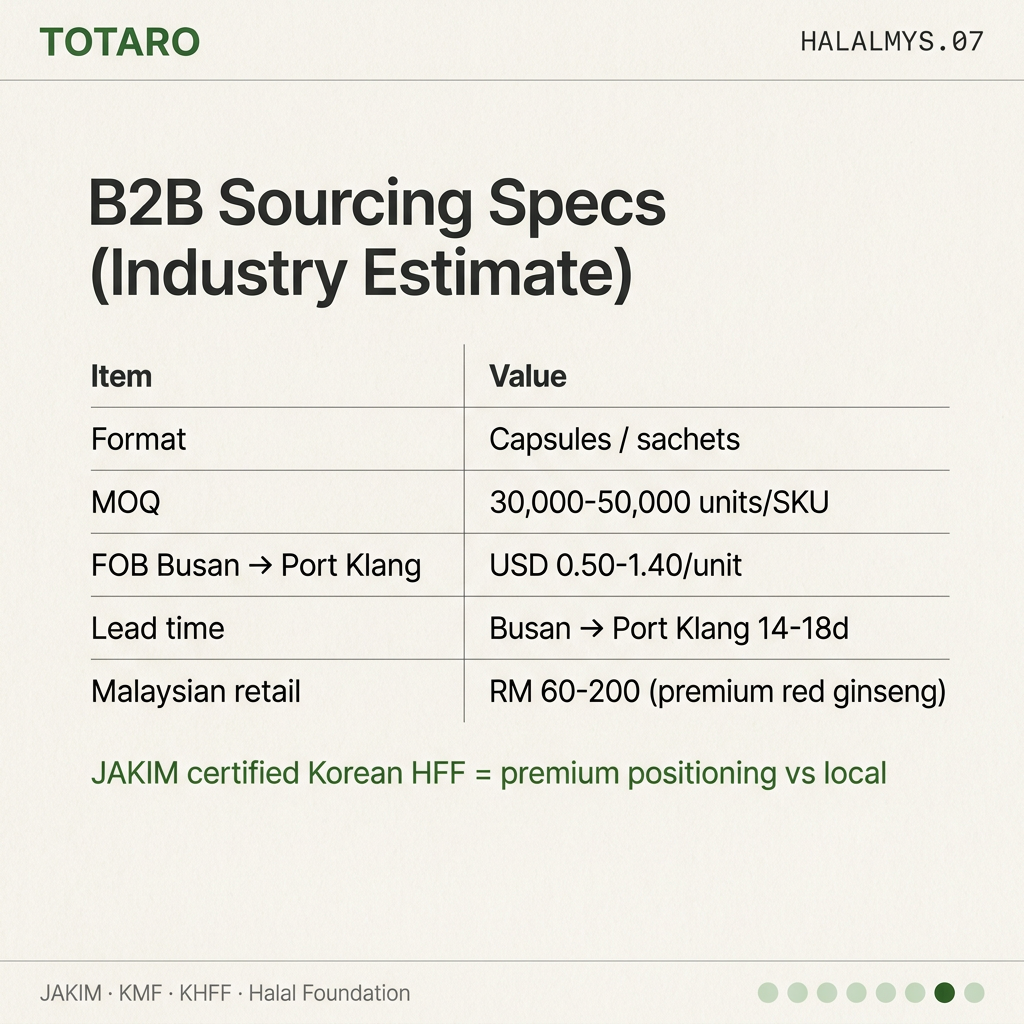
Industry estimate for HFF capsules/sachets: MOQ 30,000-50,000 units/SKU, FOB Busan→Port Klang USD 0.50-1.40/unit, 2026 early. Direct RFQ required. Malaysian retail RM 60-200 for premium Korean red ginseng 30-day pack.
What to Do This Week
(1) Confirm Korean facility holds valid KMF halal certification — without it, JAKIM application starts from scratch. (2) Internal audit against JAKIM 11-pillar requirements — fix gaps before submission. (3) Identify a Malaysian distributor partner — local presence speeds the audit visit. (4) For probiotic SKUs, prepare strain-level safety and CFU stability data before application. JAKIM = ASEAN passport. 12 months investment, multi-country payoff.
Sources
Related Guides
Ask AI to find your Korean food supplier
Describe what you need in plain language — get matched with verified suppliers in seconds.
Try AI Supplier Search