카드 1 / 8
Halal-Certified Korean Food: Sourcing Guide for Middle East & SEA
Halal-Certified Korean Food: Middle East & SEA Sourcing Guide
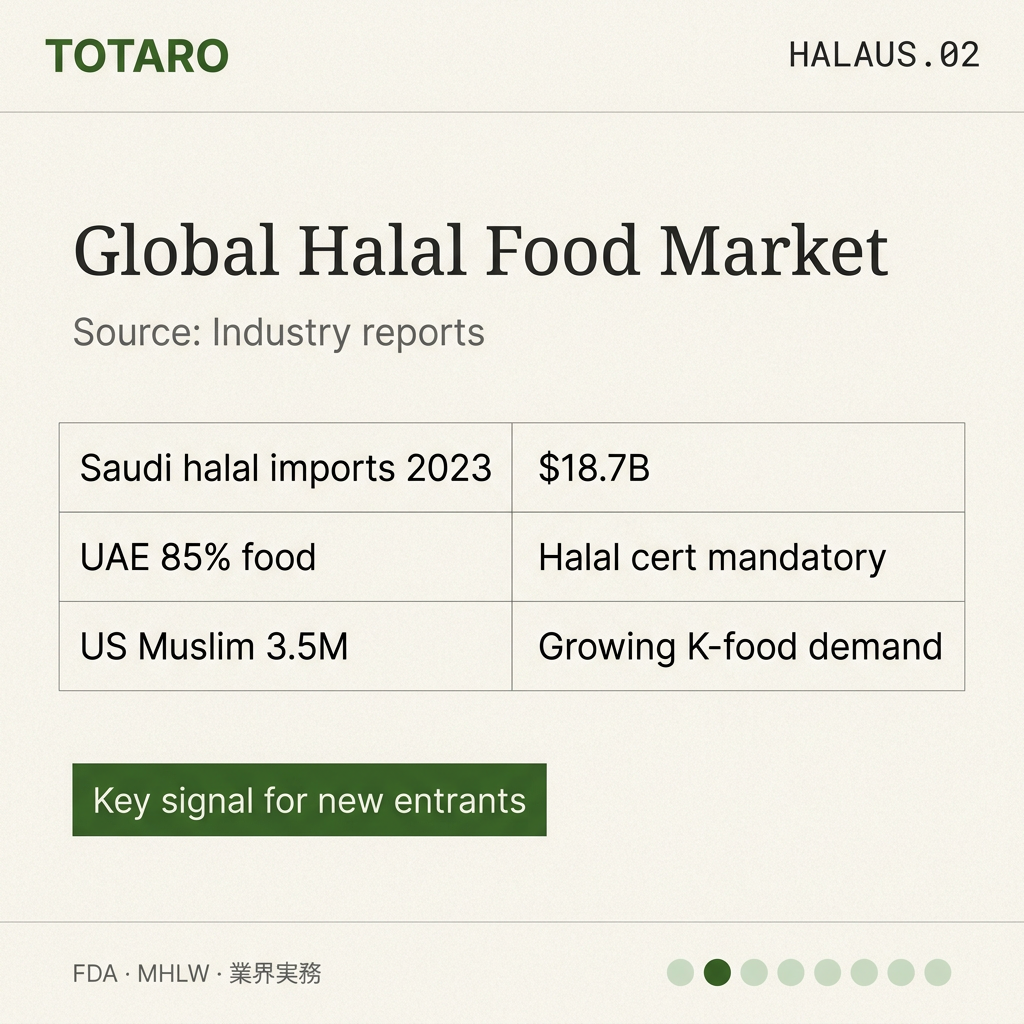
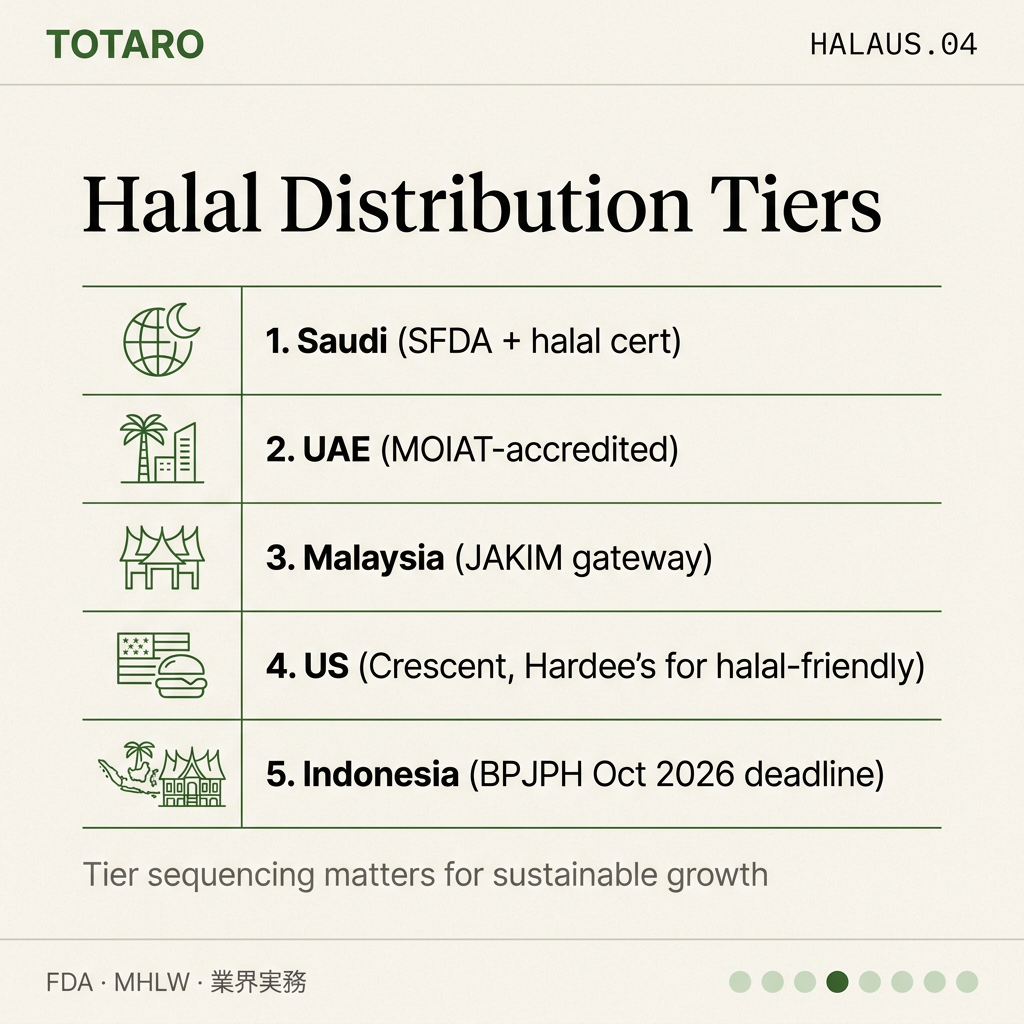
Halal Korean food exports crossed $1.8B in 2025, with Indonesia ($420M), UAE ($380M), and Saudi Arabia ($280M) leading demand. The opportunity: Korean cultural prestige + Halal certification = premium positioning few competitors offer.
This guide is the practical map for buyers in Middle East, Malaysia, Indonesia, and SEA.
Why this matters
The Halal market is structurally underserved by Korean exporters. Most Korean food brands focus on East Asia + Western markets first. The few who invest in Halal certification (Nongshim, Samyang, Daesang, Pulmuone) gain disproportionate market share.
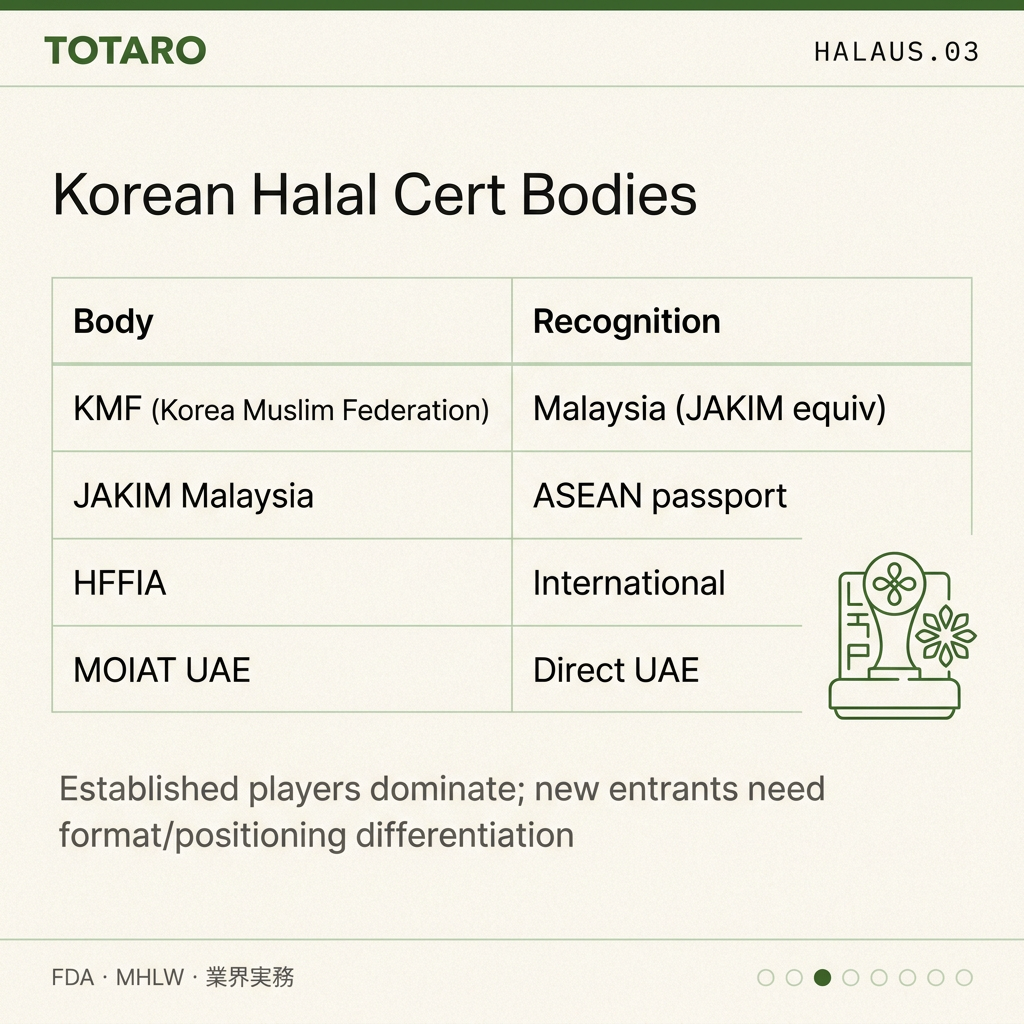
Halal certification bodies in Korea
| Body | Recognized in | Cost | Timeline |
|---|---|---|---|
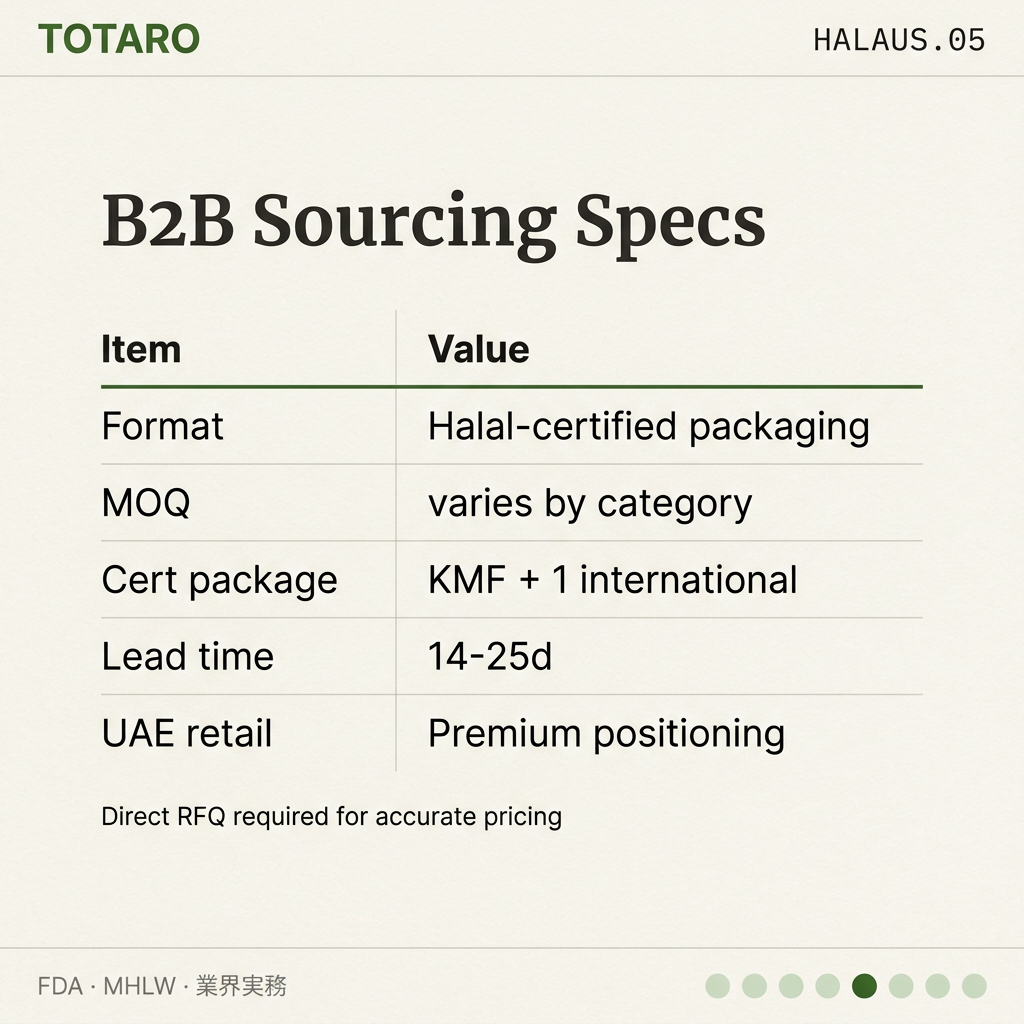
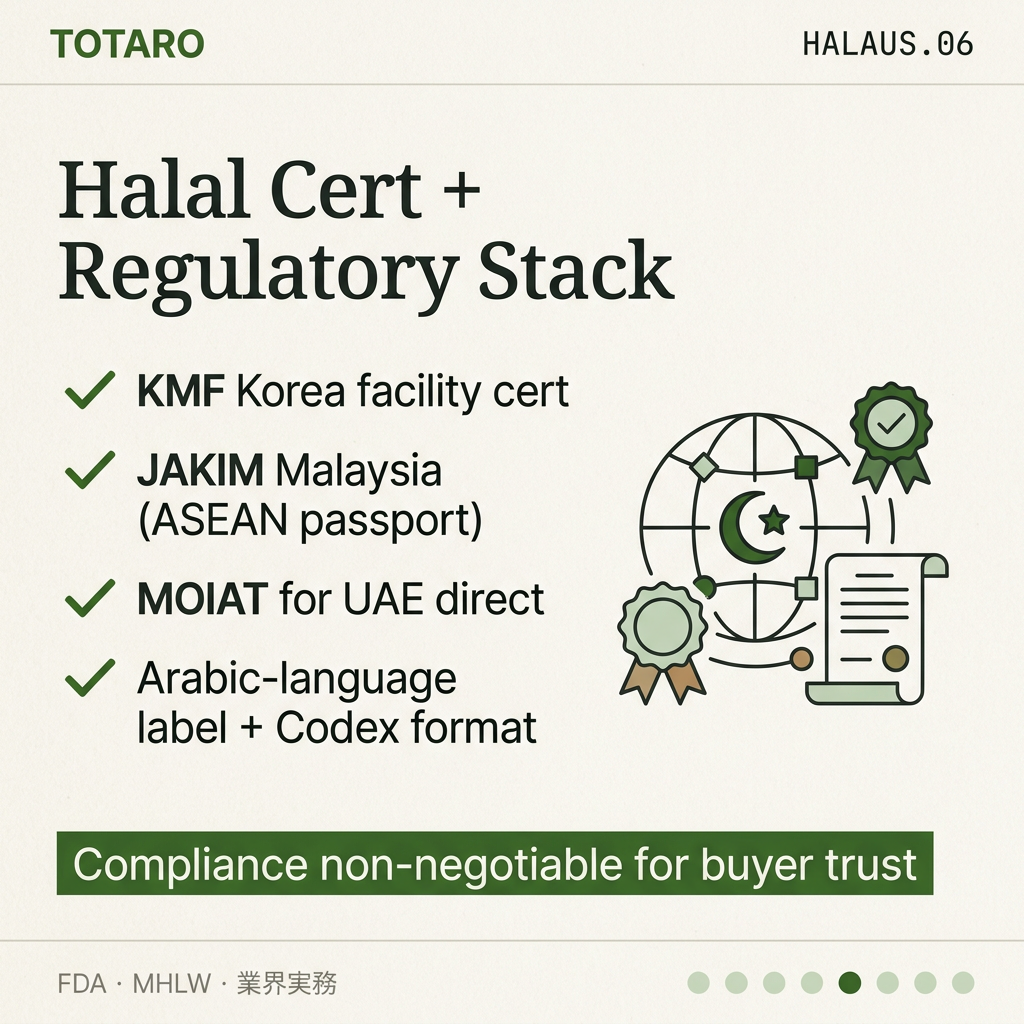
| KMF (Korea Muslim Federation) | Most countries | $5K-15K | 6-12 months |
| JAKIM (Malaysia) | Malaysia, Indonesia (some) | $10K-25K | 9-18 months (foreign) |
| MUI (Indonesia) | Indonesia | $8K-20K | 12-24 months |
| Emirates Authority for Standardization (UAE) | UAE, GCC | $15K-30K | 12-18 months |
KMF is most common; JAKIM/MUI are stricter and required for some buyers.
Top Halal-certified Korean OEMs
Tier 1 (large-scale, multiple Halal certs):
- Nongshim — Halal Shin Ramyun, full KMF + JAKIM
- Samyang — Halal Buldak (selected SKUs), KMF
- Daesang (청정원) — Gochujang, kimchi, sauces
- Pulmuone — Tofu, kimchi, vegan products
Tier 2 (specialized + flexible MOQ):
- Hansung Food — kimchi, fermented foods
- Sajo Industries — frozen, processed foods
- Crown Confectionery — selected snack lines
Categories with strong Halal demand
| Category | Demand level | Notes |
|---|---|---|
| Instant noodles | Very high | Buldak especially viral in Indonesia |
| Snacks (chips, biscuits) | High | Honey butter chip popular |
| Kimchi (vegan / no-fish) | High | Halal kimchi must omit fish sauce |
| Sauces (gochujang, soy) | Medium | Verify alcohol use in fermentation |
| Frozen seafood | Medium | Specialty importers |
| Beverages (yogurt drinks) | Growing | Functional health framing |
Critical compliance points
- Kimchi: standard kimchi uses fish sauce (not Halal). Halal kimchi uses only seaweed/fermented vegetables.
- Gochujang: fermentation produces trace alcohol (<0.5%). Some authorities allow, others don't.
- Soy sauce: traditional brewing has alcohol byproduct. Halal versions exist (Sempio, Daesang).
- Cross-contamination: facility must have Halal-only line OR thorough cleaning protocols.
What to do this week
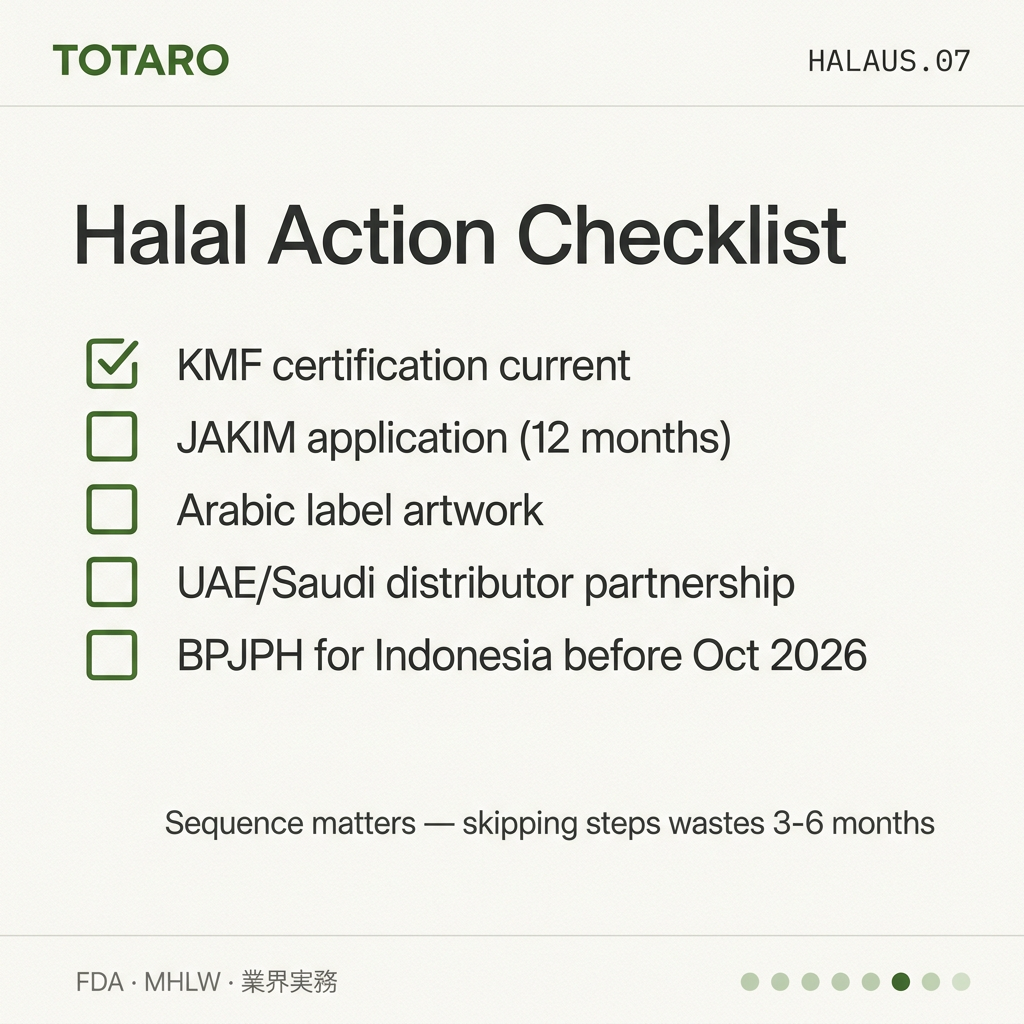
- Verify cert scope, not just cert existence. "Halal certified" can be one SKU, not whole facility.
- Match cert to your destination. UAE buyer often needs UAE-recognized cert specifically.
- Audit Halal-only line. Visit (or video tour) facility to confirm no cross-contamination.
- Build slow. Halal market trust is built over years, not quarters.
How TOTARO can help
TOTARO supplier database includes Halal certification metadata (KMF, JAKIM, MUI, EAS). Filter Korean suppliers by your exact certification requirement.
Find Halal-certified Korean suppliers: TOTARO →
Related Guides
Ask AI to find your Korean food supplier
Describe what you need in plain language — get matched with verified suppliers in seconds.
Try AI Supplier Search