카드 1 / 8
How to Import Korean Food into the USA: Complete 2026 Guide
How to Import Korean Food into the USA: Complete 2026 Guide
The US K-food market hit $1.8B in 2025 (+13.2% YoY), overtaking China as the #1 export destination. If you're starting an importing business or expanding into Korean food, this is the practical roadmap.
Step 1: Decide your structure
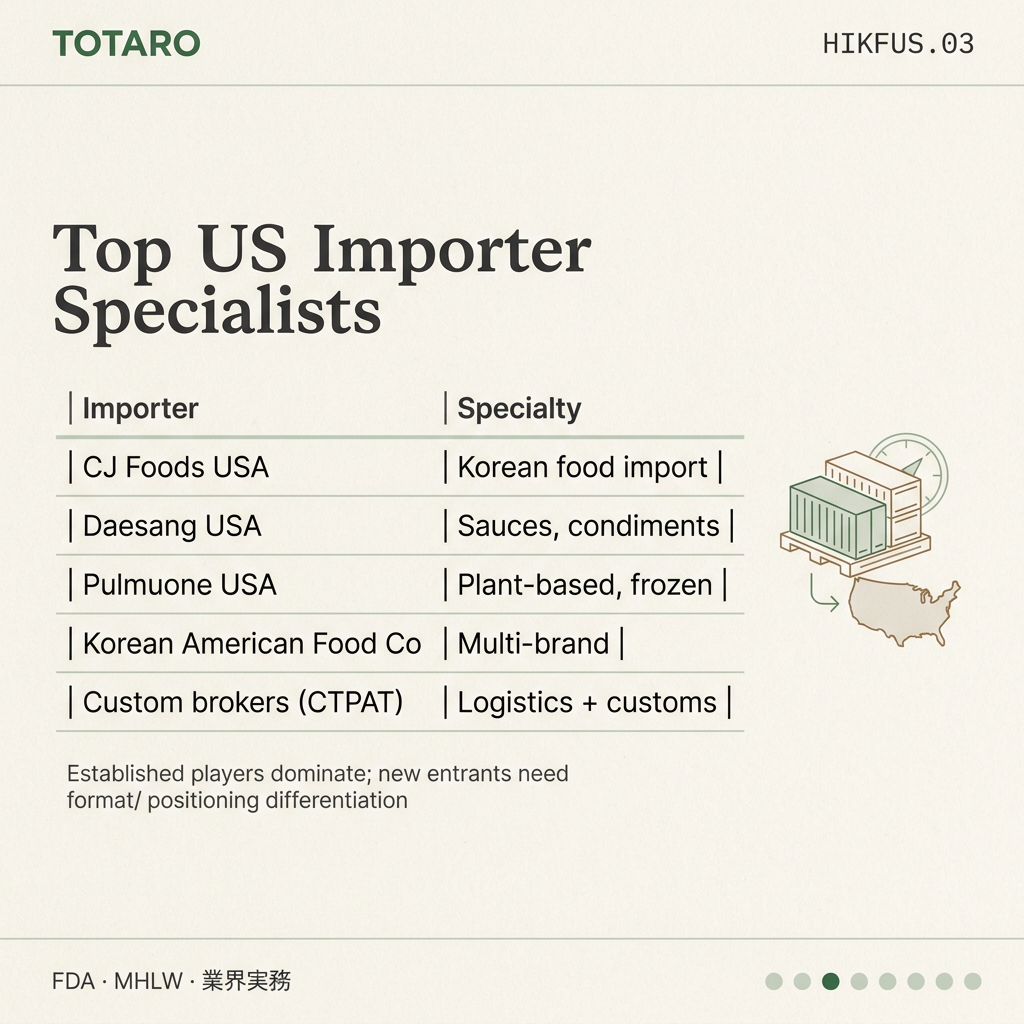
Option A: Direct import (you become the importer)
- You take title, file FDA, ship, distribute
- Best for: 5+ container/year volume
- Capital: $50K-200K initial setup
Option B: Buy from US-based wholesaler
- They've imported; you buy domestic
- Best for: small volume, e-commerce, restaurant supply
- Capital: $5K-30K initial
Option C: Distribution agreement with Korean exporter
- They handle export; you handle US distribution
- Best for: brand-led launches
- Capital: varies
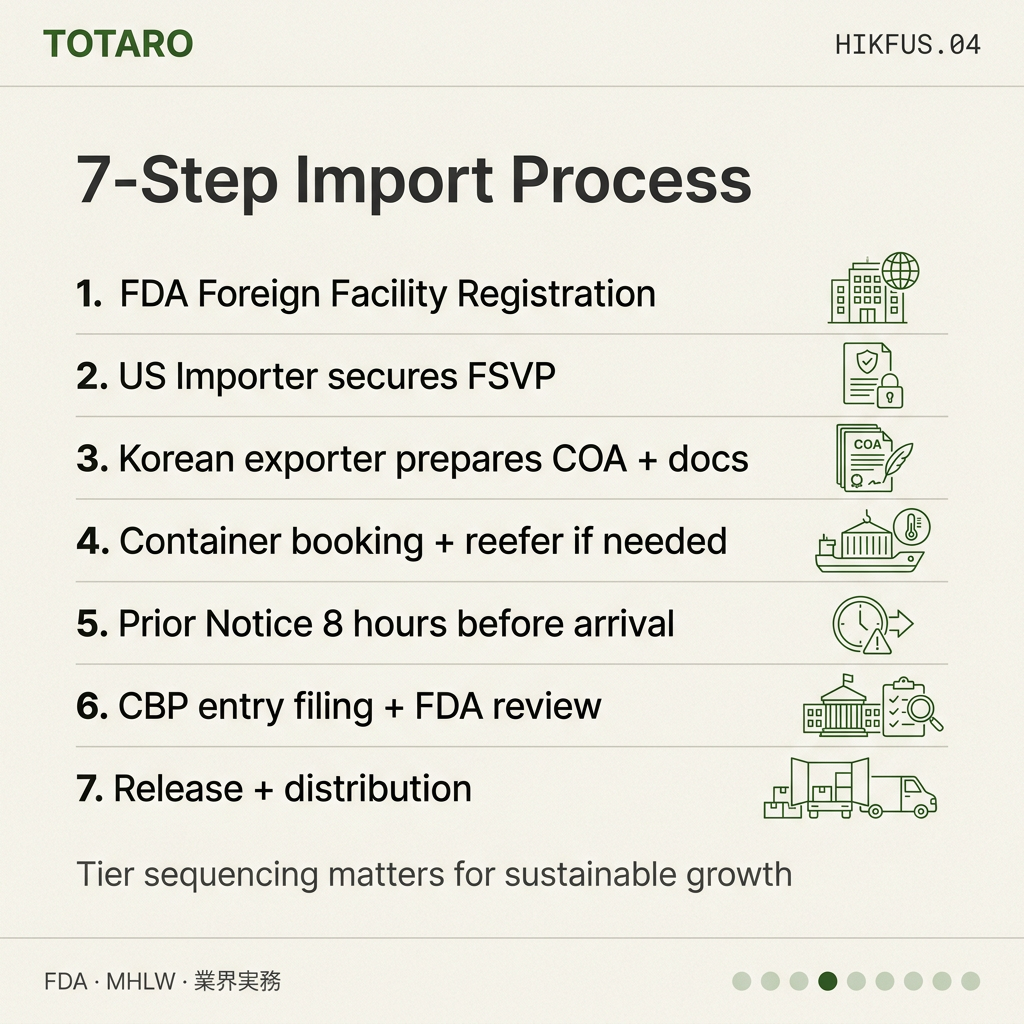
Step 2: FDA registration (mandatory)
If you're the importer (Option A):
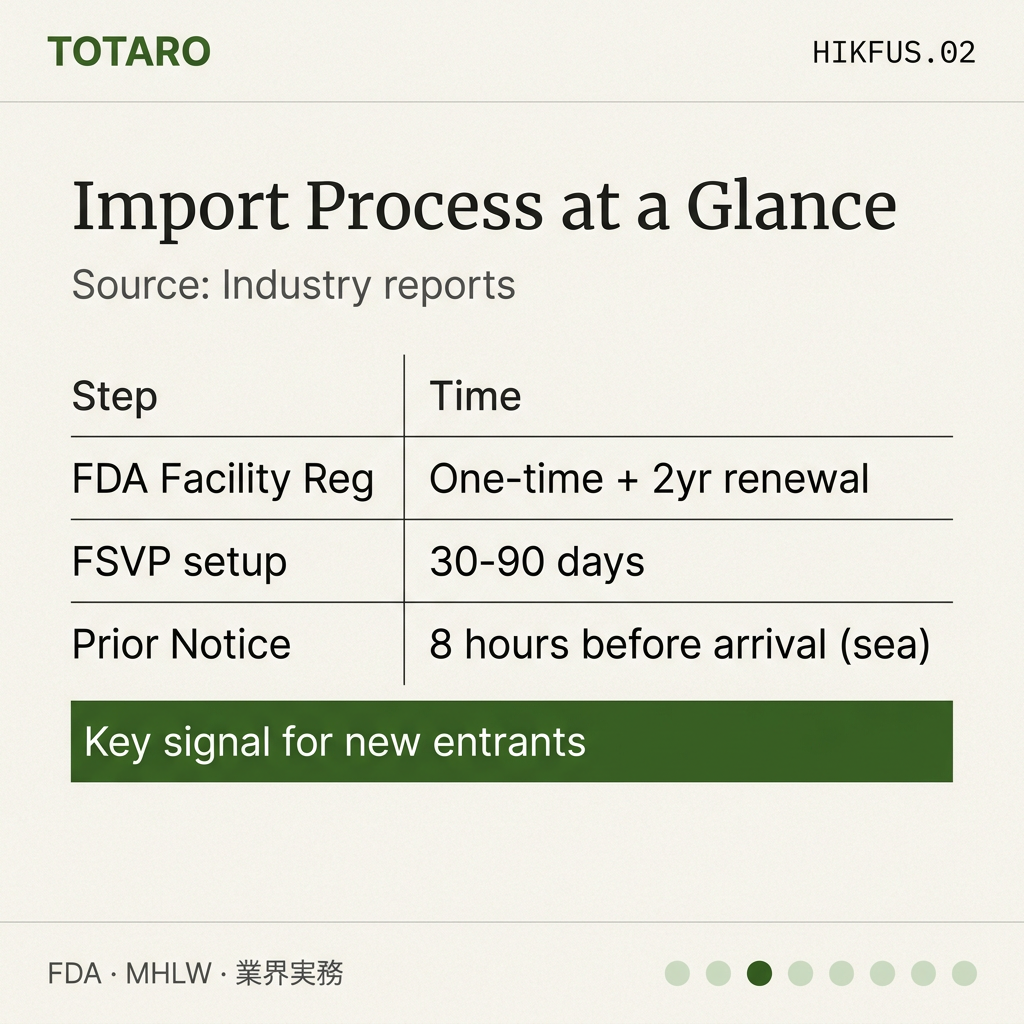
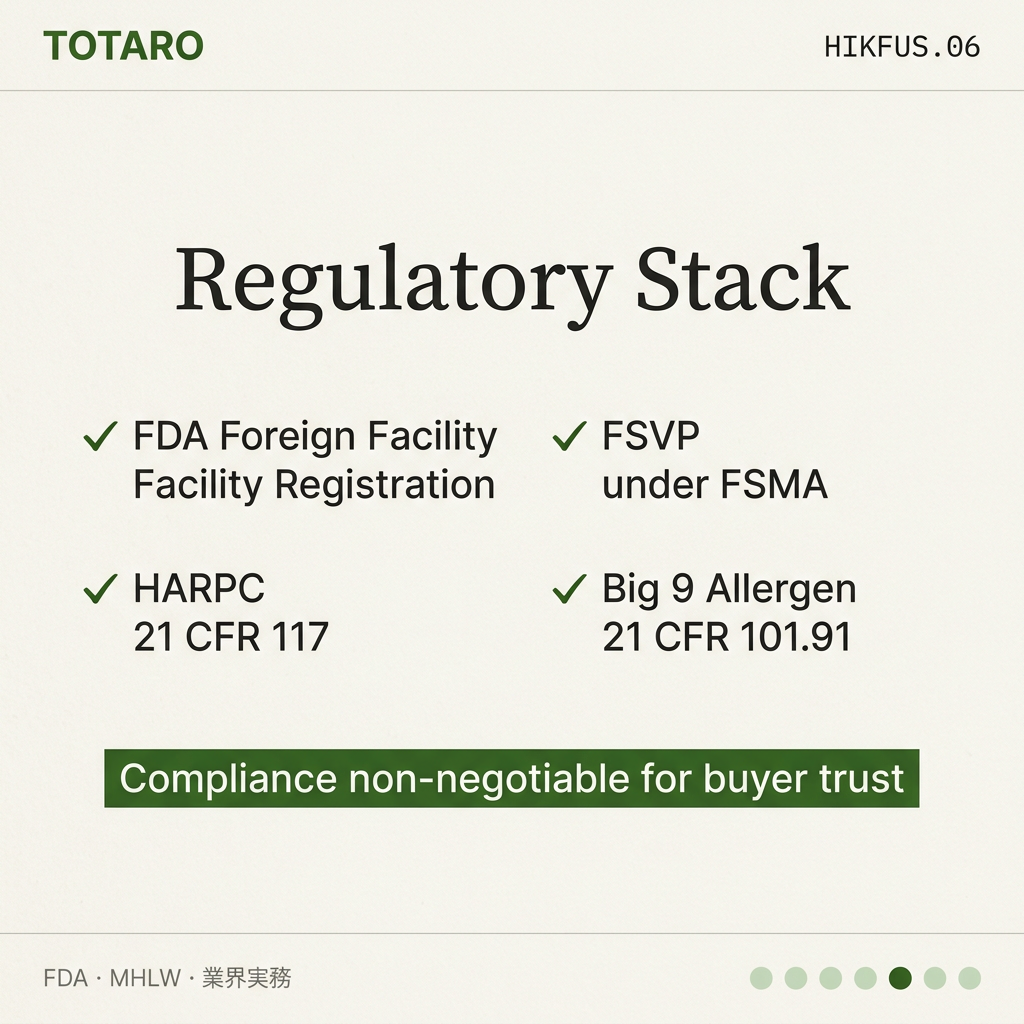
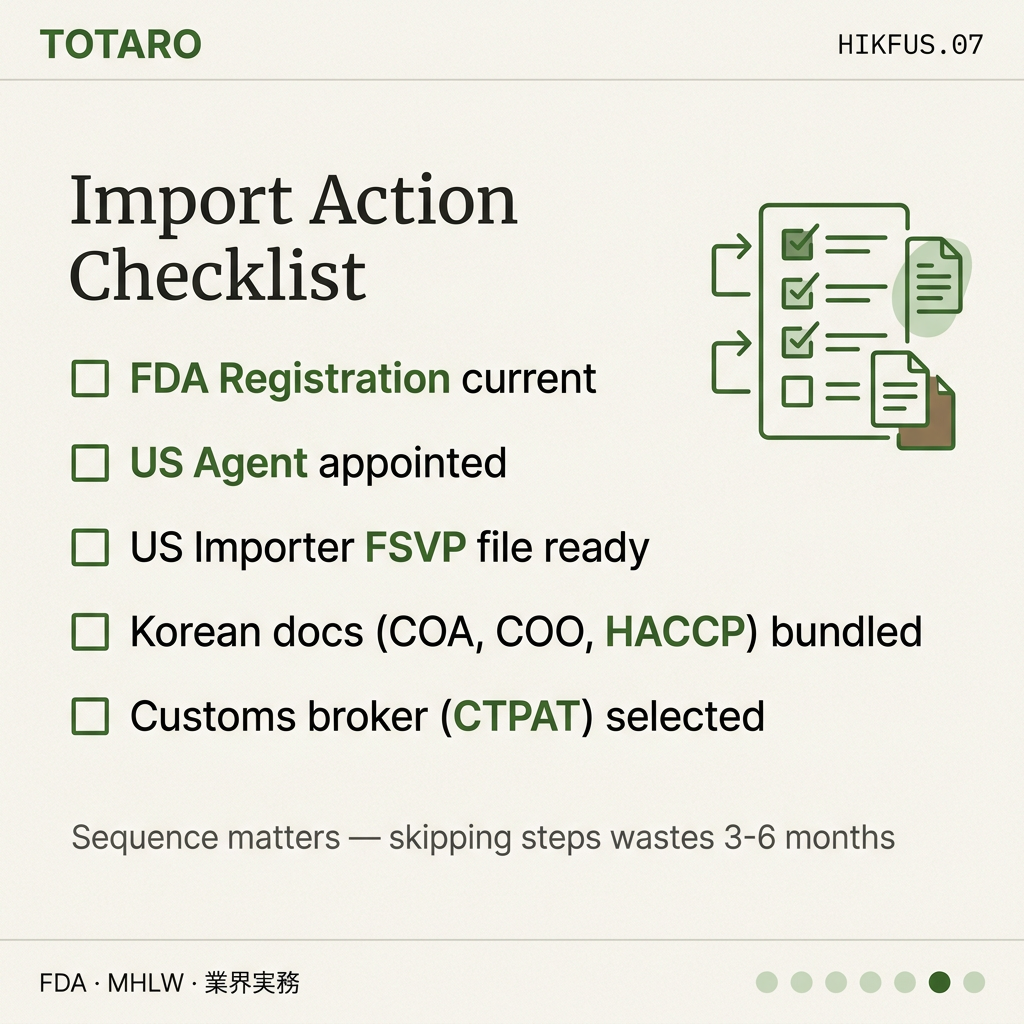
- Register your facility at FDA Food Facility Registration (free, online, biennial renewal)
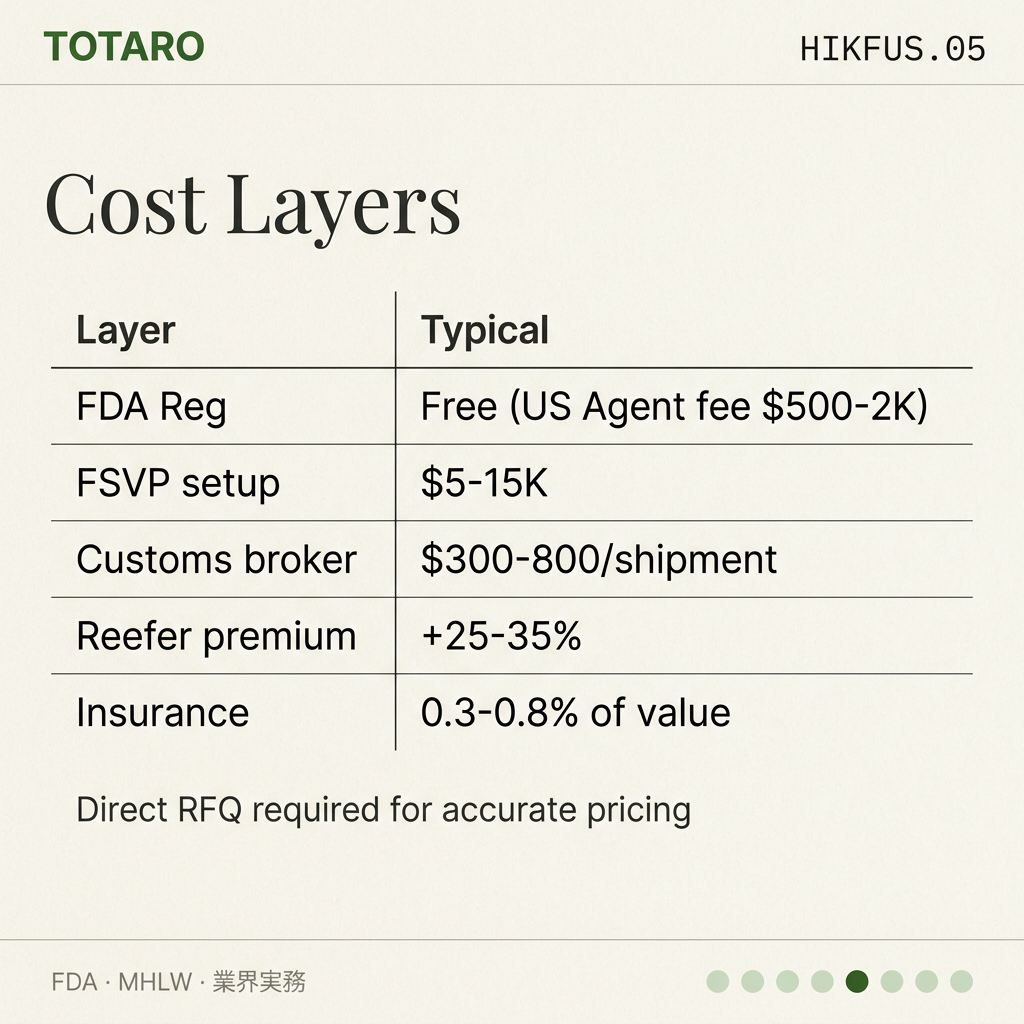
- Designate a US Agent — required by FDA, can be hired ($300-1500/year)
- Get your Importer of Record number through Customs broker
Korean supplier must also:
- Be registered with FDA Food Facility Registration
- Submit Prior Notice for each shipment (electronic, 8-hour minimum before arrival)
Step 3: FSVP (Foreign Supplier Verification Program)
Since 2017, US importers must verify their foreign suppliers comply with US food safety law. Required FSVP package:
- Hazard analysis for each Korean supplier
- Supplier verification activities (audits, sampling)
- Corrective action plans
- Documentation kept for 2 years minimum
Either:
- Hire an FSVP "Qualified Individual" ($2K-8K per supplier annually), OR
- Train someone in-house (PCQI training: $1500-3000)
Step 4: Customs clearance
For each shipment:
- Customs broker entry ($150-400 per shipment)
- Duties: typically 0-6.4% on Korean food (US-Korea FTA reduces most to 0%)
- HTS codes: critical accuracy
- CBP exam fee if randomly selected ($150-250)
Step 5: Distribution
After customs clears:
- Cold chain logistics if applicable (see our Cold Chain guide)
- Warehousing: $0.50-1.50 per case/month
- Trucking to retail/wholesale: standard LTL rates
- Distributor partnership (if going to mainstream retail)
Step 6: Sales channels
Realistic ranking by entry difficulty:
- E-commerce / Amazon — easiest entry, low margin
- Korean grocery stores (H Mart, Zion Market) — cultural fit, low margin
- Asian grocery stores — moderate
- Specialty retail (Whole Foods, Wegmans) — premium, high entry
- Mainstream supermarkets (Costco, Target) — hardest entry, scale margin
- Restaurant/Food service — relationship-driven, can be lucrative
Common beginner mistakes
- Skipping FSVP. FDA finds out when there's an issue; consequences include detention and refusal.
- Underestimating cold chain. Frozen mandu = $40K loss if breach.
- No distribution plan. Importing first, figuring out who sells later.
- Wrong HTS codes. $5K+ in penalties from misclassification.
- Cherry-picking suppliers without verification. Cert fraud is real; verification matters.
What to do this week
- Decide structure (Direct vs Distributor vs Wholesale).
- If Direct: start FDA registration + customs broker selection.
- Build your supplier list. Verify HACCP, FSSC22000, export experience.
- Calculate your unit economics. Margin minus FDA + customs + cold chain + warehousing must clear 25%+ for sustainability.
How TOTARO can help
TOTARO matches you to verified Korean suppliers ready for US export — pre-validated for HACCP, FSVP-ready, cold chain capable.
Start your import journey: TOTARO →
Related Guides
Korean Jerusalem Artichoke + Psyllium Husk Halal Enzyme Supplement for the US: The SlimFox-Style Constipation + Weight Management Combo (2026)
Related Guides →Korean Jerusalem Artichoke for Constipation: 14-19% Inulin Content and Clinical Evidence on Gut Health (2026)
Related Guides →Korean Food MOQ Guide: Negotiation Tips & Container vs LCL
Related Guides →Ask AI to find your Korean food supplier
Describe what you need in plain language — get matched with verified suppliers in seconds.
Try AI Supplier Search