카드 1 / 8
Korean Food MOQ Guide: Negotiation Tips & Container vs LCL
Korean Food MOQ Guide: Negotiation Tips & LCL Options
The fastest way to lose interest from a Korean supplier is asking "what's your MOQ?" without context. This guide gives you realistic ranges per category, negotiation tactics that work, and when LCL (Less than Container Load) makes sense.
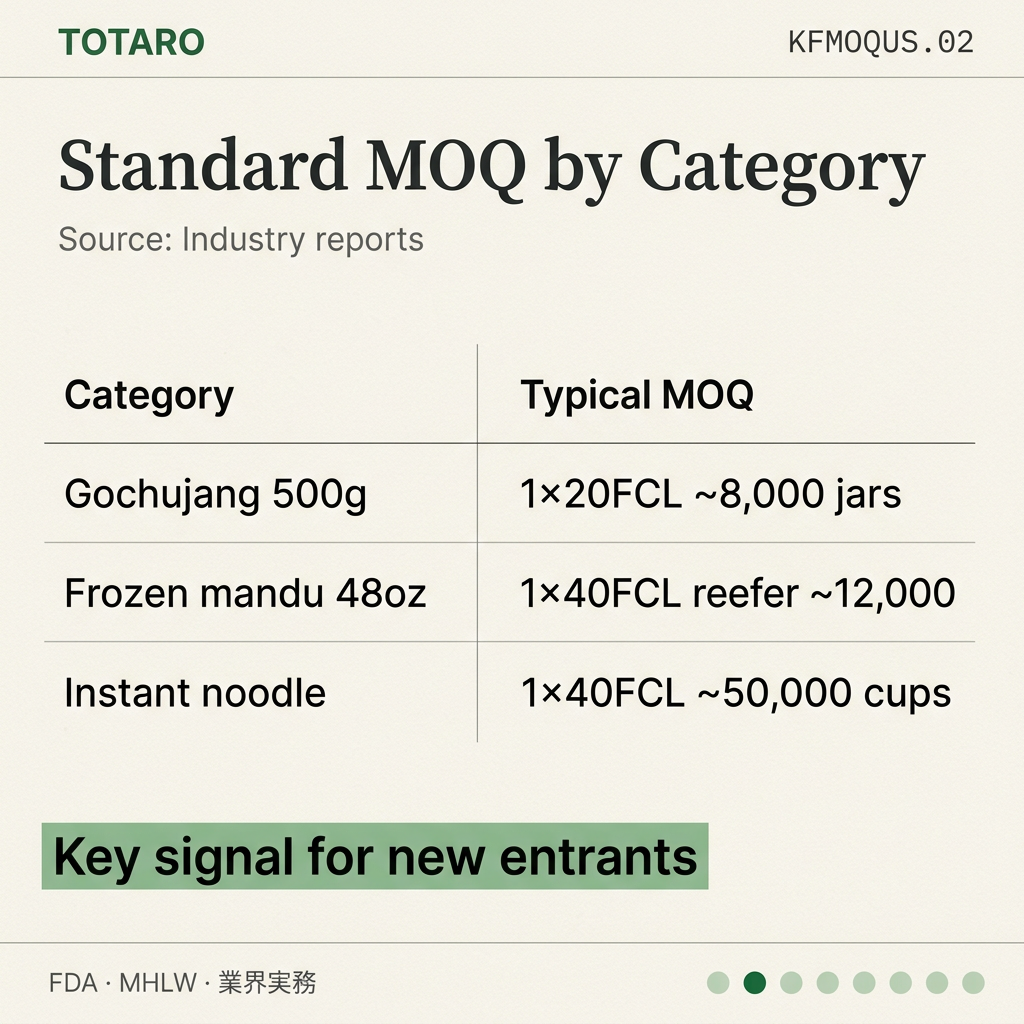
Realistic MOQ ranges (per category)
| Category | Tier 1 OEM | Mid-size OEM | Specialty |
|---|---|---|---|
| Snacks | 1 container (20'/40') | 500-2000 cases | 200-500 cases |
| Instant noodles | 1 container | 1000-3000 cases | Often 1+ container |
| Gochujang/sauces | 1 container | 500-1500 cases | 300-800 cases |
| Kimchi (refrigerated) | 1 container | 300-800 cases | 200 cases |
| Health food/supplements | 1000-5000 units | 500-1000 units | 100-500 units |
| Beverages | 1 container | 500-2000 cases | 300 cases |
| Frozen mandu/dumplings | 1 container | 500-1500 cases | 300 cases |
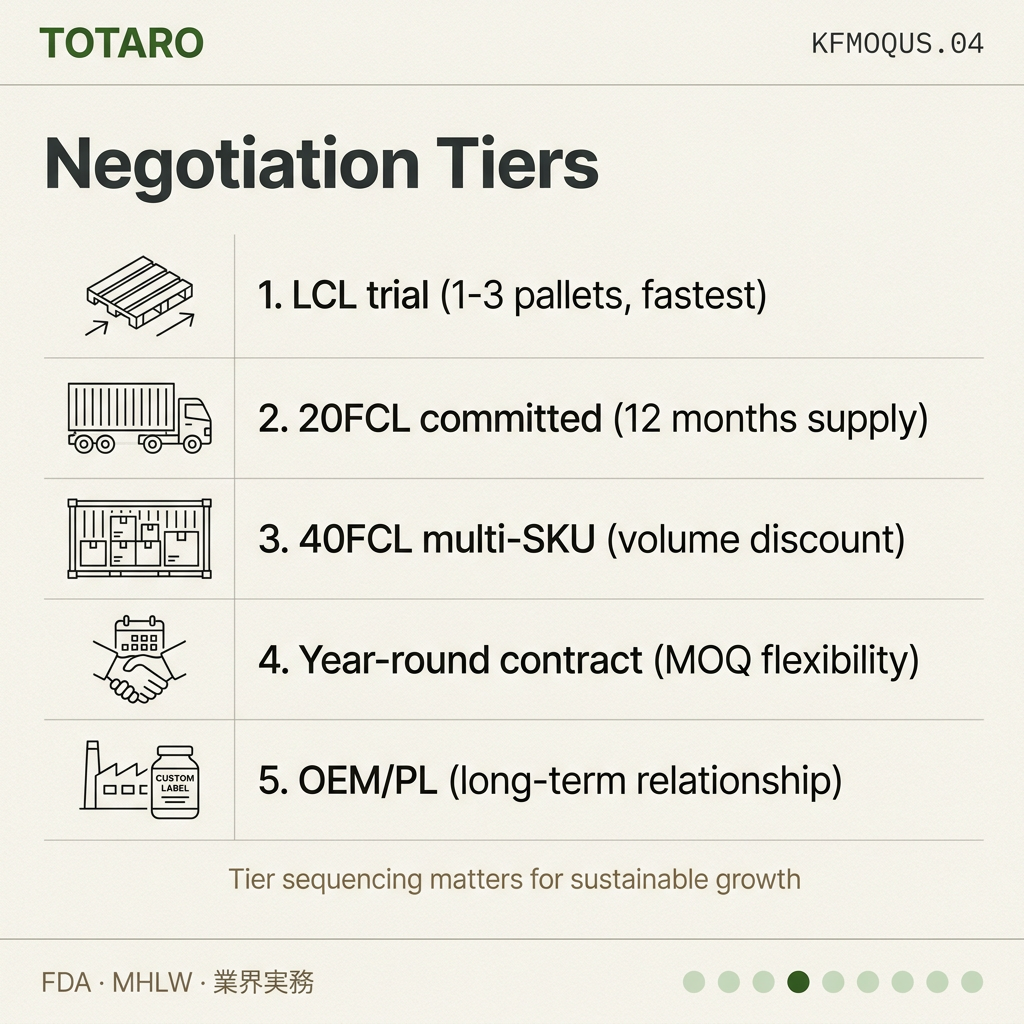
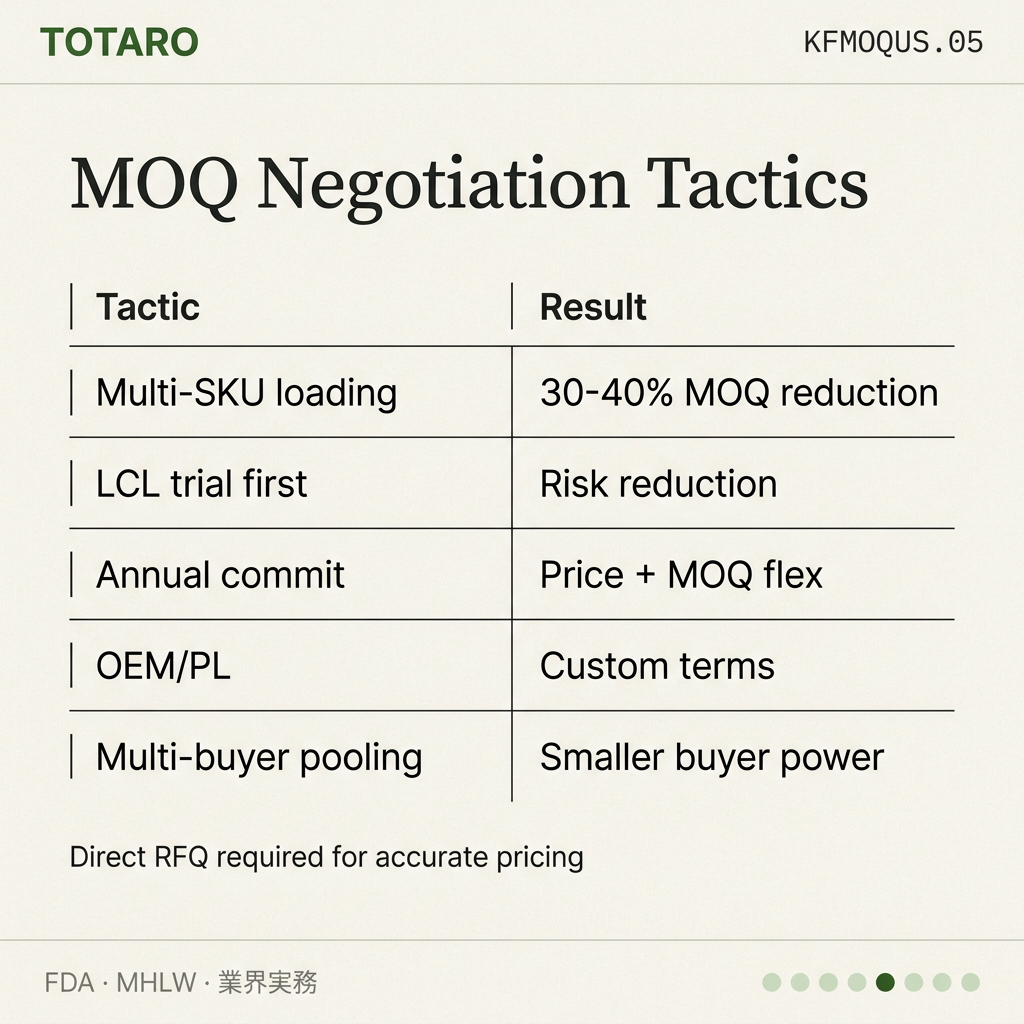
Negotiation tactics that work
1. Bundle multiple SKUs. Big 4 OEMs flex on per-SKU MOQ when you commit to total order >$80K.
2. Commit to multi-shipment contract. Quarterly purchase agreement = stronger MOQ negotiation than single PO.
3. Pay upfront vs L/C. Cash discount unlocks 20-30% MOQ flexibility for mid-size OEMs.
4. Provide marketing commitment. Photo agreements, social posts, retail launch promises = cost OEMs reach by sharing budget.
5. Use seasonal timing. Q1 Korean New Year is slow season; Korean OEMs flex MOQ to maintain factory utilization.
When LCL (Less than Container Load) makes sense
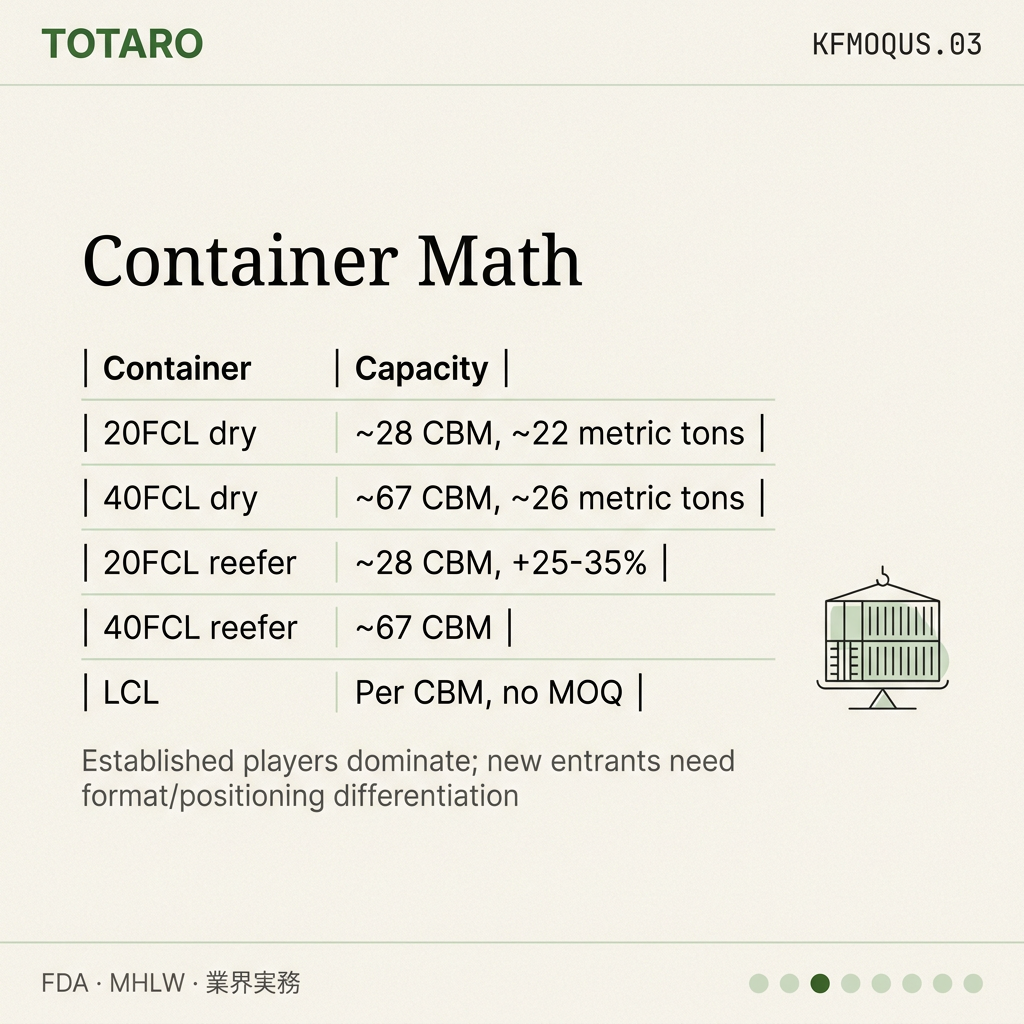
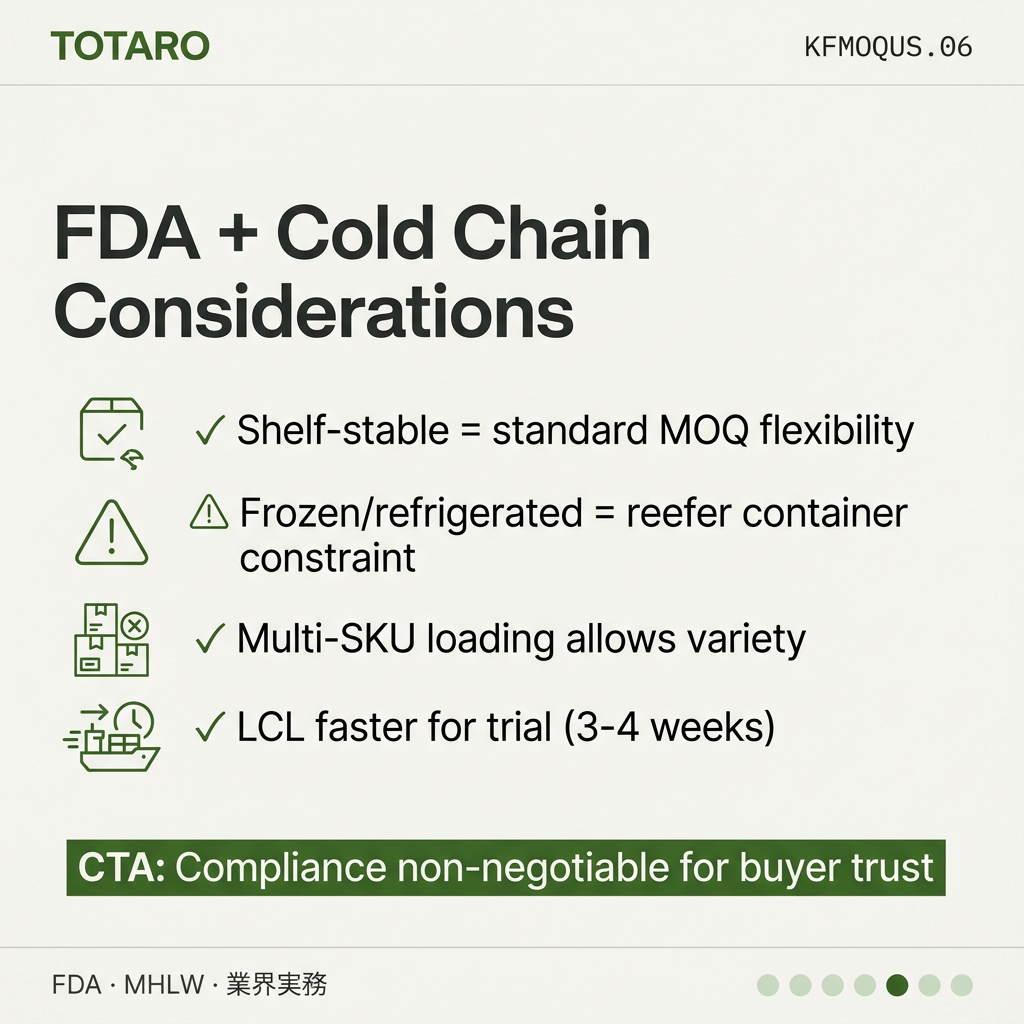
LCL = sharing container with other importers. Pros: smaller MOQ. Cons: more handling, more delays, more risk.
Good fit for LCL:
- Testing new SKU before scaling
- Halal/specialty items where 1 container is overkill
- Dry goods (snacks, instant noodles) — survive handling
- 100-500 cases per shipment
Bad fit for LCL:
- Refrigerated/frozen — temperature integrity at risk
- Premium items — extra handling = damage rate up
- Time-sensitive — LCL has 5-15 day longer transit
5 importer case studies (anonymized)
Case 1: Small US distributor (3 SKUs / quarter)
- Started: 200 cases LCL → built to 1 container after 18 months
- Tactic: bundled SKUs across 3 OEMs
Case 2: Whole Foods regional buyer (premium gochujang)
- Started: 500 cases (committed to 4 quarterly orders)
- Tactic: marketing partnership, photo agreement
Case 3: E-commerce (Buldak focused)
- Started: 1 container minimum (Samyang non-flexible)
- Tactic: jumped from sample to full container based on Q1 forecast
Case 4: UAE specialty retailer (Halal kimchi)
- Started: 100 cases (Hansung Foods flexible OEM)
- Tactic: paid 100% upfront, secured Halal-only production line
Case 5: Multi-product Asian grocery chain
- Started: Master agreement with 5 OEMs covering 30 SKUs
- Tactic: leveraged total volume across portfolio
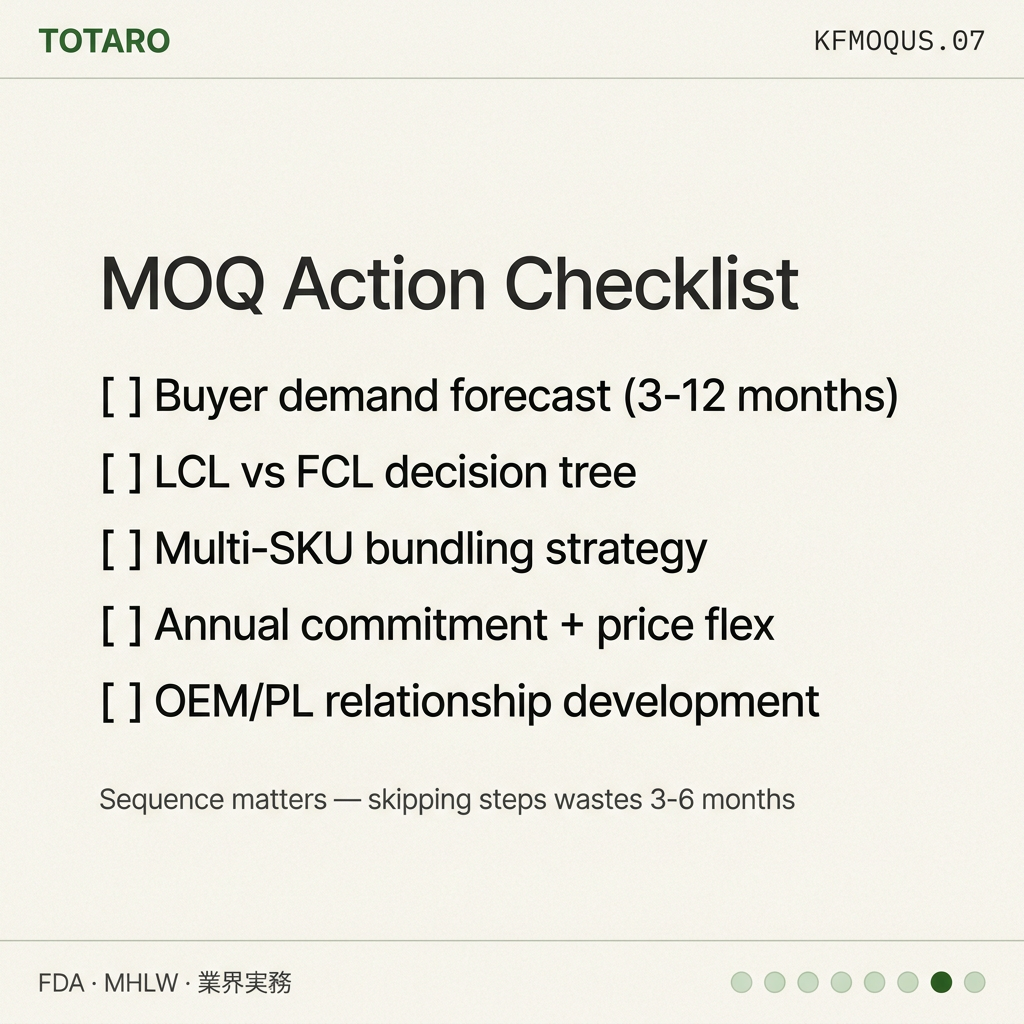
What to do this week
- Decide your "test container" strategy. Single SKU 1 container, or multi-SKU bundle?
- Calculate true cost per case. LCL reveals extra handling costs.
- Send detailed RFQ. OEMs flex MOQ for high-context buyers, push back on tire-kickers.
- Build relationships, not transactions. Every supplier values multi-quarter buyers.
How TOTARO can help
TOTARO supplier database includes MOQ flexibility metadata. Filter Korean OEMs by realistic MOQ for your category.
Find flexible MOQ Korean suppliers: TOTARO →
Related Guides
Korean Jerusalem Artichoke + Psyllium Husk Halal Enzyme Supplement for the US: The SlimFox-Style Constipation + Weight Management Combo (2026)
Related Guides →Korean Jerusalem Artichoke for Constipation: 14-19% Inulin Content and Clinical Evidence on Gut Health (2026)
Related Guides →How to Import Korean Food into the USA: Complete 2026 Guide
Related Guides →Ask AI to find your Korean food supplier
Describe what you need in plain language — get matched with verified suppliers in seconds.
Try AI Supplier Search