카드 1 / 8
Cold Chain Logistics for Korean Food Export: A Practical Playbook
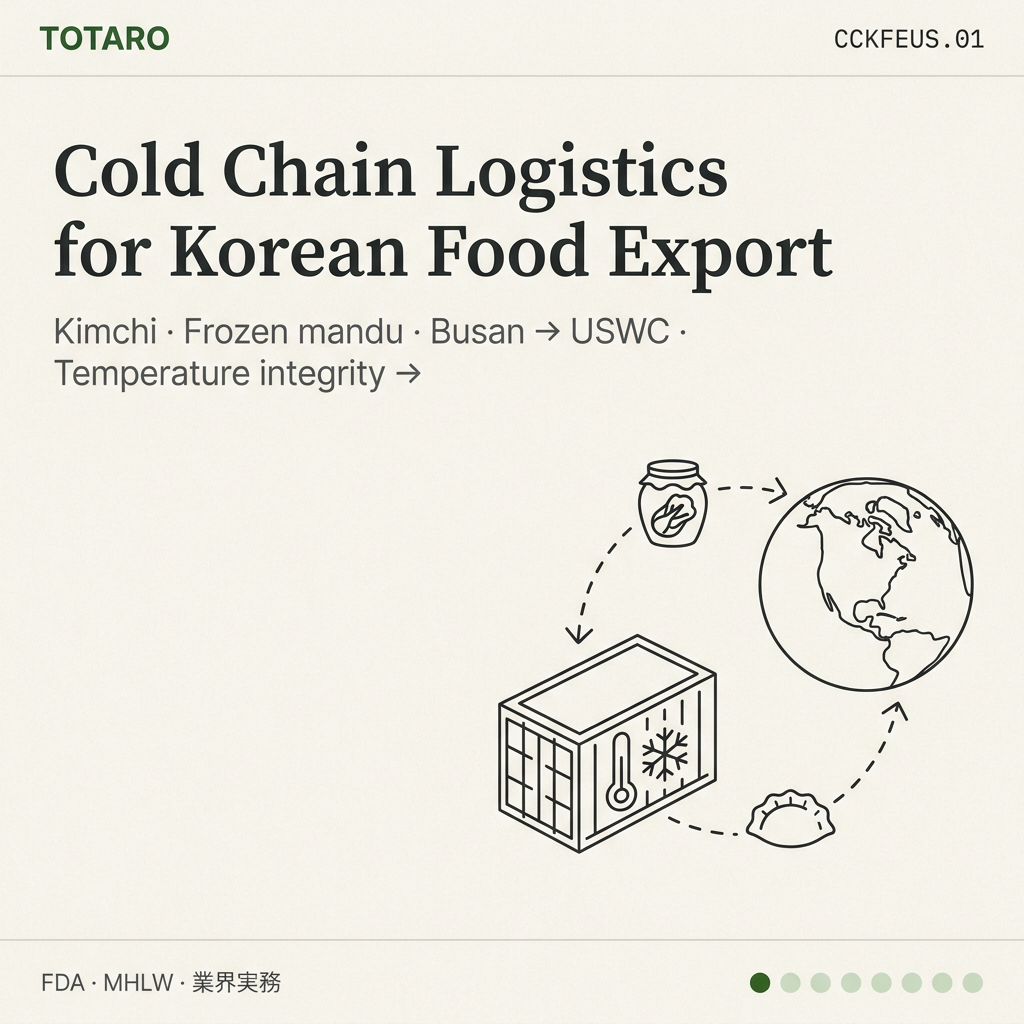
Cold Chain Logistics for Korean Food Export
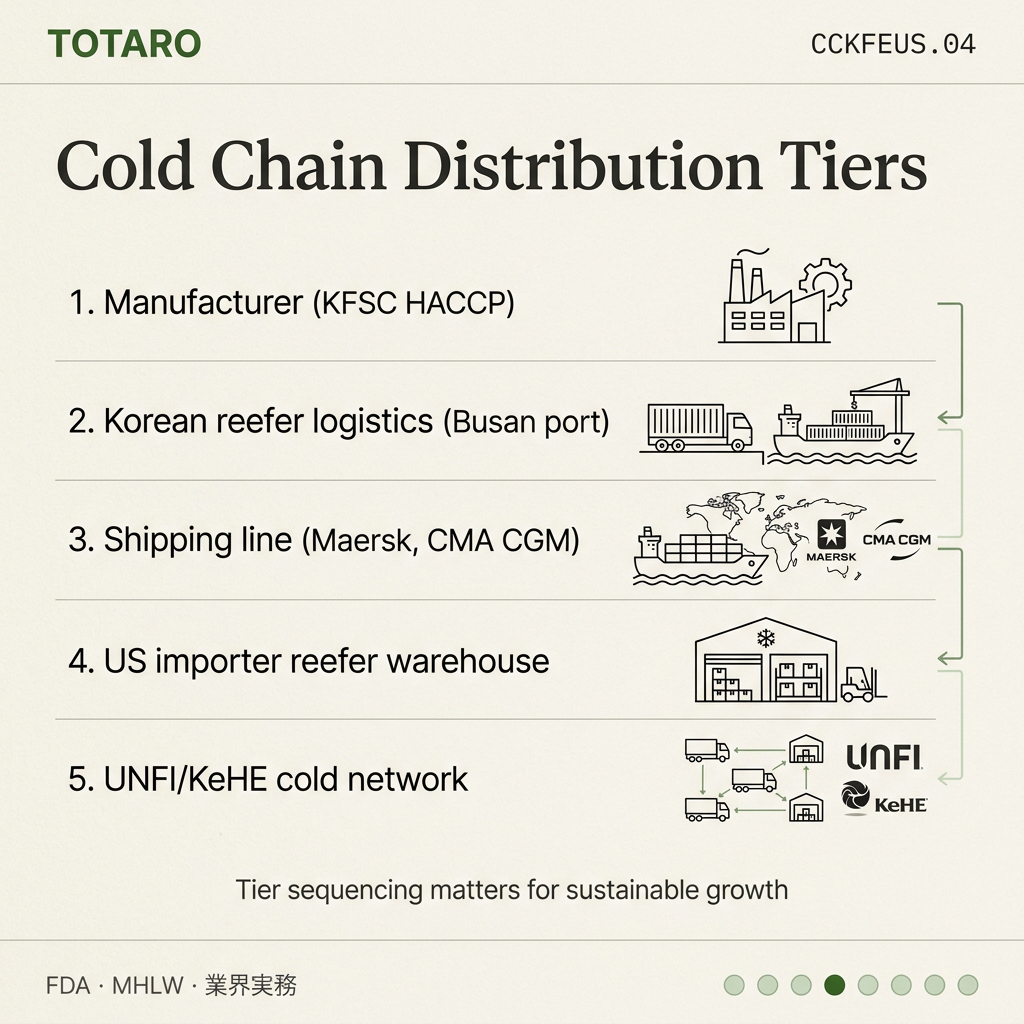
Korean food exports lean on cold chain in ways that stable categories (snacks, instant noodles) do not. Kimchi, frozen mandu, premium tofu, and cold-storage sauces all live or die on temperature integrity from Busan to your warehouse door.
This is the operational guide: container types, temperature specs, common failure points, and how to verify a Korean supplier's cold chain capacity before you commit.
Why this matters
A single temperature breach during a 30-45 day ocean transit destroys product value. Recall cost (if it reaches retail) is 5-10x order value. Your insurance covers some, not all.
Korean OEMs vary widely in cold chain sophistication, so treat it as something to verify per factory rather than assume. Ask what the plant monitors, how it logs temperature, and who carries the risk once the container leaves.
Temperature requirements by category
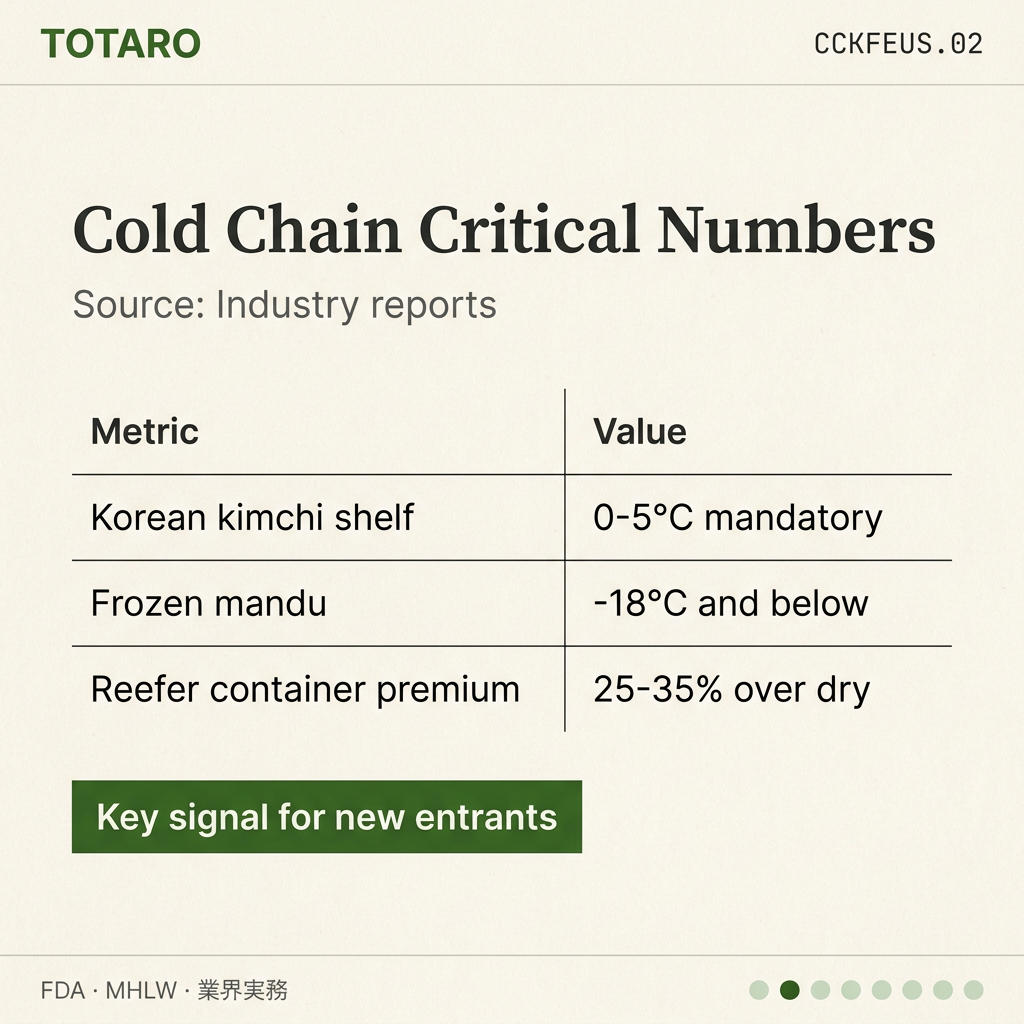
| Category | Storage | Transport | Critical breach point |
|---|---|---|---|
| Kimchi (fermenting) | -2°C to 4°C | 0°C to 4°C | >7°C accelerates fermentation |
| Frozen mandu | -18°C | -18°C ±2°C | -10°C texture loss |
| Premium tofu | 0°C to 4°C | 0°C to 4°C | >6°C bacterial growth |
| Refrigerated sauces (low-acid) | 0°C to 4°C | 0°C to 4°C | >7°C requires recall |
| Frozen seafood / fish cake | -18°C | -18°C ±2°C | Critical for export |
| Ice cream | -25°C | -25°C ±3°C | Recrystallization at >-15°C |
Container types
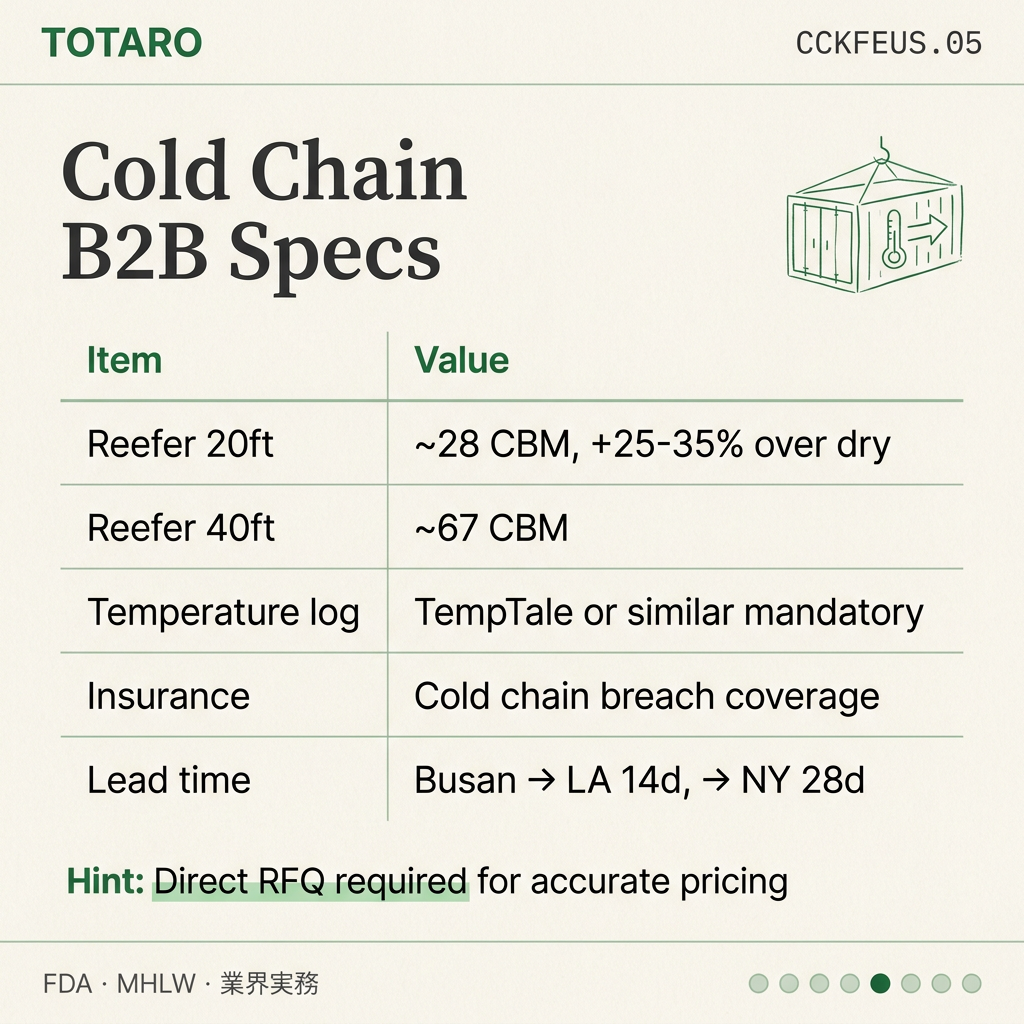
Reefer 40ft container — most common for K-food. Set point -18°C (frozen) or 2°C (chilled). Continuous monitoring with data logger.
Reefer 20ft — smaller-volume premium category (organic kimchi, specialty mandu). Often used by mid-size importers.
Insulated dry container with gel packs — only for short routes (Korea-Japan), not USA/EU.
Air freight reefer — premium use case (Halal-certified frozen items, perishable specialty). 5-10x cost of ocean.
Verifying supplier cold chain
Before placing first order, ask for:
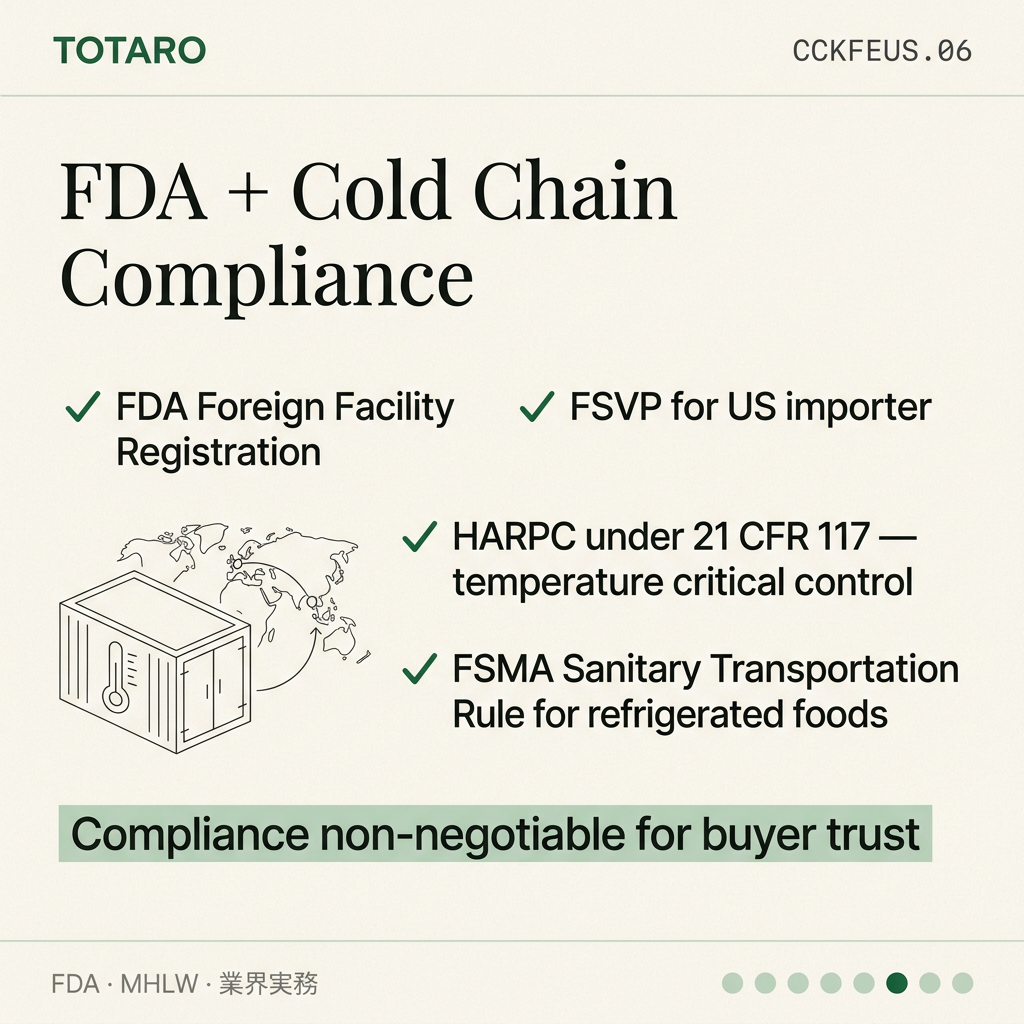
- HACCP cold chain certificate — separate from general HACCP, specifically for cold storage.
- GPS-tracked container history for last 5 export shipments. Top OEMs share this routinely.
- Reefer manifest with breach logs (zero breaches > 1 hour is acceptable).
- Insurance certificate — verify coverage for thermal breach.
Common red flags:
- Supplier "doesn't usually share" temperature logs (red flag)
- Uses dry container for frozen with "ice packs" claim (will fail)
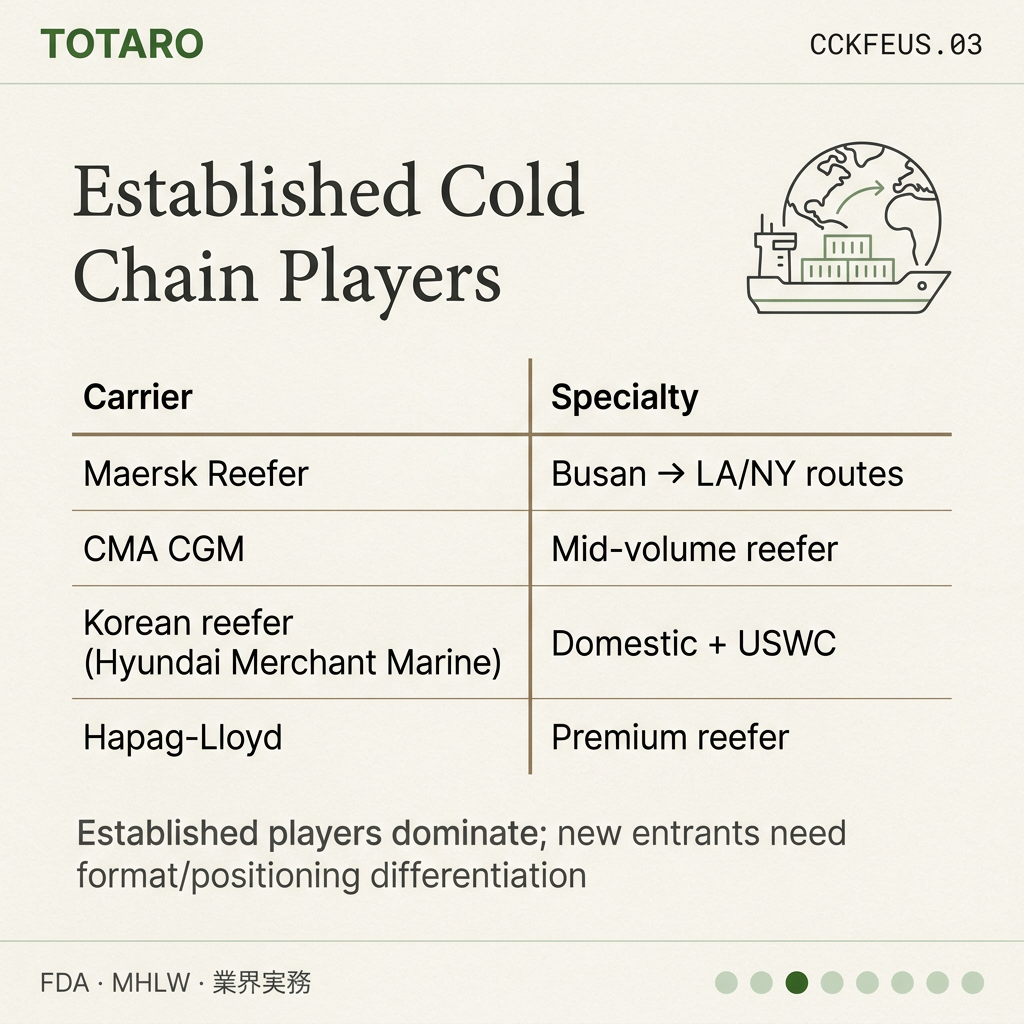
- No mention of carrier (Maersk, MSC, Hyundai have well-documented K-food cold chain; smaller carriers vary)
What to do this week
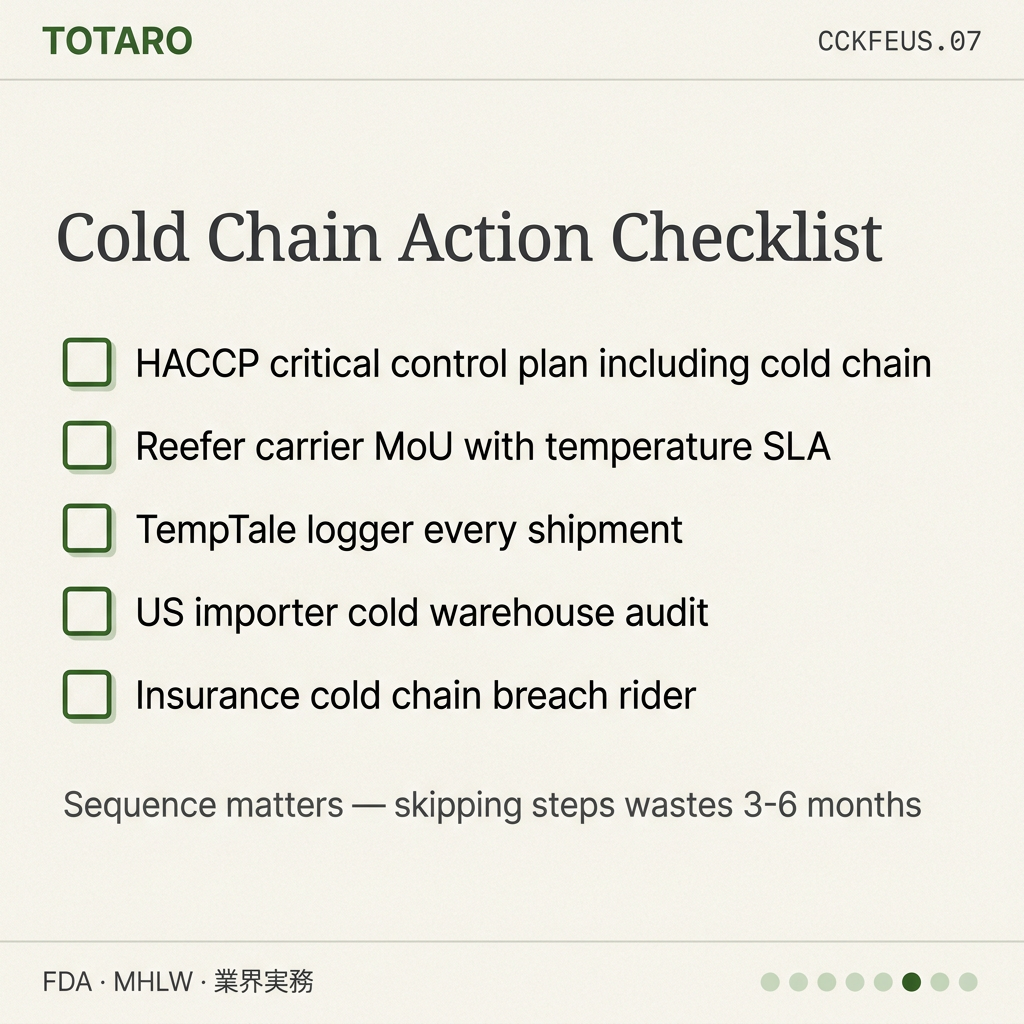
- Define your cold chain SLA in the PO. Don't assume; specify temperature ranges and breach tolerance.
- Request data logger included in shipment. Cost is minimal; visibility is priceless.
- Test with first shipment small. 1-2 pallets first, full container after verification.
- Choose port wisely. Busan → Long Beach is the most-monitored K-food cold chain corridor.
How TOTARO can help
TOTARO supplier database flags cold-chain-certified Korean exporters separately. Filter by category + cold chain certification + export history.
Verified Korean cold chain suppliers: TOTARO →
Related Guides
Get TOTARO Notifications on Your Phone — iPhone & Android Setup
Related Guides →Korean Jerusalem Artichoke for Constipation: 14-19% Inulin Content and Clinical Evidence on Gut Health (2026)
Related Guides →Korean Seaweed Snacks to the US: Beyond Kim and Into the Mainstream Snack Aisle (2026)
Related Guides →Ask AI to find your Korean food brand
Describe what you need in plain language — get matched with verified brands in seconds.
Try AI Brand Search