카드 1 / 8
Korean Jerusalem Artichoke for Constipation: 14-19% Inulin Content and Clinical Evidence on Gut Health (2026)
TL;DR
Jerusalem artichoke (helianthus tuberosus, Korean 돼지감자 dwaeji-gamja) contains 14-19% inulin per 100g fresh weight (British Journal of Nutrition — Jerusalem Artichoke Prebiotic Study). It is one of the few whole foods where a practical serving size delivers a clinically relevant prebiotic dose (Yuve — Prebiotic Foods 2026). Human clinical trials confirm bifidogenic effect — measurable increase in Bifidobacteria post-consumption. The US prebiotic supplement market hit USD 4.8B+ in 2025; Korean Jerusalem artichoke is uncontested premium positioning.
1. The Inulin Content — Why Jerusalem Artichoke Is Premium
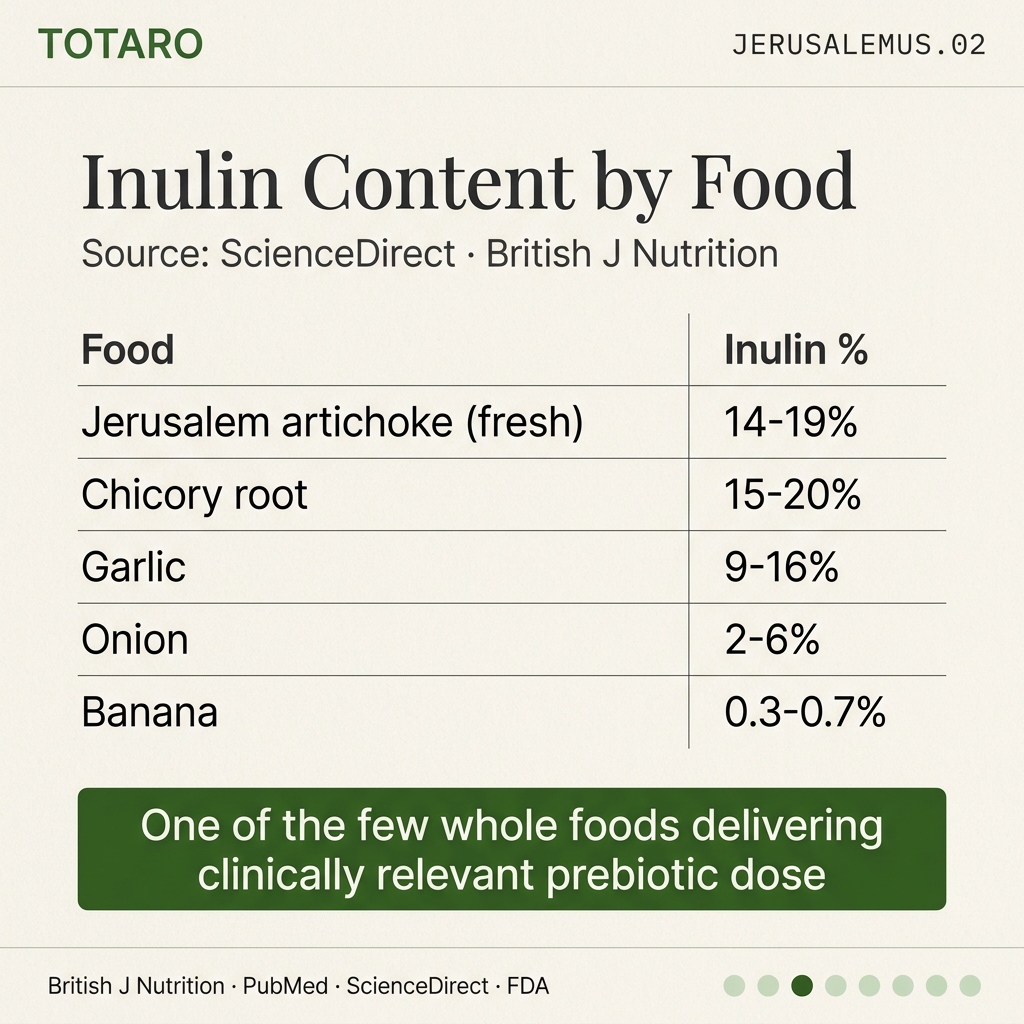
The inulin content of Jerusalem artichoke reaches 15-20% in dry weight of tubers (ScienceDirect — Jerusalem Artichoke Inulin). This makes it one of the main commercial sources of industrial inulin production. Comparison with other inulin sources:
- Jerusalem artichoke fresh tuber: 14-19% inulin
- Chicory root: 15-20% inulin
- Garlic: 9-16% inulin
- Onion: 2-6% inulin
- Banana: 0.3-0.7% inulin
Korean Jerusalem artichoke (cultivated in Gangwon, Chungcheong, Gyeongsang provinces) has comparable inulin density to chicory but with whole-food positioning that resonates with US clean-label buyers.
2. Constipation Relief — The Clinical Mechanism
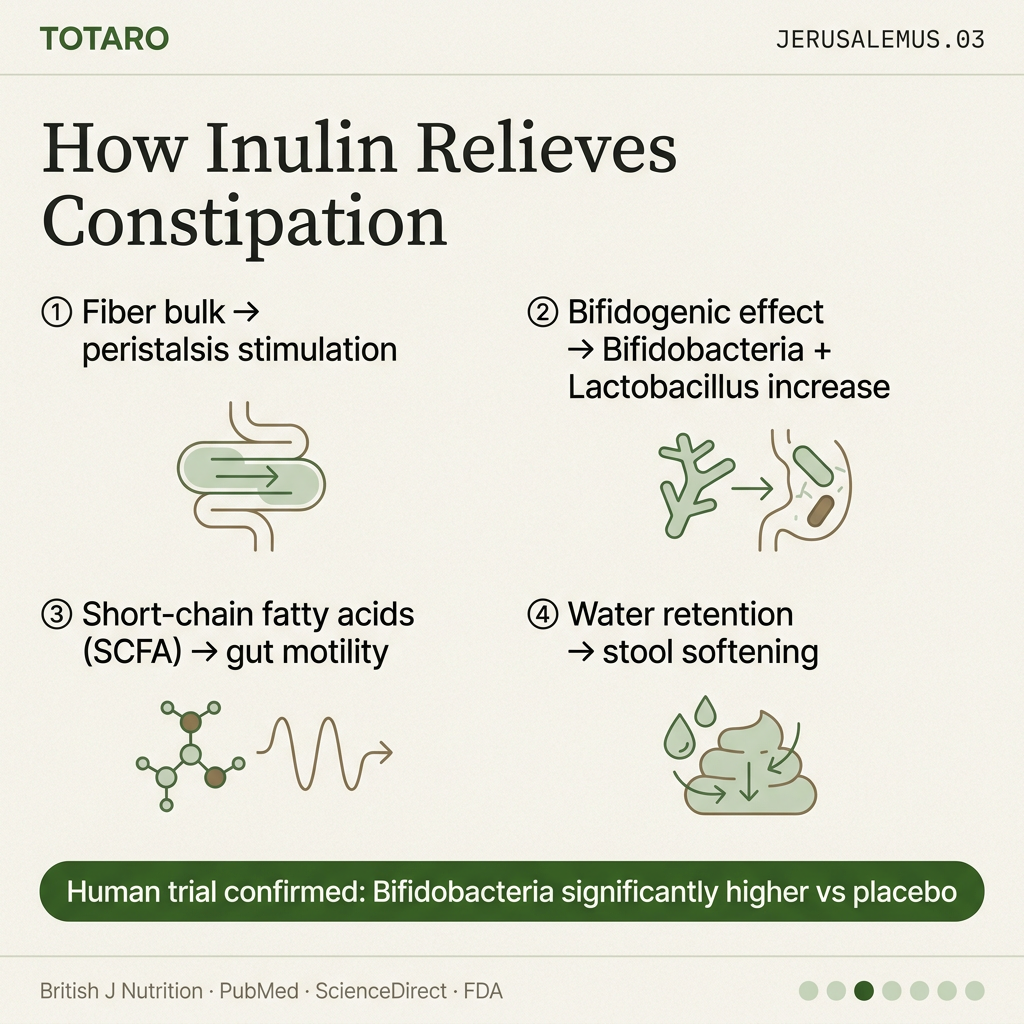
The prebiotic mechanism on constipation:
- Fiber bulk — Inulin adds bowel mass, stimulating peristalsis
- Bifidogenic effect — Inulin selectively fermented by Bifidobacteria and Lactobacillus (PMC — Jerusalem Artichoke Gut Microbiota Study)
- Short-chain fatty acid (SCFA) production — Bacterial fermentation produces butyrate, acetate, propionate that promote gut motility
- Water retention — Soluble fiber holds water in colon, softening stool
A human clinical trial (PubMed — Jerusalem Artichoke Inulin Shot Study) found that prebiotic efficacy of fruit and vegetable shots containing JA inulin was confirmed with Bifidobacteria levels significantly higher versus placebo.
3. Blood Sugar Bonus — The Functional Beverage Story
Inulin from Jerusalem artichoke does NOT trigger insulin response (zero-glycemic). For US diabetic-friendly and keto-positioned product lines, this is a major B2B sourcing angle. The dual claim (constipation + blood sugar regulation) doubles the addressable market — gut-health consumers + low-glycemic consumers.
4. Korean Production Areas — Premium Sourcing
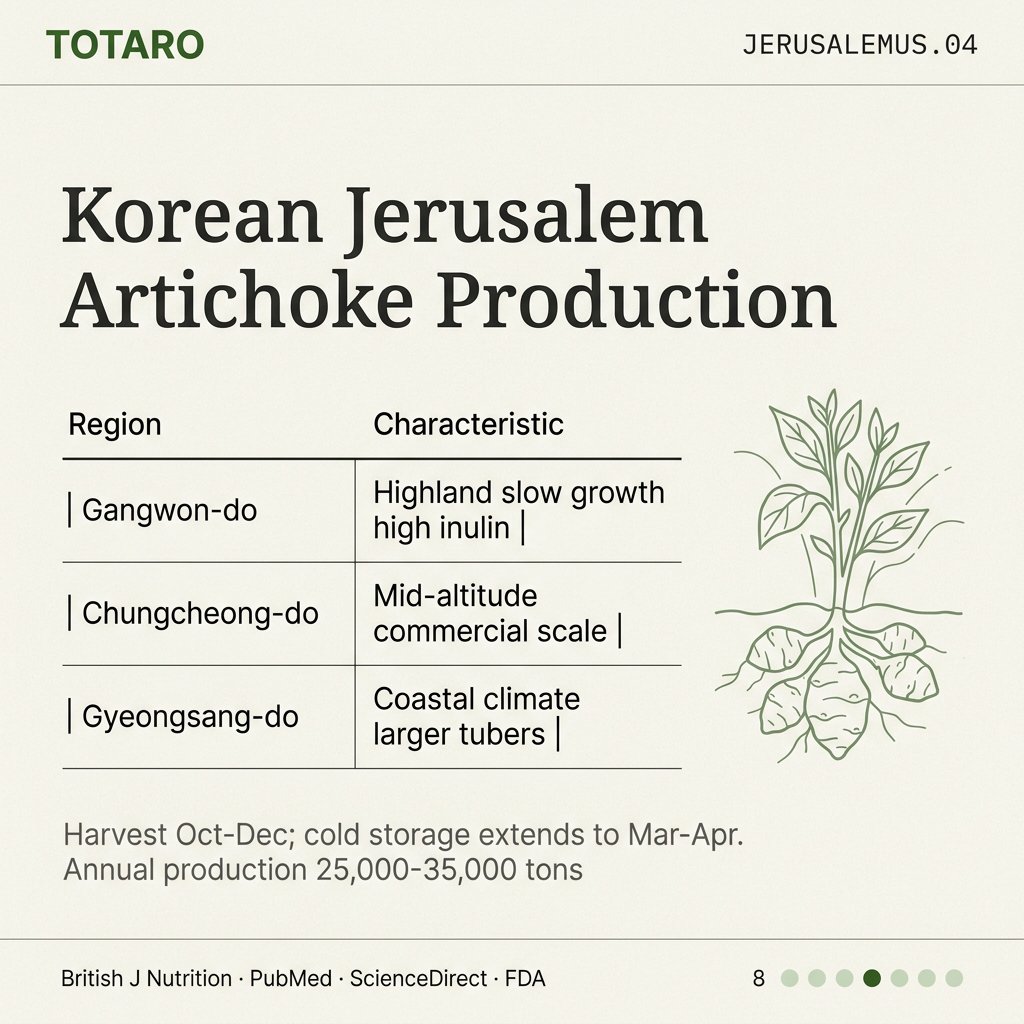
- Gangwon-do (강원도): High-altitude cultivation, slow growth, dense inulin
- Chungcheong-do (충청도): Mid-altitude commercial scale, year-round supply
- Gyeongsang-do (경상도): Coastal climate, larger tubers
Korean farmers harvest Jerusalem artichoke October-December, with cold-storage capability extending supply to March-April. Annual Korean production ~25,000-35,000 tons.
5. US Market — The Prebiotic Supplement Wave
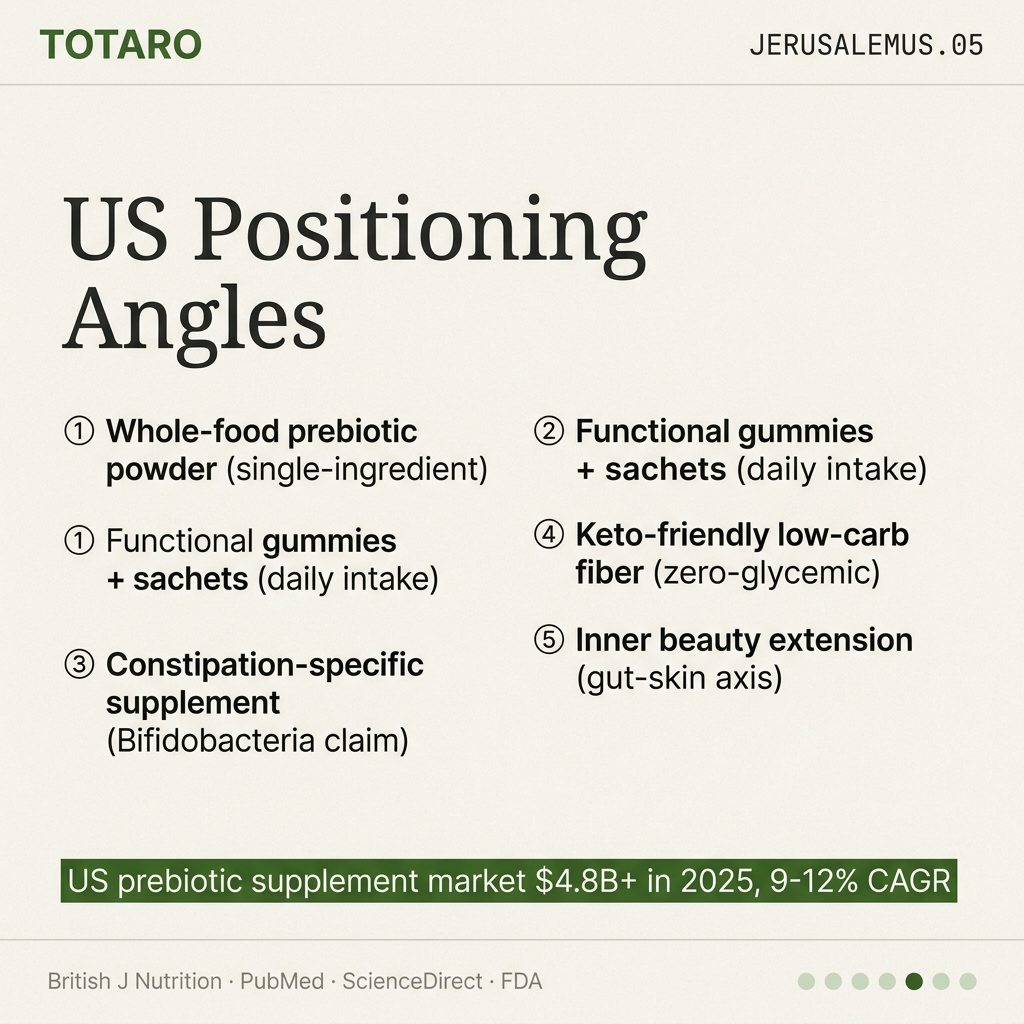
US prebiotic supplement market = USD 4.8B+ in 2025, growing at 9-12% CAGR (industry estimates). Korean Jerusalem artichoke positioning angles:
(1) Whole-food prebiotic powder — single-ingredient (Korean Jerusalem artichoke), no fillers
(2) Functional gummies + sachets — convenient daily intake
(3) Constipation-specific supplement — direct positioning with Bifidobacteria claim
(4) Keto-friendly low-carb fiber — diabetic-friendly + keto positioning
(5) Inner beauty extension — gut-skin axis story (Korean inner beauty cross-marketing)
6. FDA Compliance for Inulin Products
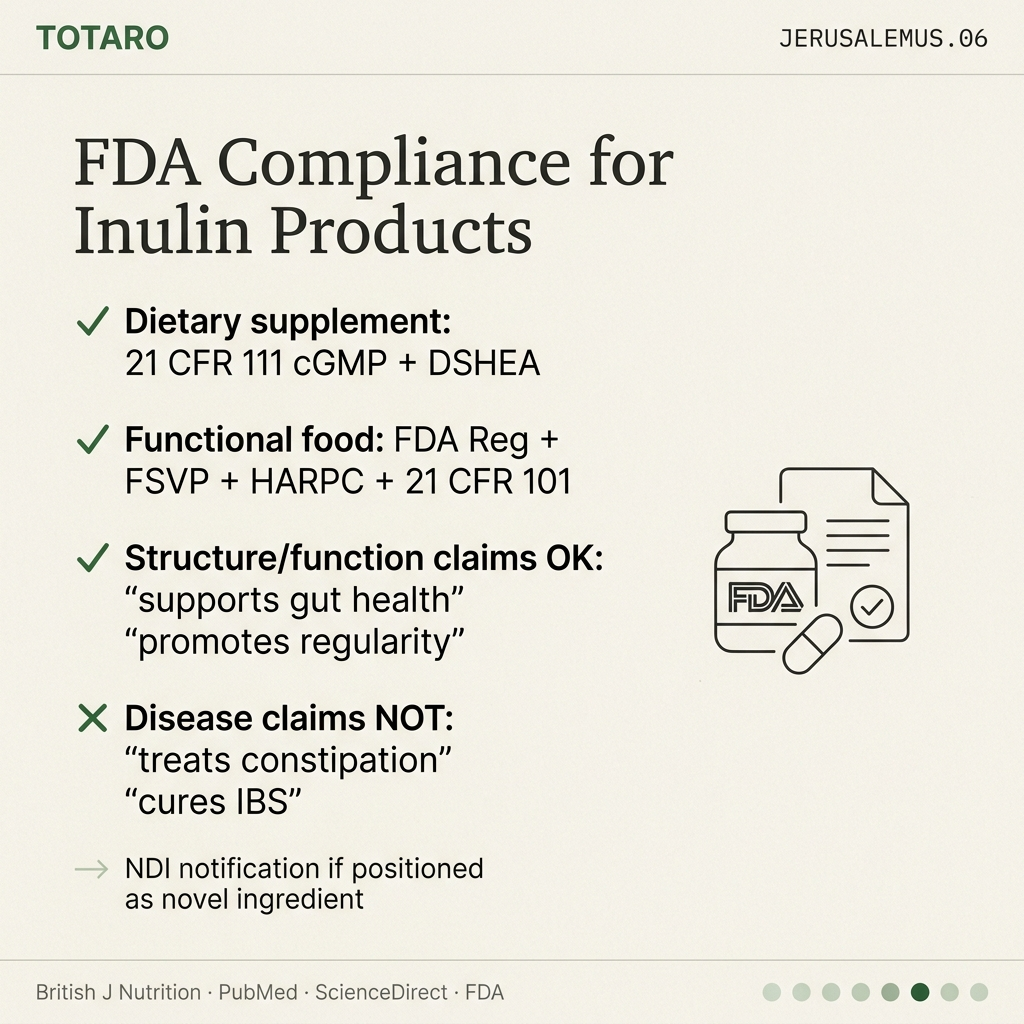
If marketed as dietary supplement: 21 CFR 111 cGMP (21 CFR 111) + DSHEA structure/function claims. NDI notification if Korean Jerusalem artichoke is positioned as novel (FDA — NDI).
If marketed as functional food: FDA Foreign Facility Registration (FDA) + FSVP + HARPC + standard food labeling per 21 CFR 101.
Health claims allowed:
- Structure/function: "supports gut health," "promotes regularity," "contains prebiotic fiber"
- NOT allowed: "treats constipation," "cures IBS" (disease claims)
7. US Channel Strategy
(1) Whole Foods Market — Premium organic single-origin Korean Jerusalem artichoke powder. LEAP program for new brands (Whole Foods Supplier)
(2) Sprouts Farmers Market — Mid-tier wellness, accepts new specialty SKUs
(3) Holland & Barrett US (limited footprint, expansion) — Wellness category
(4) Amazon Premium Beauty / Health & Personal Care — Subscribe & Save subscription model
(5) Thrive Market — DTC clean-label focused
(6) Korean K-beauty + K-wellness specialists — Olive Young US, YesStyle US cross-marketing
8. Pricing Reality (MOQ / FOB)
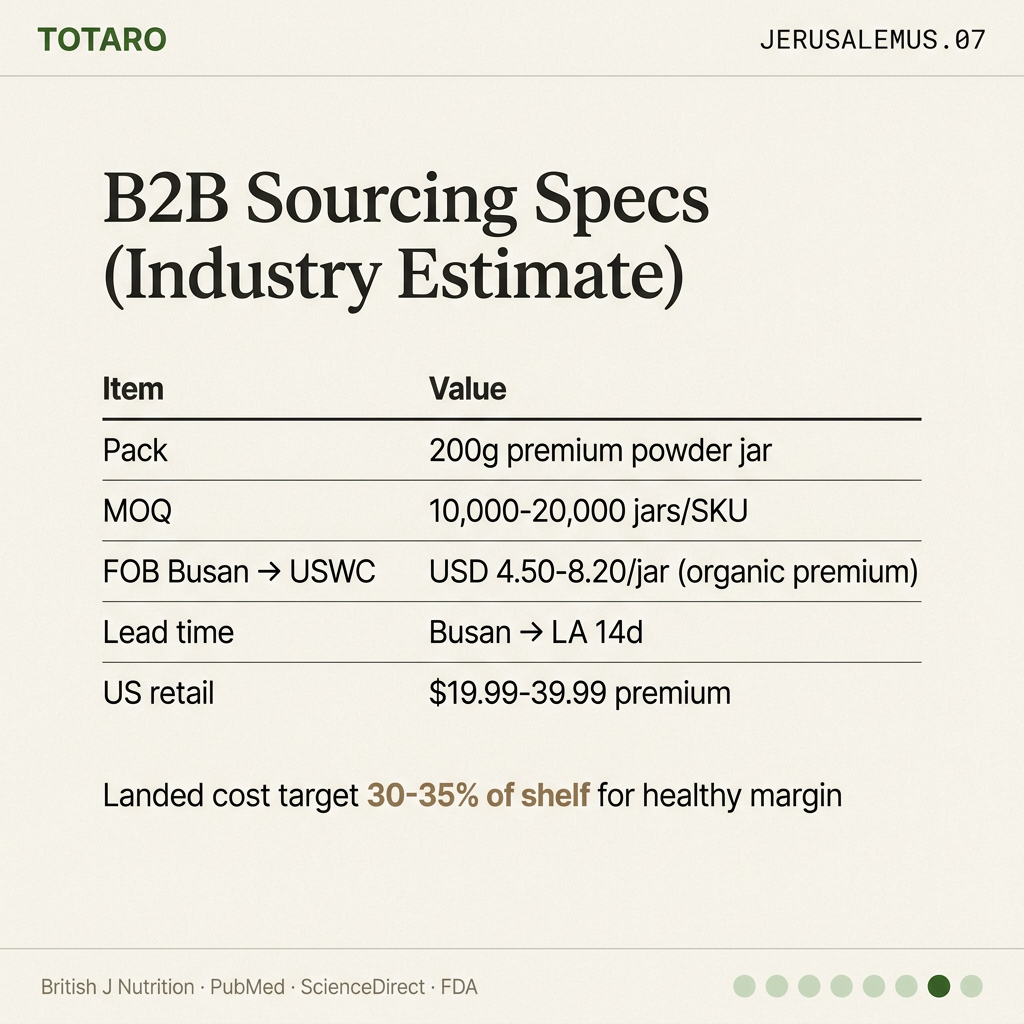
Industry estimate for premium Korean Jerusalem artichoke powder 200g jar: MOQ 10,000-20,000 jars/SKU, FOB Busan→USWC USD 4.50-8.20/jar (organic premium, 2026 early). Direct RFQ required. US retail USD 19.99-39.99 for premium single-origin Korean Jerusalem artichoke powder.
9. The Inner Beauty Cross-Sell
Korean inner beauty brands are already established at US premium retail (Cult Beauty, Sephora Olive Young partnership). A gut-skin axis story — Jerusalem artichoke prebiotic → improved gut microbiome → clearer skin — directly supports K-beauty supplement positioning. Korean Jerusalem artichoke is the first whole-food K-prebiotic at scale.
What to Do This Week
(1) Confirm Korean grower partnership (Gangwon farms preferred for highest inulin density), (2) Apply for USDA Organic certification if positioning organic, (3) Develop single-origin Korean Jerusalem artichoke 200g powder SKU + 30-day sachet box, (4) Apply for Whole Foods LEAP regional buyer, (5) Build Amazon Premium Subscribe & Save listing with clinical evidence references. The clinical evidence is strong; the US market is open.
Sources
- British Journal of Nutrition — Jerusalem Artichoke Prebiotic Study
- Yuve — Prebiotic Foods 2026
- ScienceDirect — Jerusalem Artichoke Inulin Deciphering
- PMC — Jerusalem Artichoke Gut Microbiota Mice Study
- PubMed — Jerusalem Artichoke Inulin Shot Human Trial
- 21 CFR 111 cGMP Dietary Supplements
- Whole Foods — Information for Potential Suppliers
Related Guides
Ask AI to find your Korean food brand
Describe what you need in plain language — get matched with verified brands in seconds.
Try AI Brand Search