카드 1 / 8
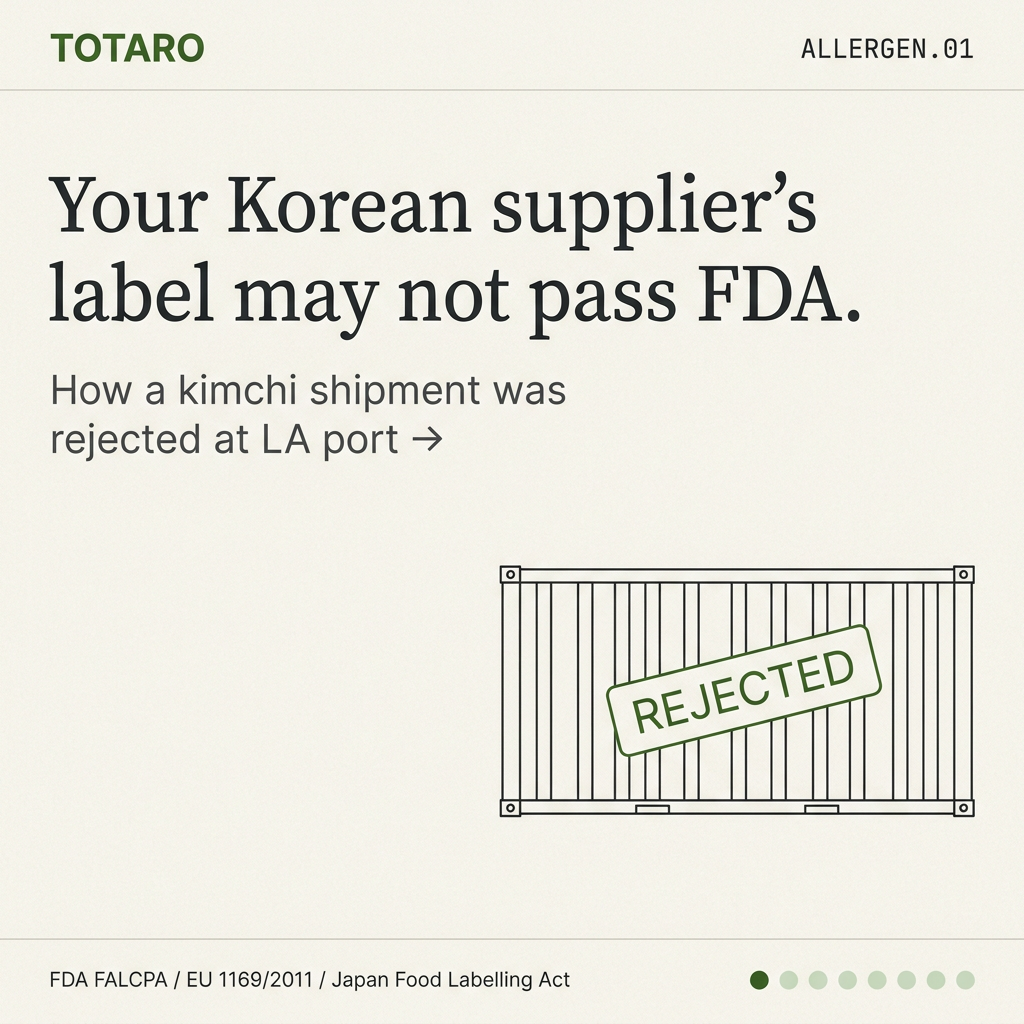
Allergen Labeling for Korean Food Imports — US/EU/Japan Guide (Card News)
This insight is in card news format. Swipe through the 8 slides above.
Summary
Korean food labels often miss what US, EU, and Japan require for import. Verify these before sourcing:
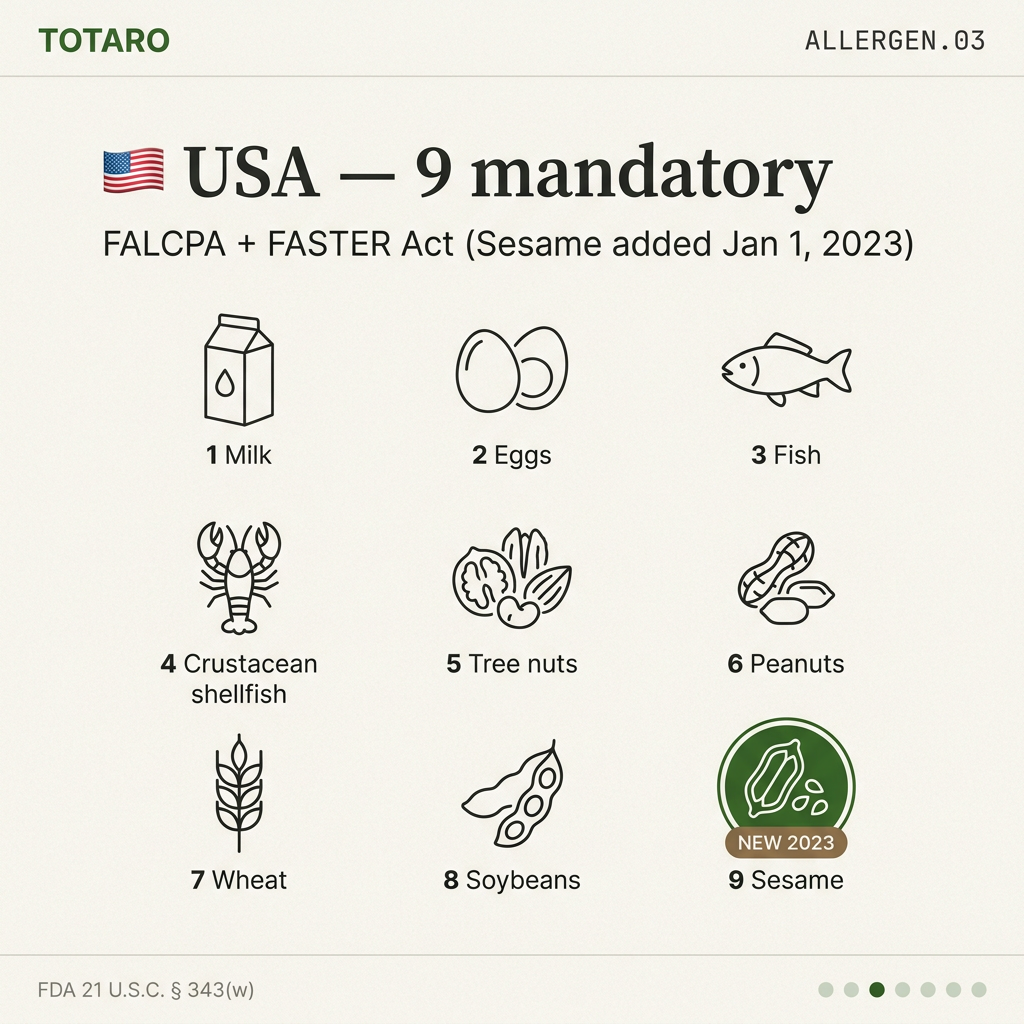
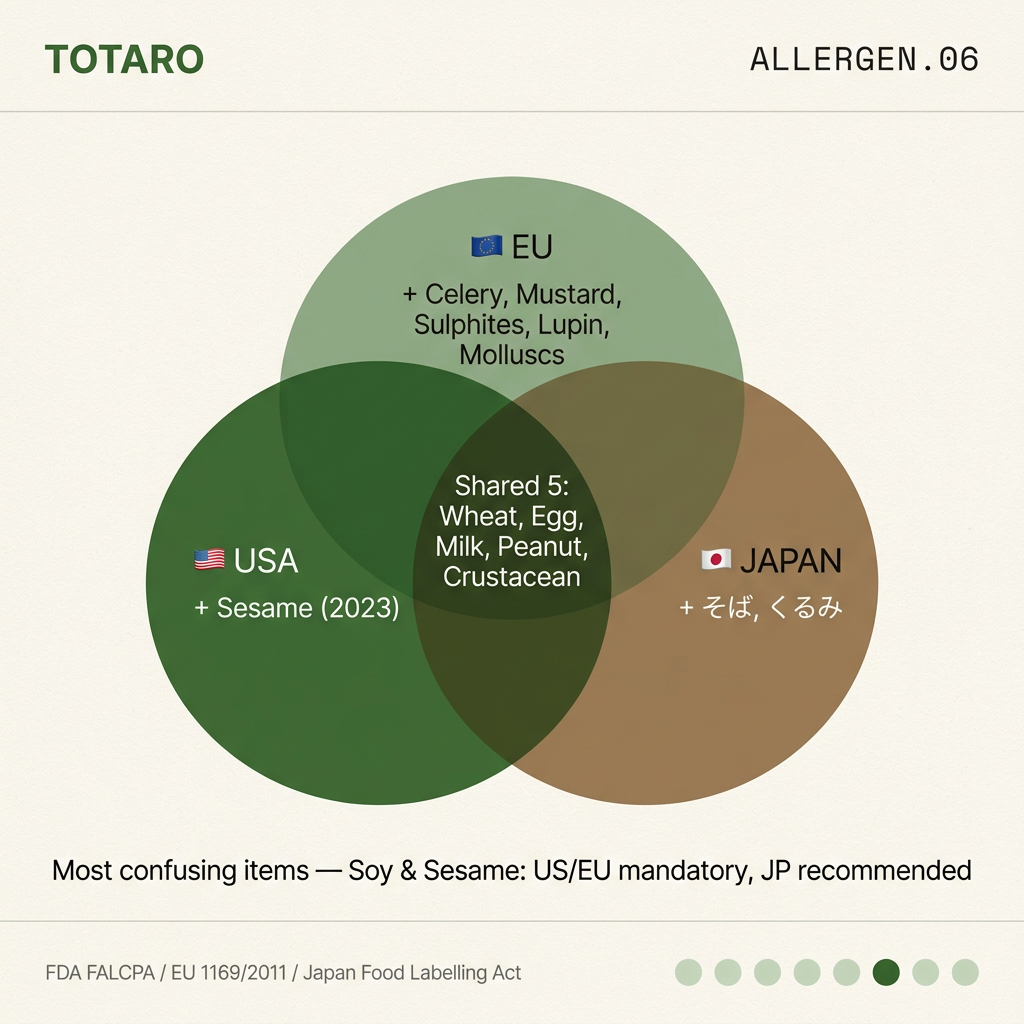
- USA — 9 mandatory (FALCPA + FASTER Act, Sesame added Jan 1, 2023)
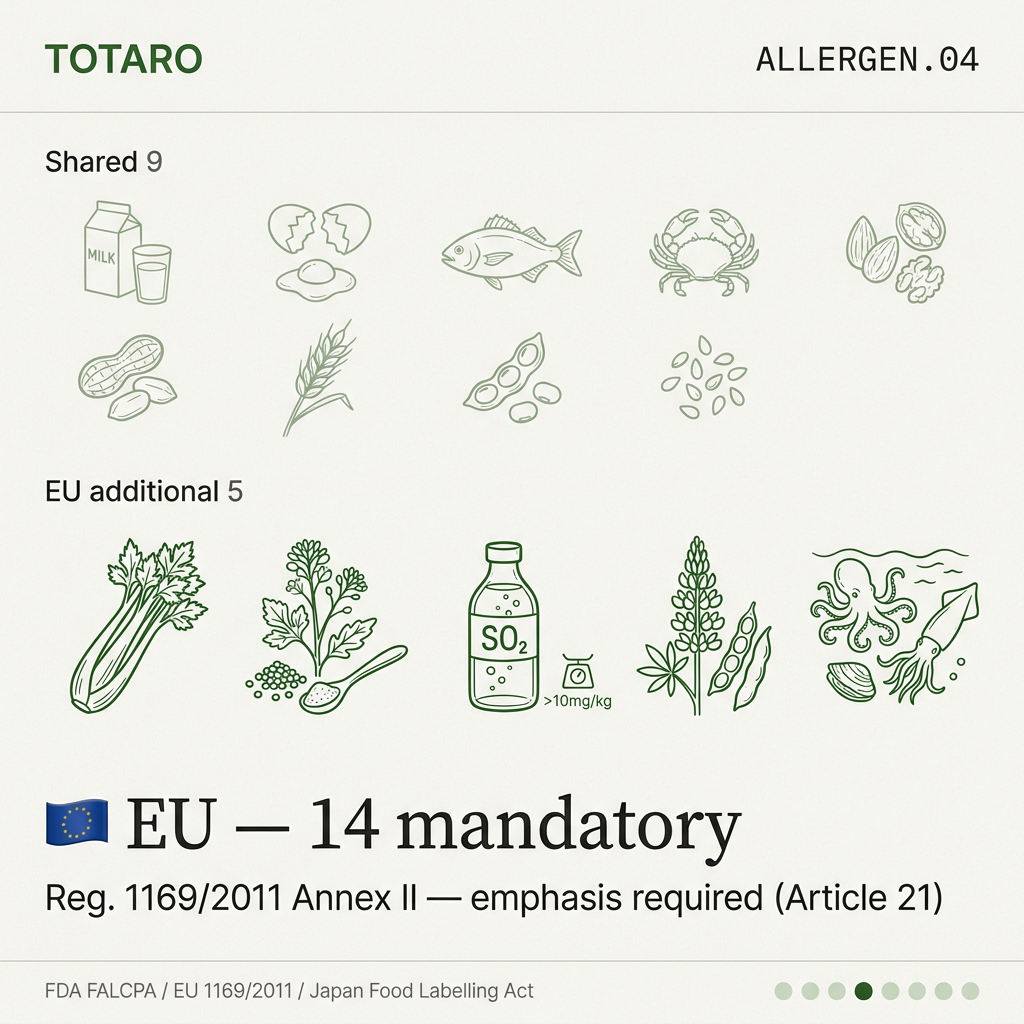
- EU — 14 mandatory (Regulation 1169/2011 Annex II, with emphasis required)
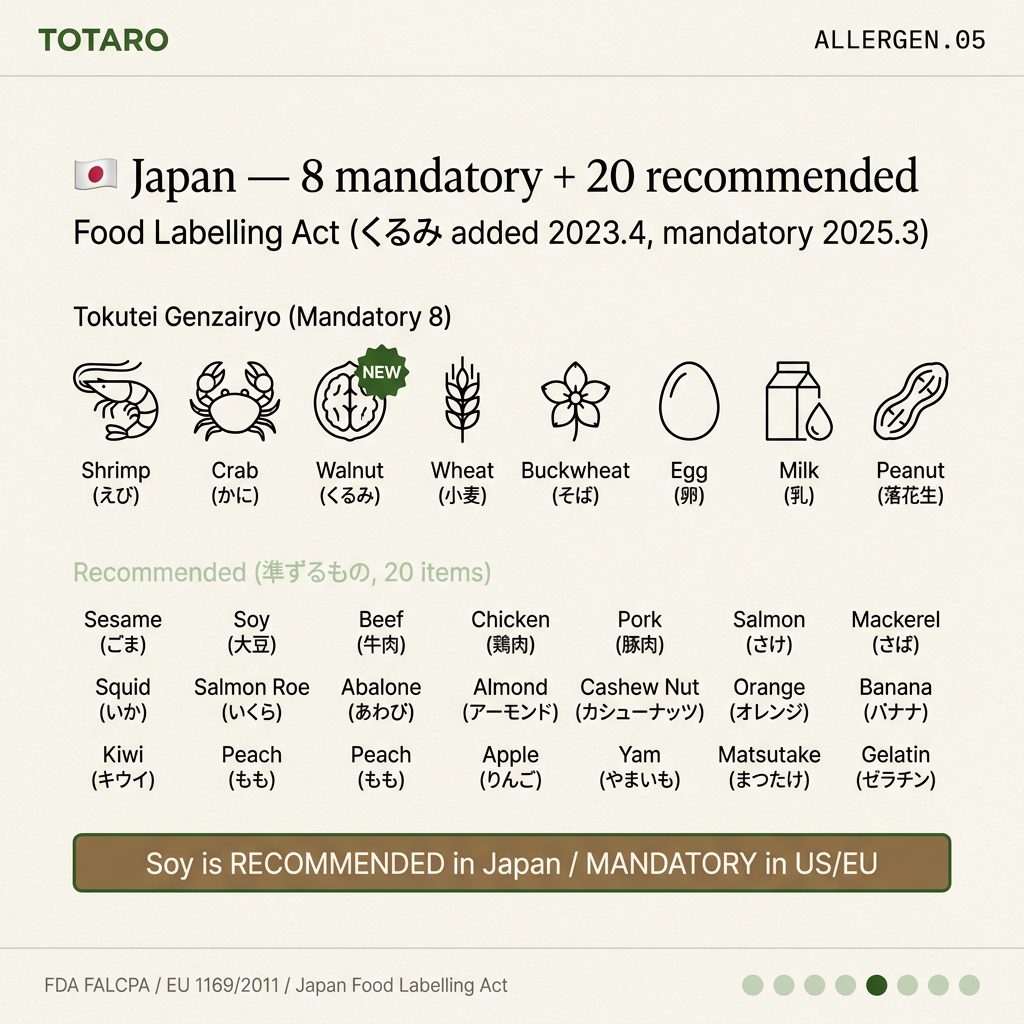
- Japan — 8 mandatory + 20 recommended (Food Labelling Act, Walnut added April 2023)
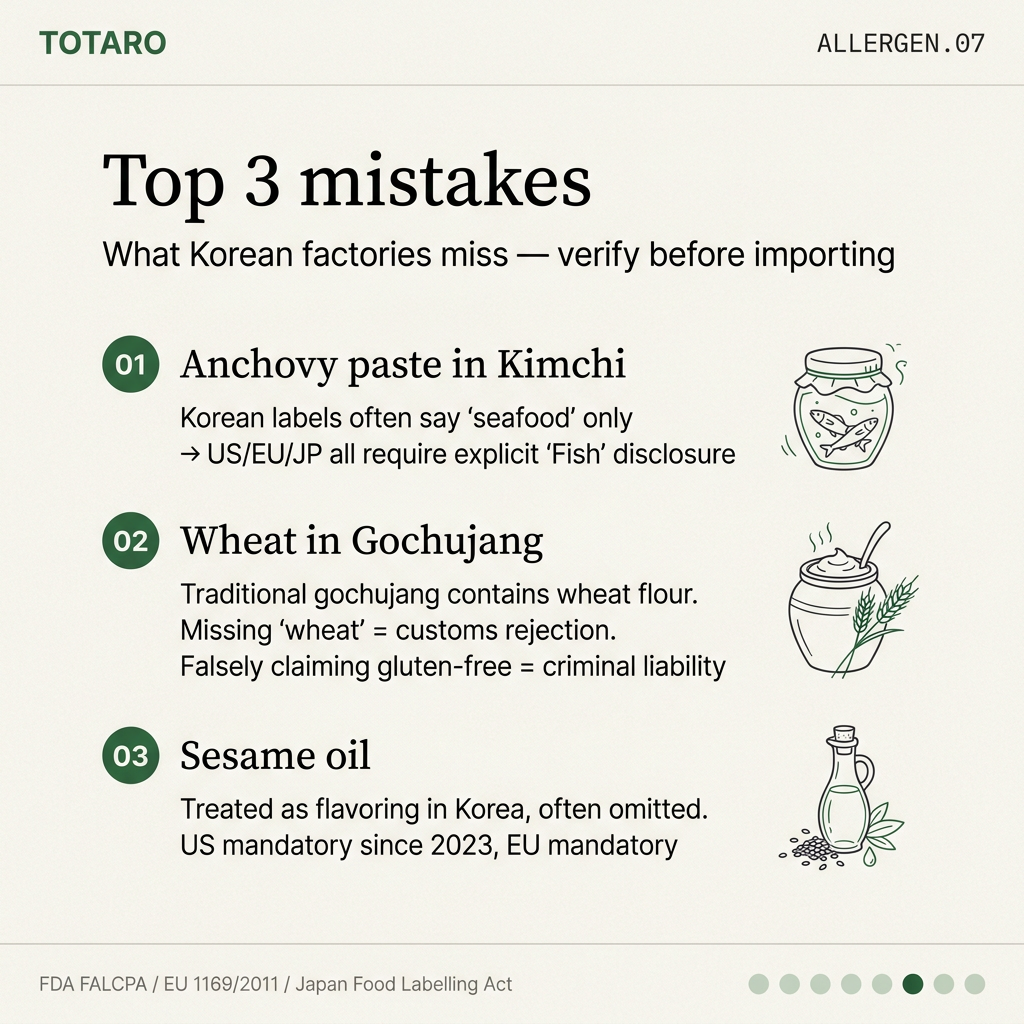
Top 3 things Korean factories miss
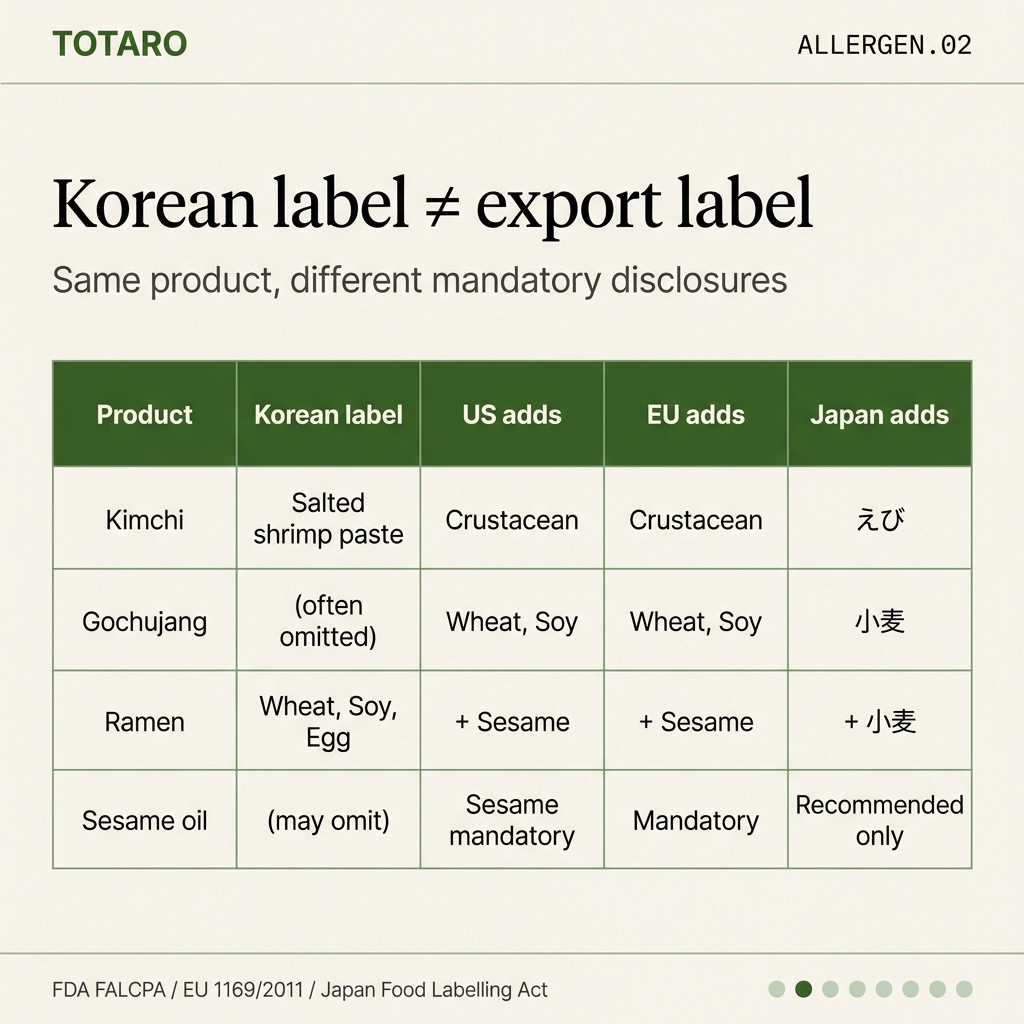
- Anchovy paste in Kimchi — Korean labels often say "seafood" only. US/EU/JP all require explicit "Fish" disclosure.
- Wheat in Gochujang — Traditional gochujang contains wheat flour. Missing "wheat" causes customs rejection. Falsely claiming gluten-free triggers criminal liability.
- Sesame oil — Treated as flavoring in Korea, often omitted. Mandatory in US since Jan 2023, mandatory in EU.
Most confusing items
- Soy: US/EU mandatory, Japan recommended only
- Sesame: US/EU mandatory, Japan recommended only
Sources
- US FDA — 21 U.S.C. § 343(w)
- EU — Regulation (EU) No 1169/2011 Annex II
- Japan — 食品表示基準
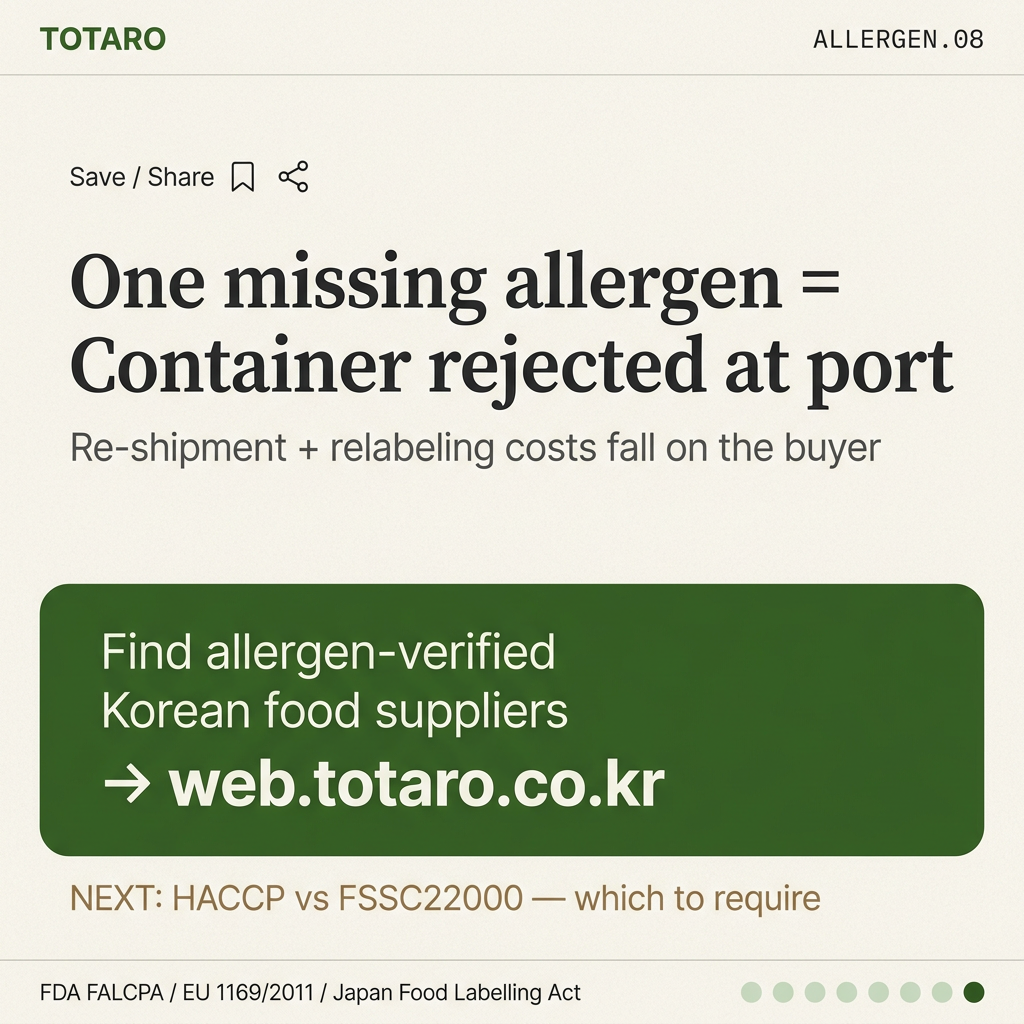
Find allergen-verified Korean suppliers
Match with verified Korean food suppliers — labeling compliance pre-validated. 5 minutes, free.
Related Guides
Ask AI to find your Korean food supplier
Describe what you need in plain language — get matched with verified suppliers in seconds.
Try AI Supplier Search