카드 1 / 8
Korean Sauce and Condiment Wholesale in the US: How Haechandle, Chung Jung One, and Sempio Built Their H-Mart Beachhead (2026)
TL;DR
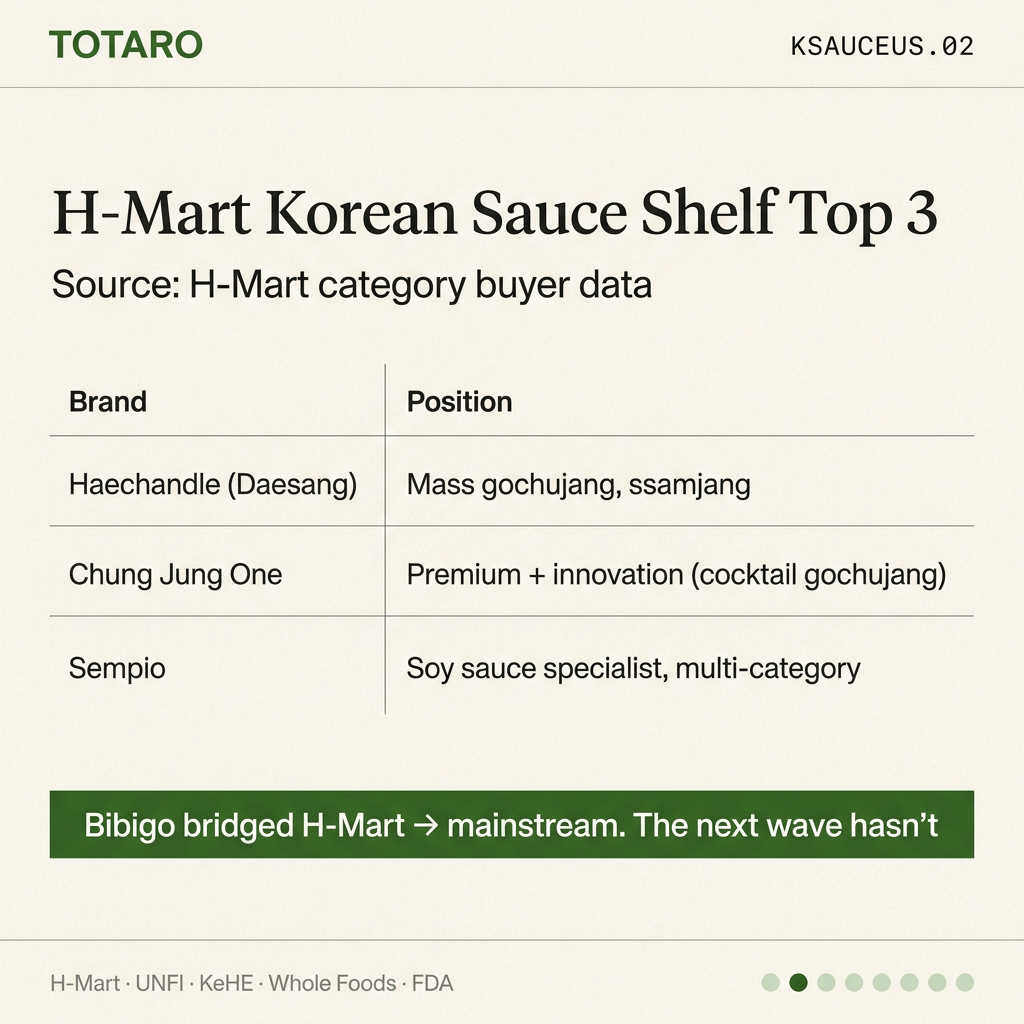
The Korean sauce shelf at every H-Mart in the US is structurally dominated by three brands: Haechandle (Daesang) (H-Mart Haechandle), Chung Jung One (H-Mart Chung Jung One), and Sempio (H-Mart Sempio). New Korean sauce exporters need to understand why these three won and where the gaps are.
1. Why H-Mart Is the Beachhead, Not the Endgame
H-Mart's 100+ US stores are the diaspora entry channel — high turnover, brand awareness, immigrant household trial. The endgame is mainstream: Whole Foods, Trader Joe's, Costco, Kroger (Whole Foods Supplier Info). Bibigo (gochujang and frozen mandu) jumped that gap; most Korean sauces still haven't. The successful playbook is: (a) win H-Mart penetration, (b) gather sales data, (c) pitch the data to mainstream buyers.
2. Category Structure
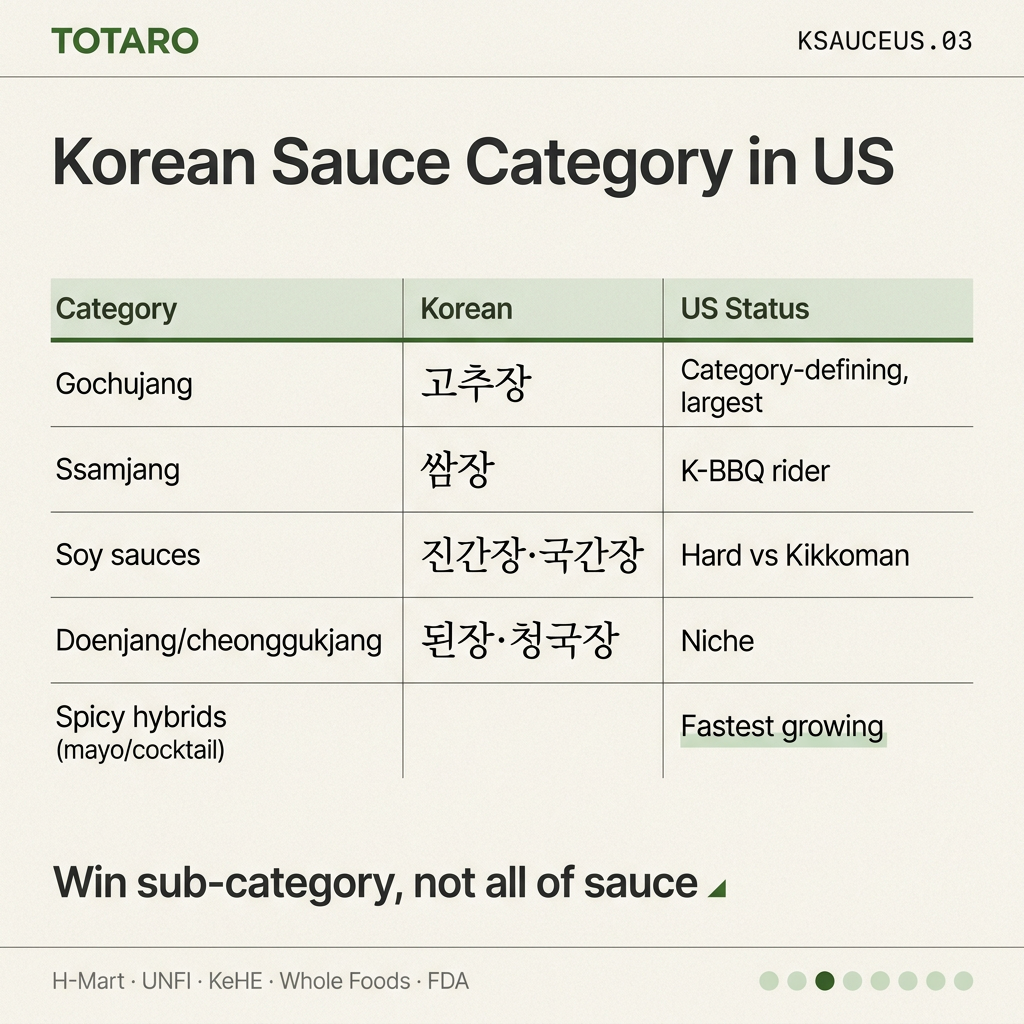
Gochujang is the single largest US Korean sauce category (the category-defining product). Ssamjang is the BBQ wrap-sauce, riding K-BBQ restaurant tailwind. Soy sauces (jin-ganjang, guk-ganjang) compete with Kikkoman head-on and rarely win on price. Doenjang and cheonggukjang are niche. Cocktail / dipping / spicy mayo hybrids (Chung Jung One Spicy Cocktail Gochujang) are the newest growth category.
3. Distribution Tiers
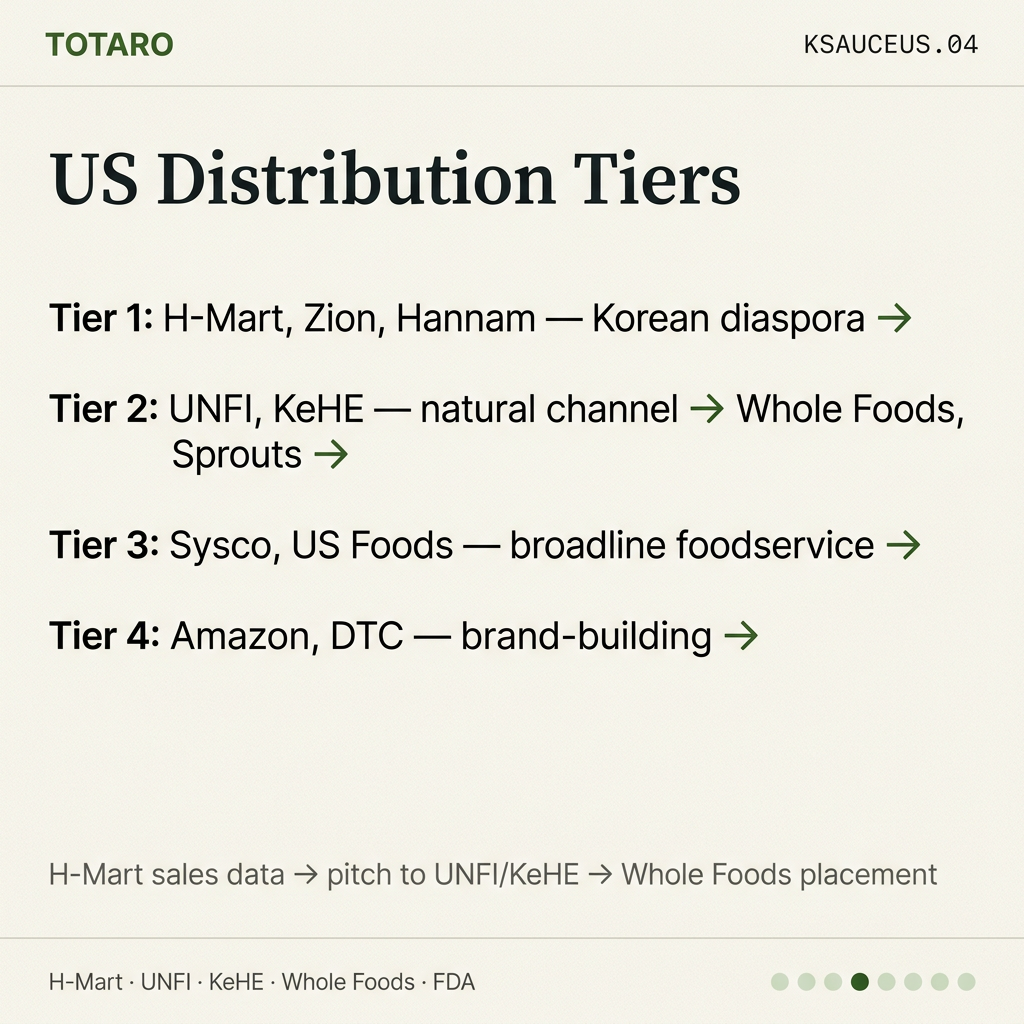
(1) H-Mart, Zion, Hannam Chain — Korean grocery chains; entry via the chain's import team. (2) UNFI, KeHE — natural channel distributors (UNFI, KeHE) that gate Whole Foods, Sprouts, Fresh Market. (3) Sysco / US Foods — broadline foodservice for restaurants and institutional. (4) Amazon / DTC — useful for brand-building, not volume.
4. FDA Compliance Stack for Sauces
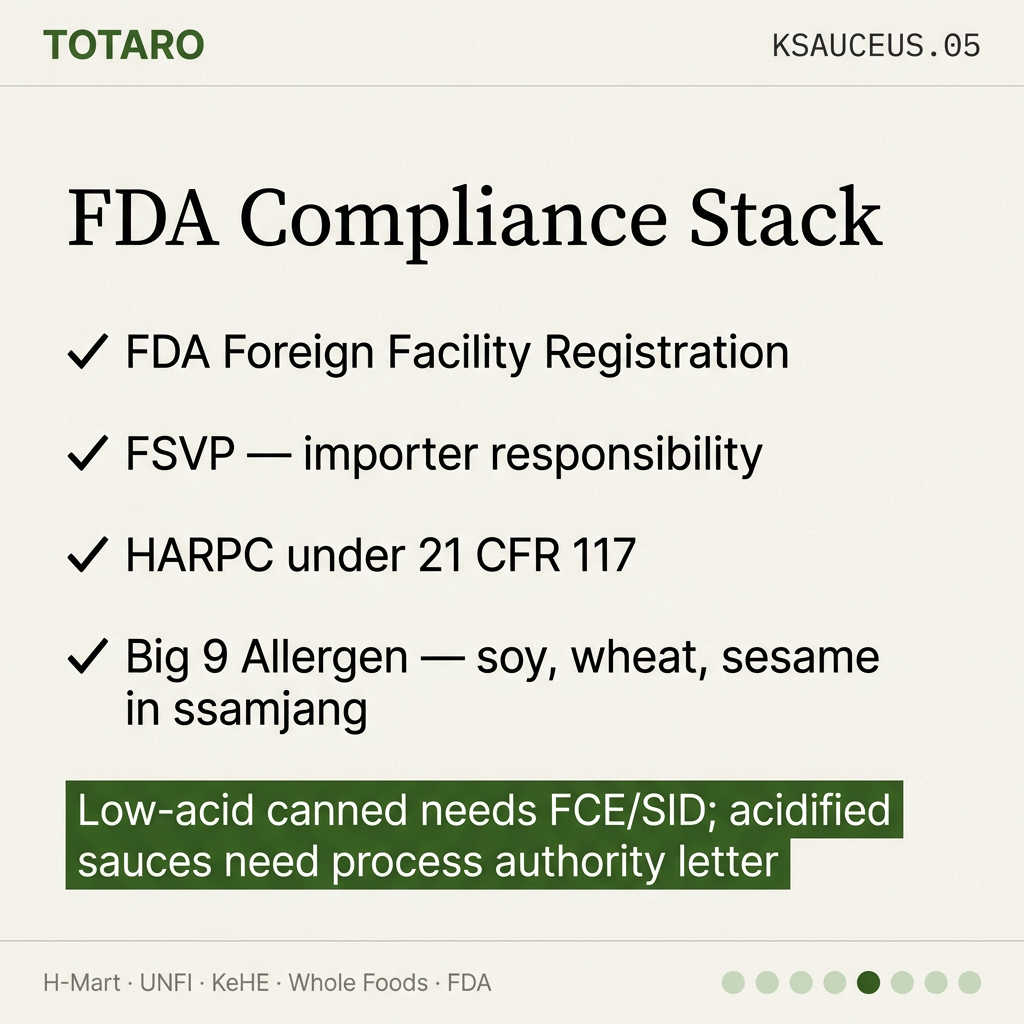
FDA Foreign Facility Registration (FDA), FSVP for the importer (FSVP rule), HARPC Food Safety Plan under 21 CFR 117 (21 CFR 117). Low-acid canned foods require FCE/SID; most Korean sauces are acidic or refrigerated, so FCE is not always needed but a process authority letter is. The Big 9 Allergen statement under 21 CFR 101.91 covers soy and wheat (in soy sauce) and sesame (in many ssamjang formulations).
5. Mainstream Differentiation Angles
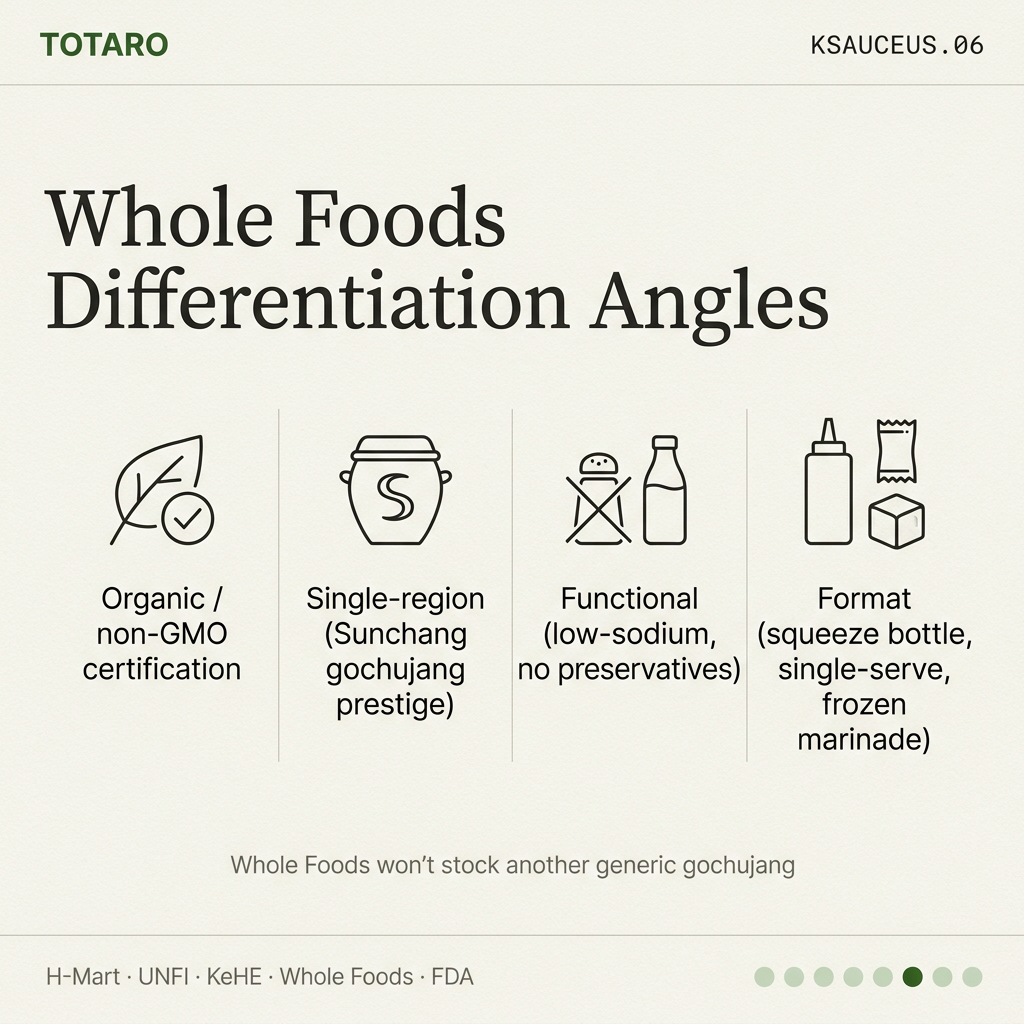
Whole Foods will not stock another generic gochujang. The angles that work: (1) Organic / non-GMO certification, (2) Single-region / single-farm sourcing story (Sunchang gochujang for prestige), (3) Functional / health positioning (low-sodium, no preservatives), (4) Format innovation (squeeze bottle, single-serve packet, frozen marinade pouch).
6. Pricing Reality (MOQ / FOB)
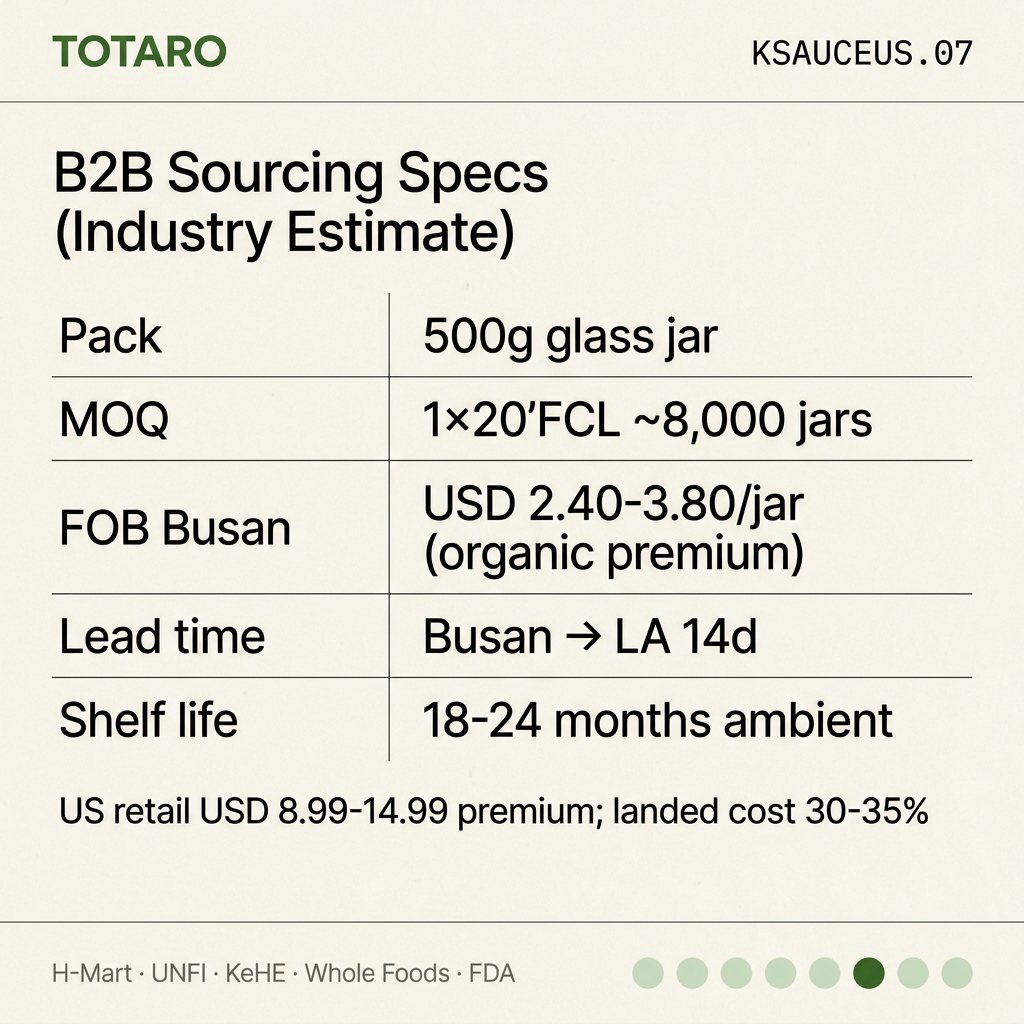
Industry estimate for glass jar gochujang 500g: MOQ 1×20' FCL (~8,000 jars), FOB Busan→USWC USD 2.40–3.80 per jar (early 2026, organic premium). Direct RFQ required. US retail shelf price USD 8.99–14.99 for premium gochujang; landed cost target 30–35% of shelf.
What to Do This Week
(1) Pick one differentiation angle and build the SKU. (2) Approach H-Mart's import team via Korean trade desk. (3) Apply to Whole Foods LEAP simultaneously — parallel paths, not sequential. The Korean sauce category in the US is not won; there's room for the next Bibigo.
Sources
Related Guides
Ask AI to find your Korean food brand
Describe what you need in plain language — get matched with verified brands in seconds.
Try AI Brand Search