카드 1 / 8
Korean RTD Cocktail in the US: Target, Walmart, and the Soju-Based Wedge — Beyond the Konbini Strategy (2026)
TL;DR
Korean RTD cocktail entry to the US is a 2-stage path: Stage 1 — Korean grocery + Asian liquor specialty for diaspora trial. Stage 2 — Target / Walmart / Total Wine mass channel for category establishment. Hite Jinro Chamisul soju is the only Korean alcohol brand established at Target/Total Wine; soju-based seltzer and highball RTD are the next wave. Korean RTD brands need a state-by-state liquor license strategy and a regional distributor, not a national launch.
1. US State-Level Alcohol Distribution
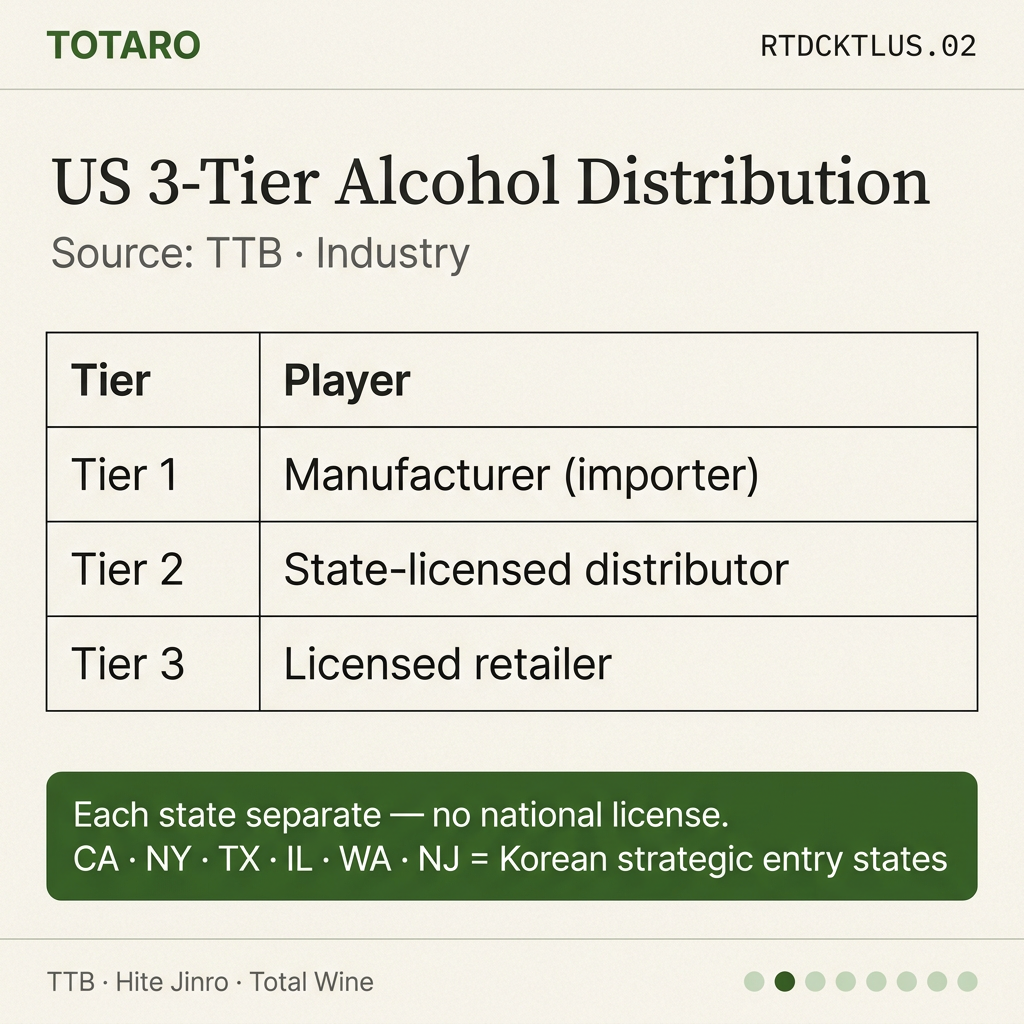
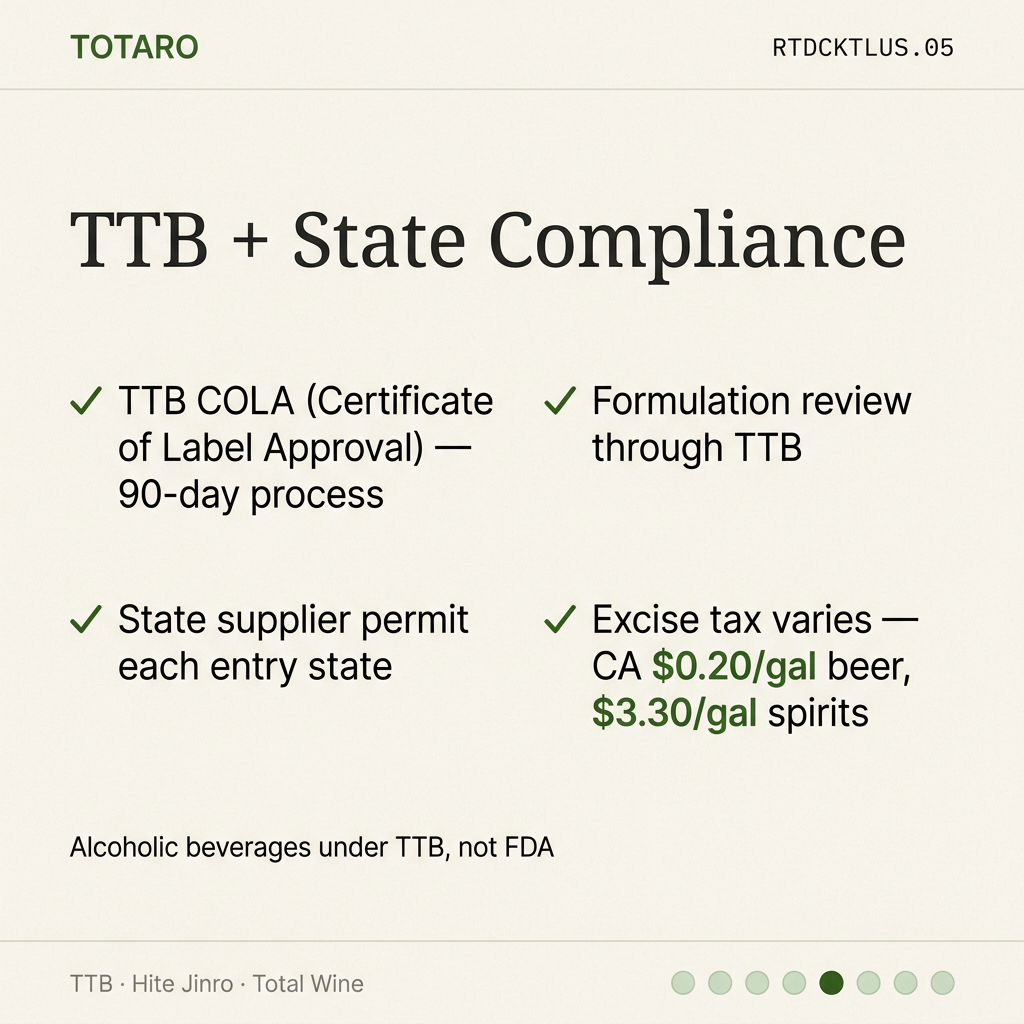
Unlike consumer packaged goods, alcohol distribution is regulated state-by-state through the 3-tier system (manufacturer → distributor → retailer). Korean RTD brands need: (1) Federal TTB COLA (Certificate of Label Approval), (2) state-level supplier permit for each state, (3) state-licensed distributor partner. California, New York, Texas, Illinois, Washington, New Jersey have the largest Korean-American populations and are the strategic entry states.
2. Target Carries Hite Jinro — The Beachhead
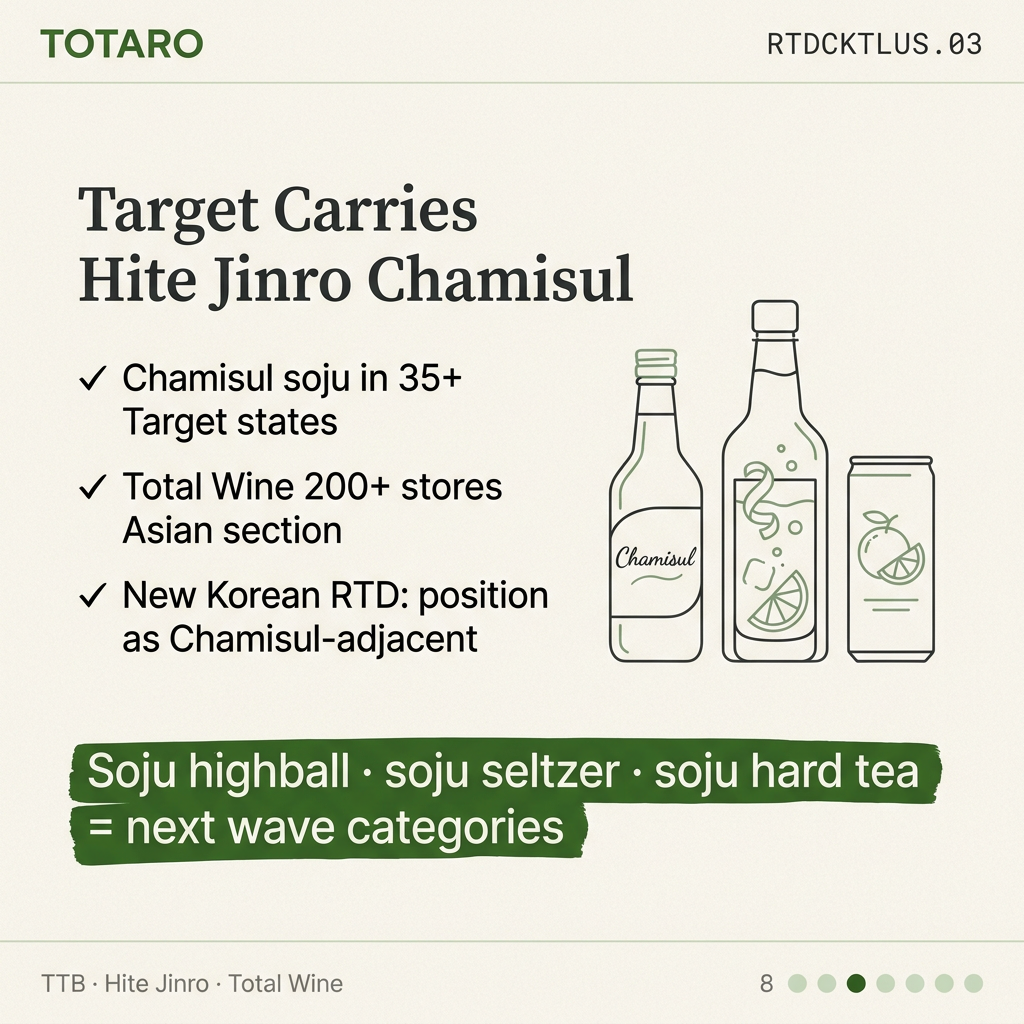
Target stocks Hite Jinro Chamisul soju in 35+ states. This is the established Korean alcohol beachhead. New Korean RTD brands should pitch Target as "the Chamisul-adjacent SKU" — soju seltzer, soju highball, soju-based hard tea — not as new category creation. Total Wine has 200+ stores and a dedicated international/Asian section.
3. Soju Highball Category Opportunity
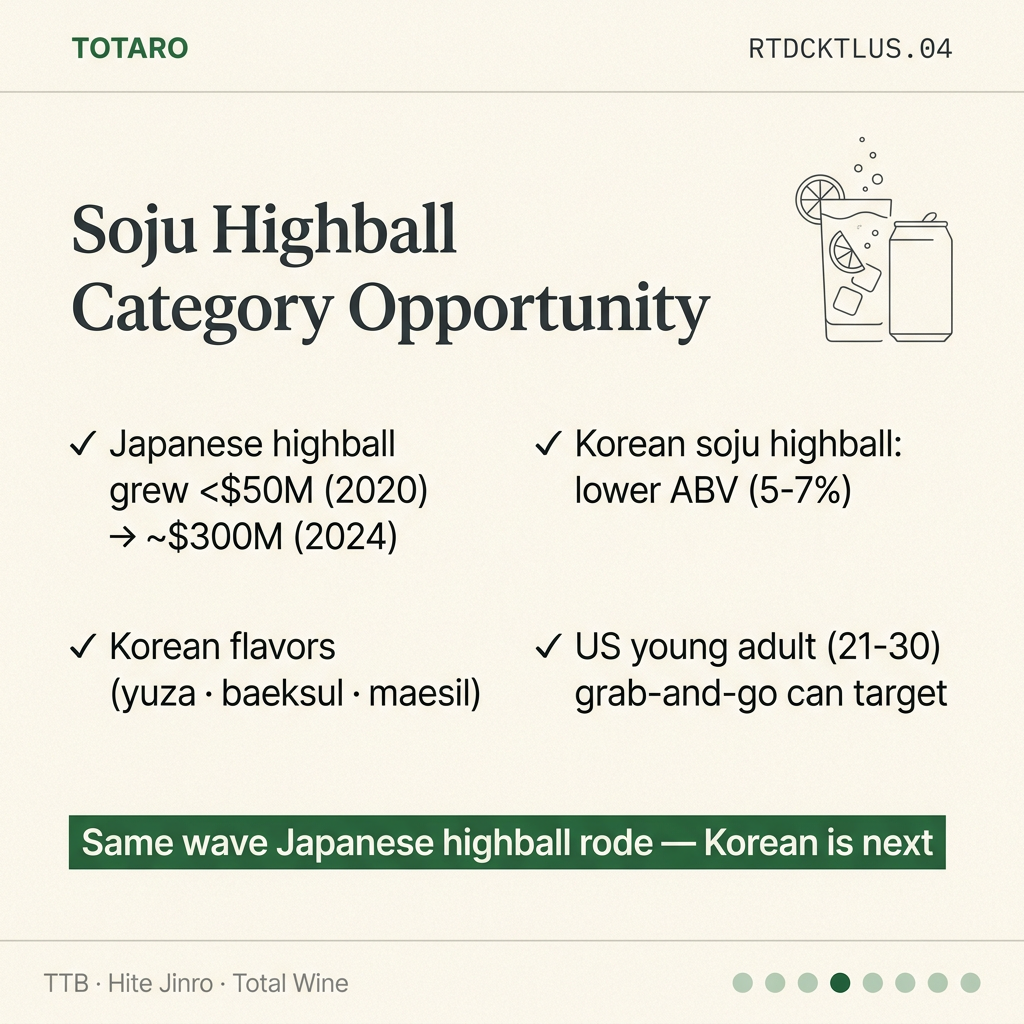
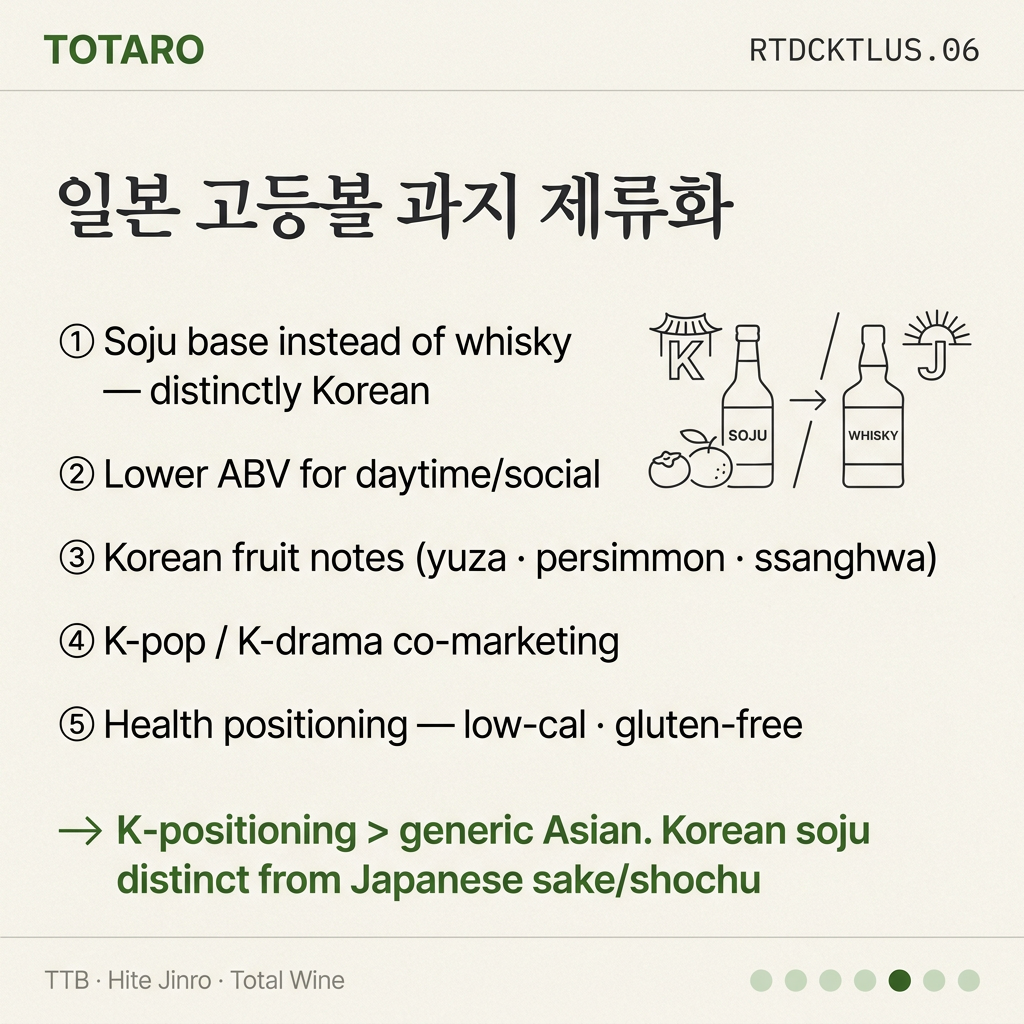
Japanese highball (whisky + soda) category in US grew from <$50M in 2020 to ~$300M in 2024 (industry estimate). Korean soju highball can ride the same momentum: lower ABV (5-7% vs whisky highball 9-12%), Korean flavor profiles (citrus yuza, peach baeksul, plum maesil), grab-and-go can format. US young adult drinkers (21-30) are the target.
4. Category Differentiation From Japanese Highball
(1) Soju base instead of whisky — distinctly Korean. (2) Lower ABV for daytime/social occasions. (3) Korean fruit notes — yuza, persimmon, ssanghwa traditional herb blend. (4) K-pop / K-drama co-marketing — STAY-G / Soju x Spotify Wrapped campaigns. (5) Health-positioning — low-cal, gluten-free (rice-based soju), no artificial colors.
5. FDA + TTB Compliance Stack
Alcoholic beverages under TTB (Alcohol and Tobacco Tax and Trade Bureau) jurisdiction, not FDA primarily. TTB COLA mandatory for label. Beverage formulation review through TTB. State liquor authority permits for each entry state. Sin tax / excise tax varies — CA $0.20/gal beer, $3.30/gal spirits.
6. Pricing Reality (MOQ / FOB)
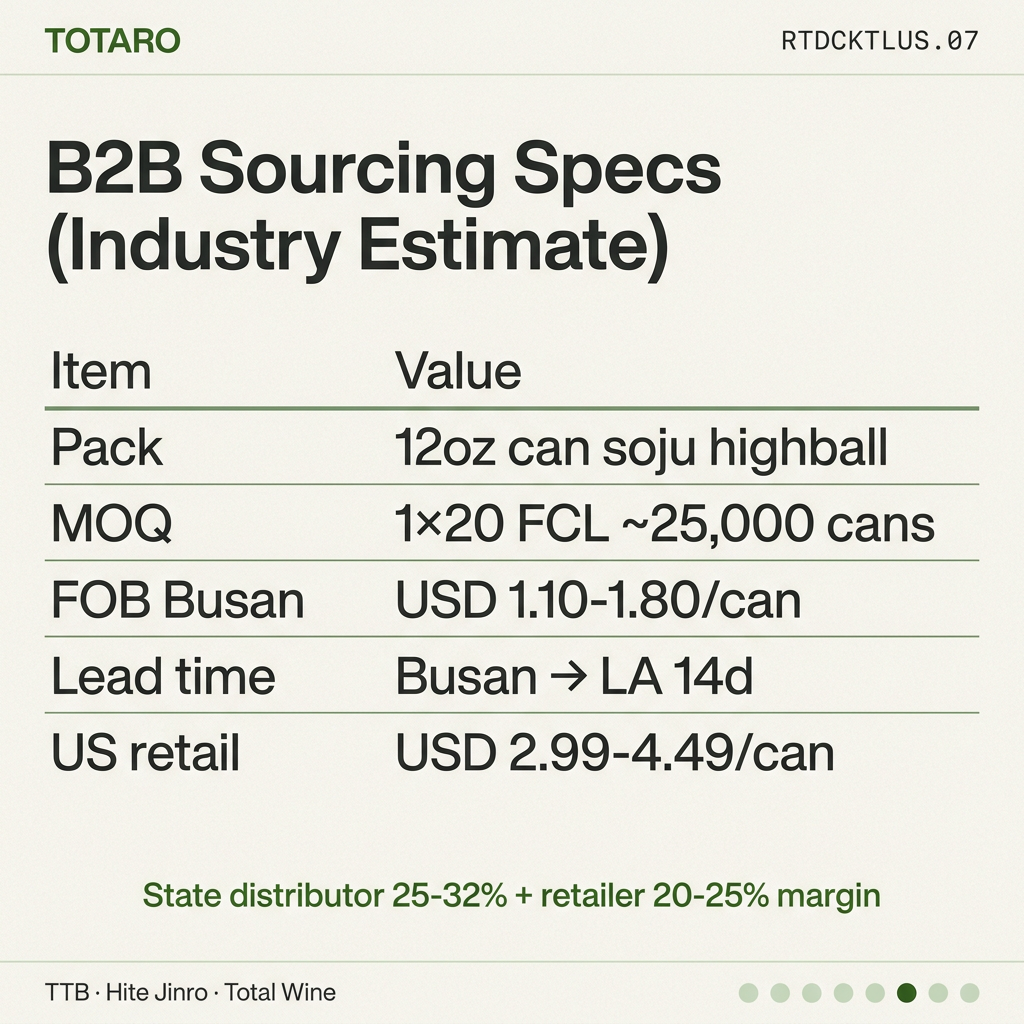
Industry estimate for 12oz can soju highball: MOQ 1×20' FCL (~25,000 cans), FOB Busan→USWC USD 1.10-1.80/can (2026 early). Direct RFQ required. US retail USD 2.99-4.49/can; landed cost target 30% of shelf. State distributor takes 25-32% margin; retailer 20-25%.
What to Do This Week
(1) Apply for TTB COLA — 90-day process. (2) Select 1 entry state (California most common) and license a state distributor. (3) Pitch to Total Wine / BevMo regional buyers with "Chamisul-adjacent" positioning. (4) Build Amazon Wine listing (where state allows) for DTC data. (5) Engage Hite Jinro USA or a Korean-American liquor importer (Wine Sources, Pacific Edge, Universal Beverage Imports) for distribution depth. Mass channel takes 12-18 months from kickoff.
Sources
Related Guides
Ask AI to find your Korean food brand
Describe what you need in plain language — get matched with verified brands in seconds.
Try AI Brand Search