카드 1 / 8
Korean Rice Flour and Gluten-Free Noodles at Whole Foods: The Hidden K-Wave for Allergy-Aware US Buyers (2026)
TL;DR
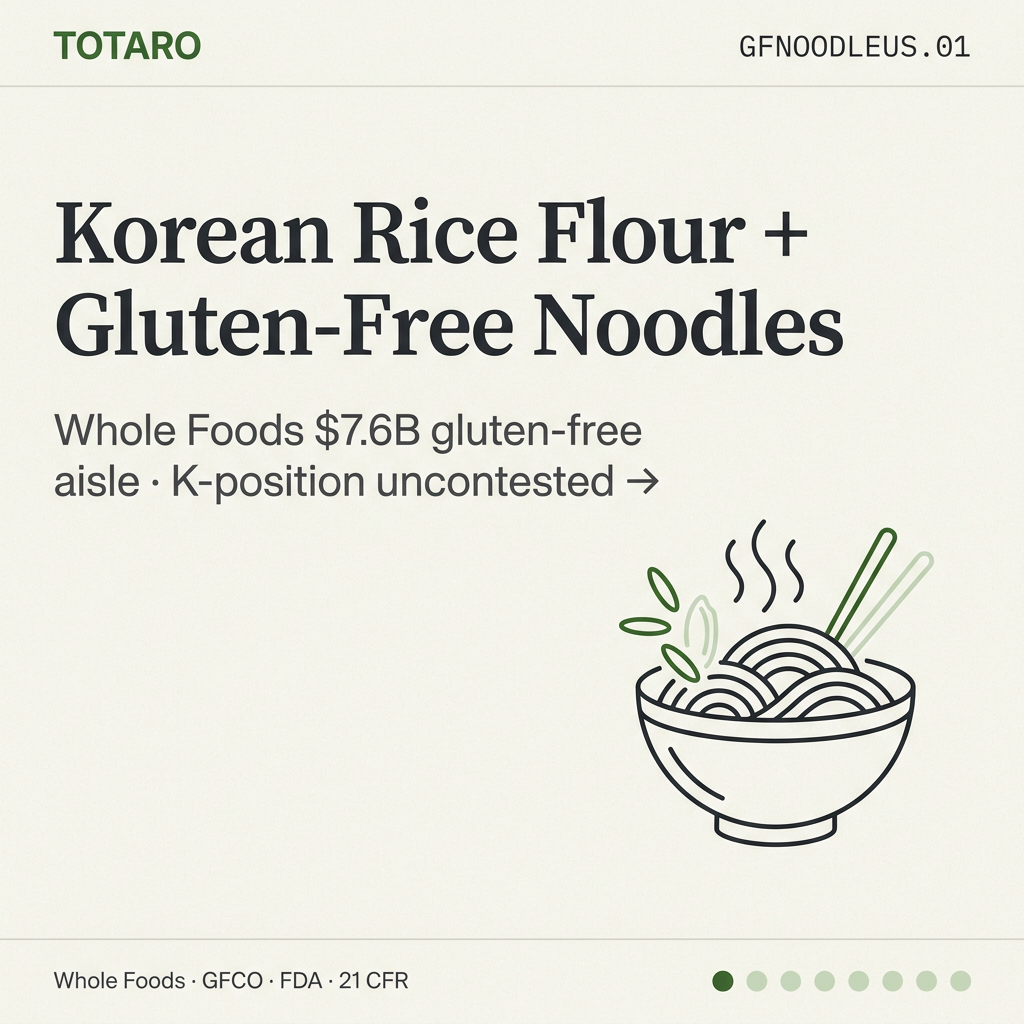
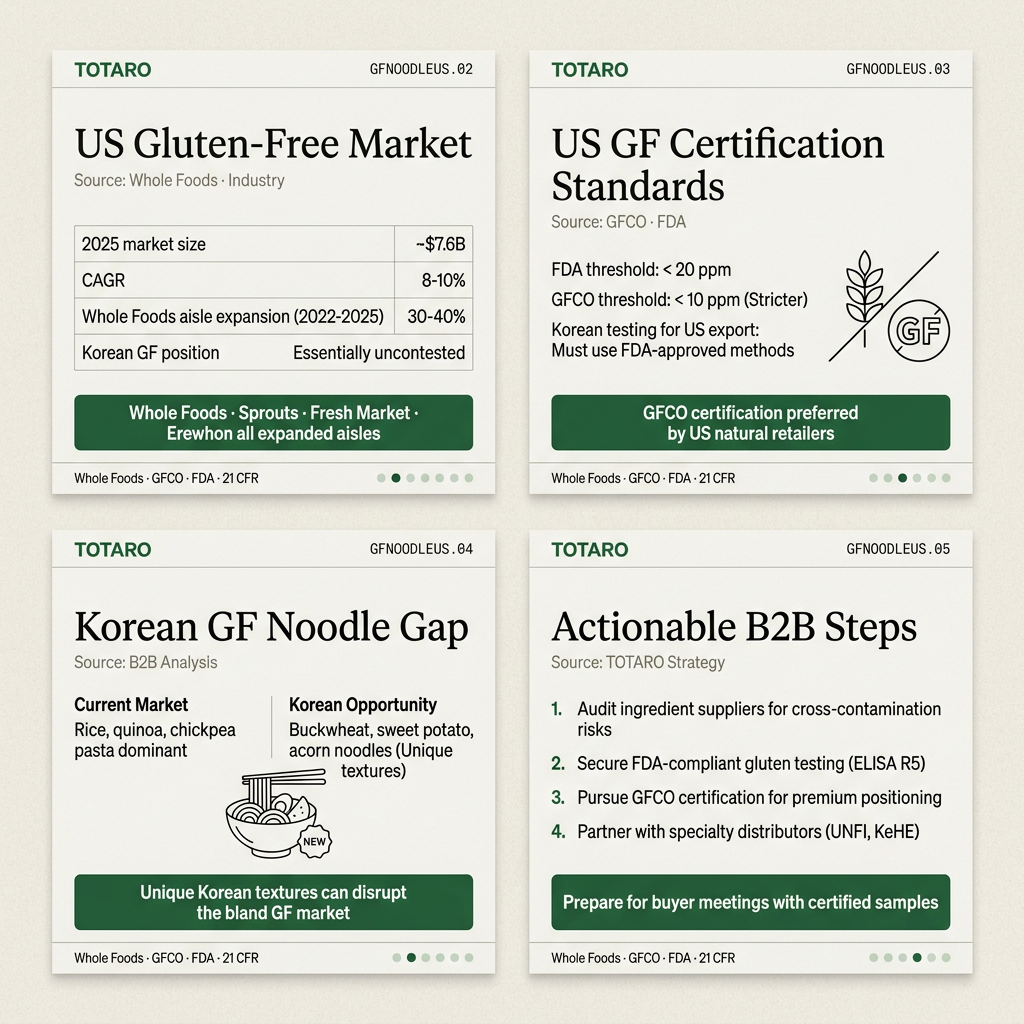
US gluten-free food market is approximately $7.6B (2025) growing at 8-10% CAGR. Whole Foods, Sprouts, Fresh Market, Erewhon expanded gluten-free aisles 30-40% over 2022-2025. Korean rice flour, rice vermicelli, dangmyeon (sweet potato noodles) are naturally gluten-free — and the K-positioning is essentially uncontested in this aisle. The opportunity is open for Korean exporters with the right packaging and certification.
1. Why Korean Noodles Have a Natural Edge
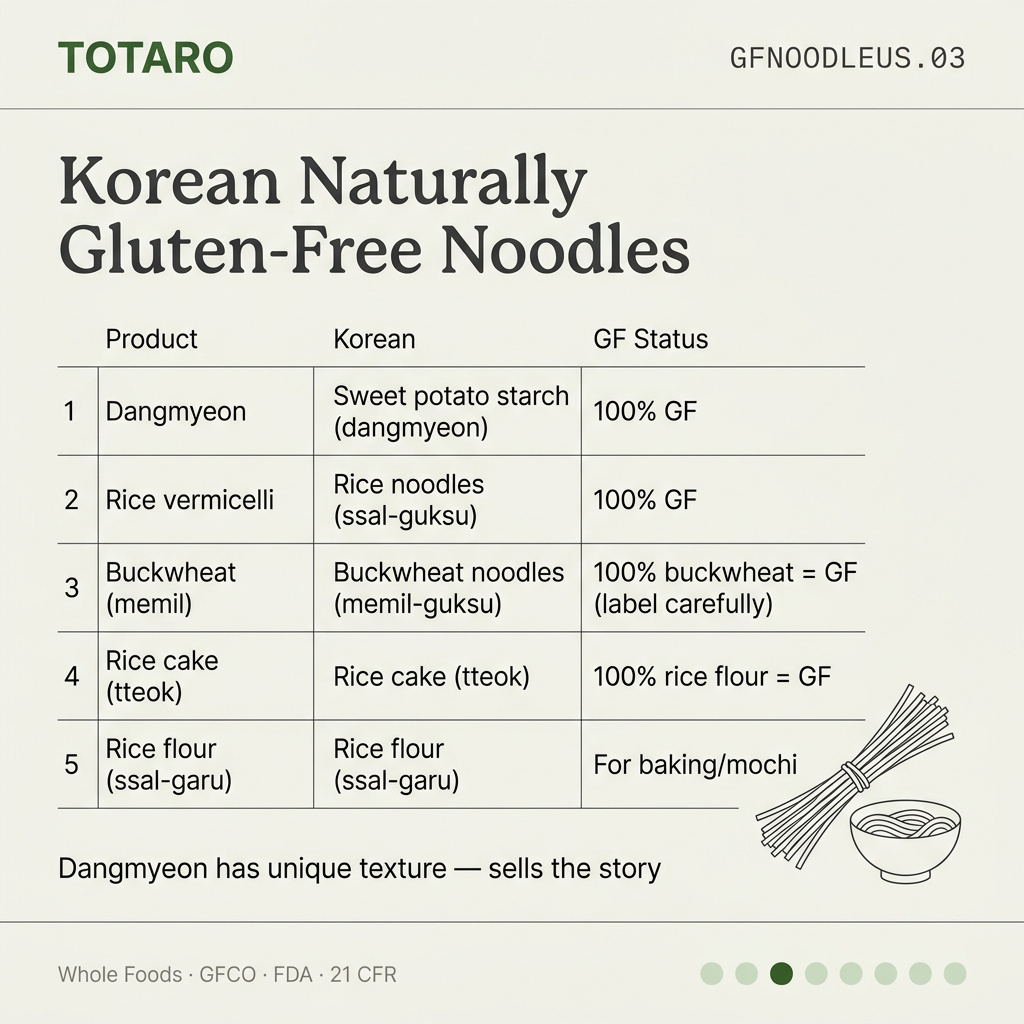
(1) Dangmyeon (sweet potato starch noodle) — 100% sweet potato starch, naturally gluten-free, used in japchae. Unique texture sells the story. (2) Rice vermicelli (mi) — used in Vietnamese pho but Korean style with kimchi or bulgogi. (3) Buckwheat noodles (memil-guksu) — 100% buckwheat is gluten-free; mixed varieties are not. Label carefully. (4) Rice cake (tteok) — 100% rice flour. (5) Korean rice flour (ssal-garu) — for baking, mochi, pancakes.
2. Whole Foods Quality Standards for Gluten-Free
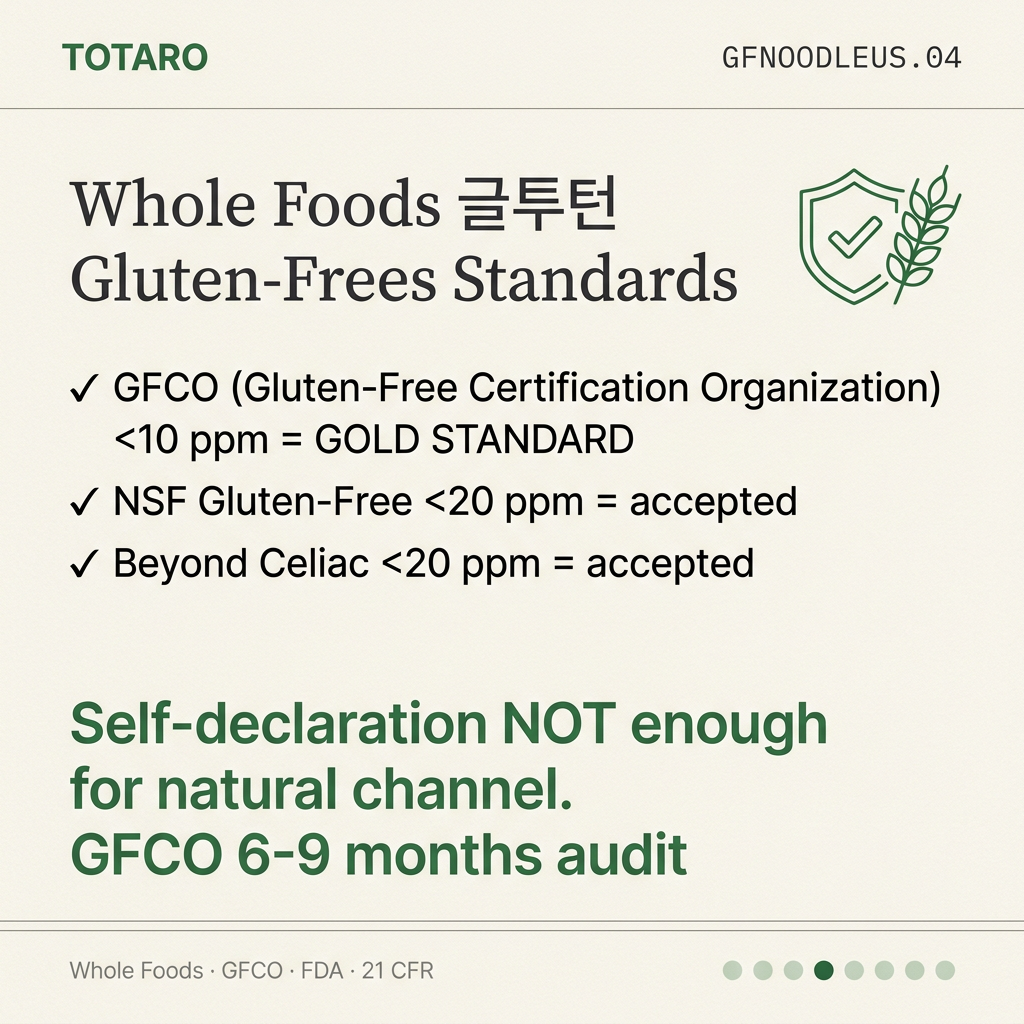
Whole Foods accepts products certified by Gluten-Free Certification Organization (GFCO) — <10 ppm, NSF Gluten-Free — <20 ppm, or Beyond Celiac — <20 ppm. Self-declaration is not enough for the natural channel. GFCO is the gold standard Whole Foods buyers prefer. Korean manufacturers need to apply for GFCO certification — 6-9 months, audit-based.
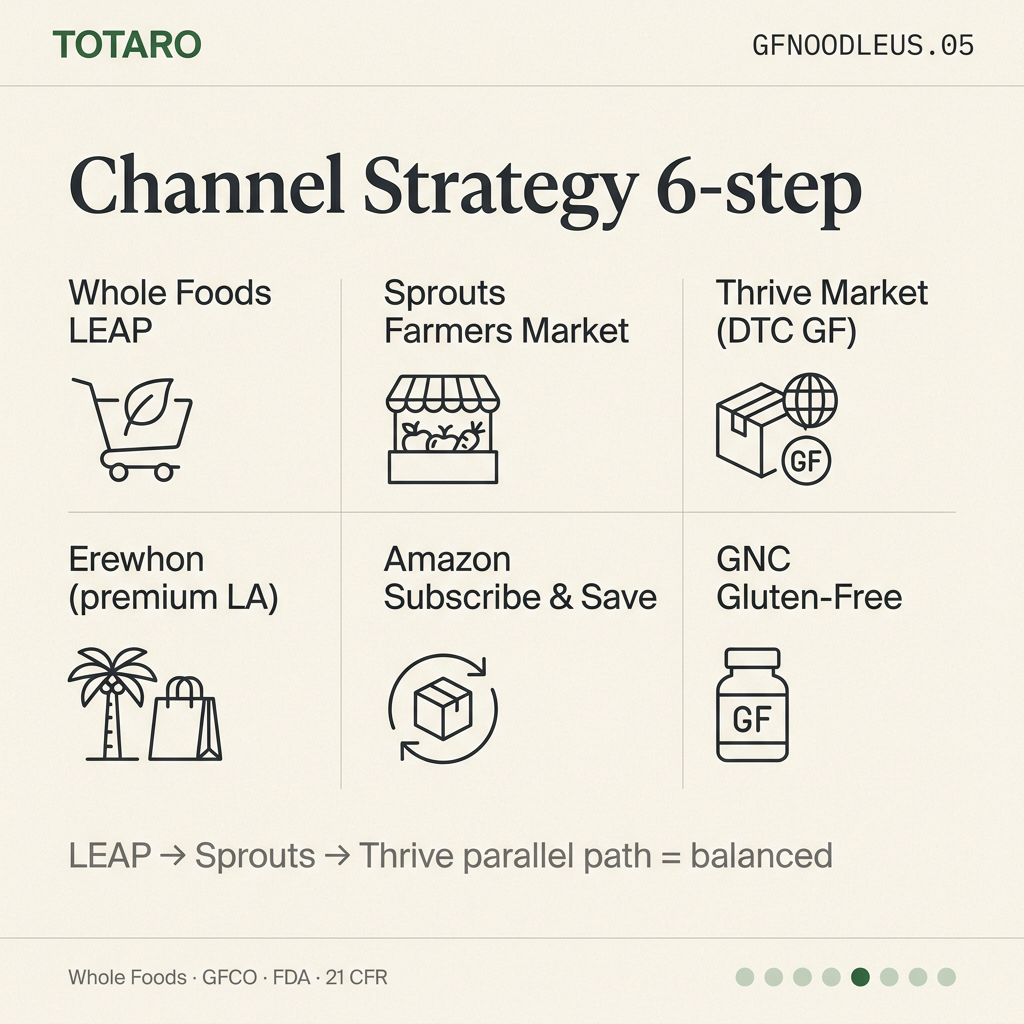
3. Channel Strategy
(1) Whole Foods LEAP program (Whole Foods Supplier Info) for emerging Korean brands. (2) Sprouts Farmers Market — strong specialty diet category. (3) Thrive Market — DTC gluten-free focused. (4) Erewhon — premium LA-centric trial. (5) Amazon Subscribe & Save — repeat purchase gluten-free buyers. (6) GNC Gluten-Free — health food channel.
4. Big 9 Allergen Considerations
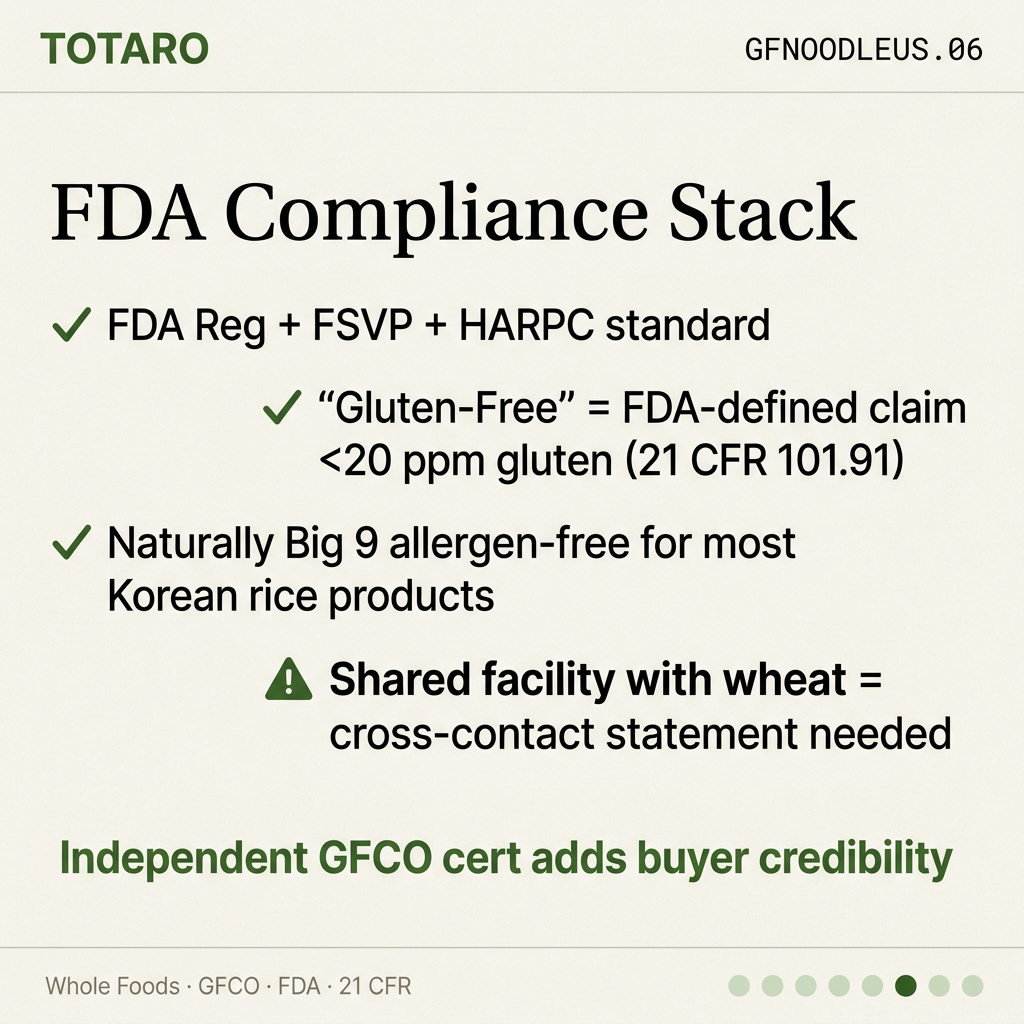
Most Korean rice products are naturally free from Big 9 allergens. Dangmyeon (sweet potato starch) is allergen-free. Rice vermicelli is allergen-free. Mixed buckwheat noodles may contain wheat — must label "Contains: Wheat" if so. Korean noodle products from shared facilities producing wheat-based products need cross-contact statements.
5. FDA Compliance Stack
FDA Foreign Facility Registration + FSVP + HARPC (21 CFR 117). Standard food labeling per 21 CFR 101. Nutrition Facts Panel mandatory. "Gluten-Free" is FDA-defined claim: product must contain <20 ppm gluten per 21 CFR 101.91. Independent certification (GFCO) adds buyer credibility.
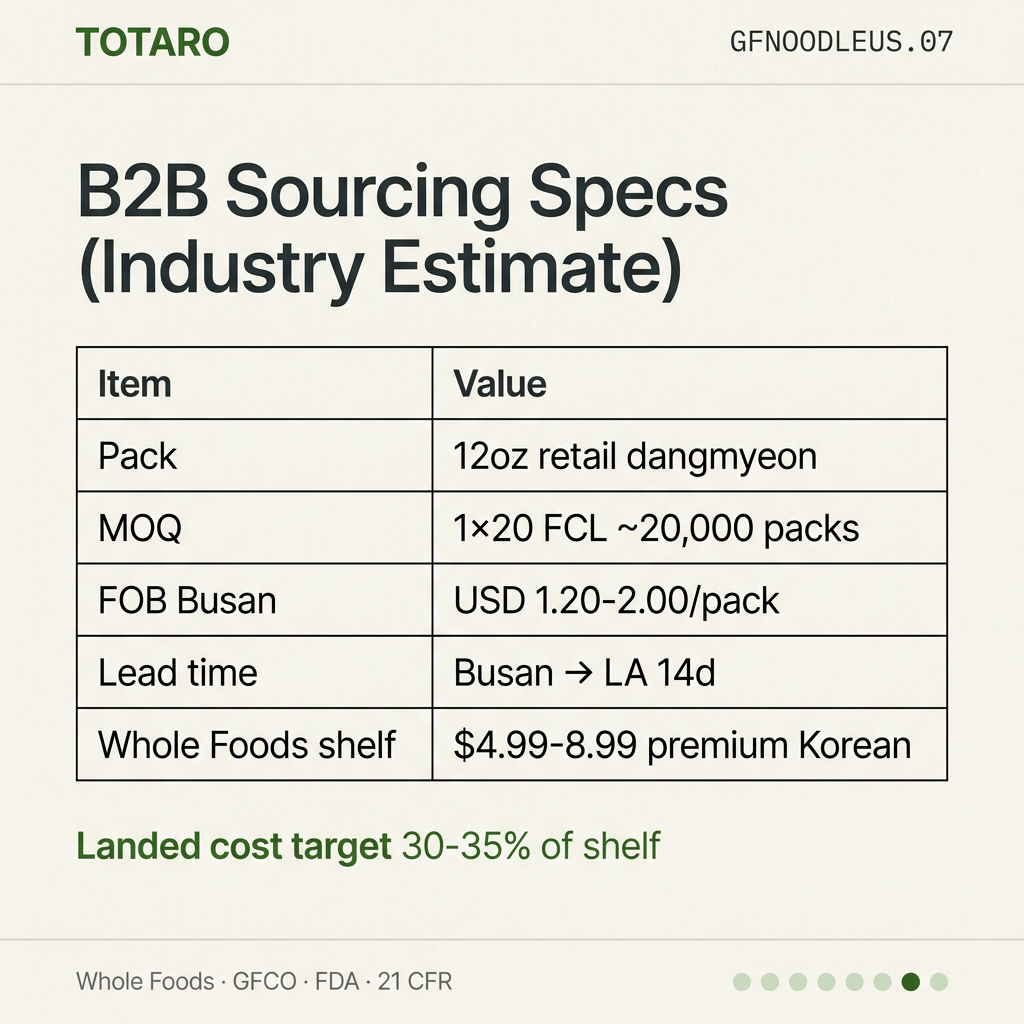
6. Pricing Reality (MOQ / FOB)
Industry estimate for 12oz dangmyeon retail pack: MOQ 1×20' FCL (~20,000 packs), FOB Busan→USWC USD 1.20-2.00/pack (2026 early). Direct RFQ required. Whole Foods shelf USD 4.99-8.99 for premium Korean noodles; landed cost target 30-35%.
What to Do This Week
(1) Apply for GFCO certification for the lead SKU — 6-9 months. (2) Build a 3-SKU gluten-free lineup (dangmyeon + rice vermicelli + rice flour). (3) Apply to Whole Foods LEAP with the GFCO-certified SKU as the lead. (4) Set up Thrive Market and Amazon Subscribe & Save for DTC parallel channels. (5) Position Korean rice flour as mochi / Asian baking angle for cross-category placement. The gluten-free Korean shelf is wide open.
Sources
Related Guides
Ask AI to find your Korean food brand
Describe what you need in plain language — get matched with verified brands in seconds.
Try AI Brand Search