카드 1 / 8
Korean Natural Peanut Butter for Trader Joe's and Whole Foods: Sourcing, Labeling, and the Clean-Label Trend (2026)
TL;DR
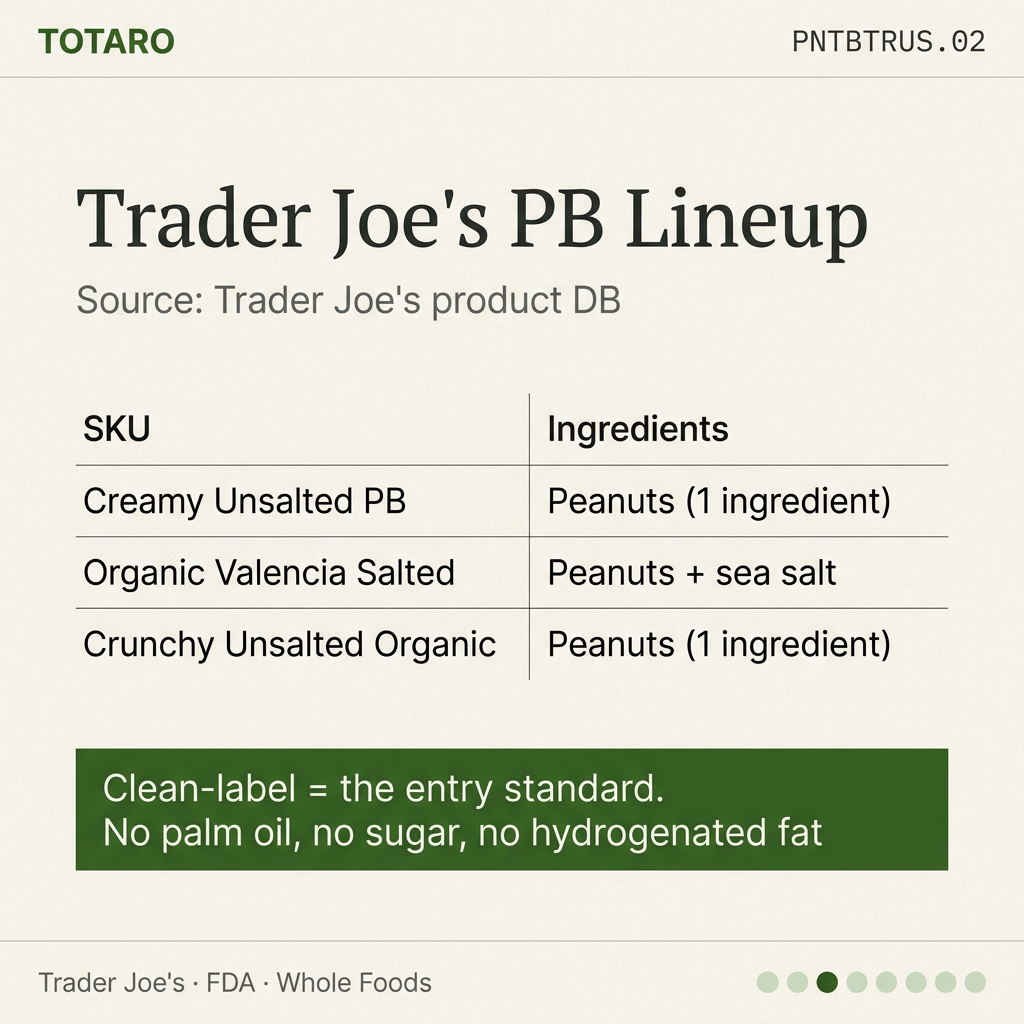
Trader Joe's Creamy Peanut Butter Unsalted is one ingredient: peanuts (Trader Joe's PB Creamy Unsalted). Their organic Valencia line (Trader Joe's Organic Valencia) signals regional sourcing transparency. Korean suppliers chasing US natural PB shelf space must match that clean-label discipline — no palm oil, no added sugar, no hydrogenated fats — and document it.
1. Clean-Label Is Now the Default for Natural PB Buyers
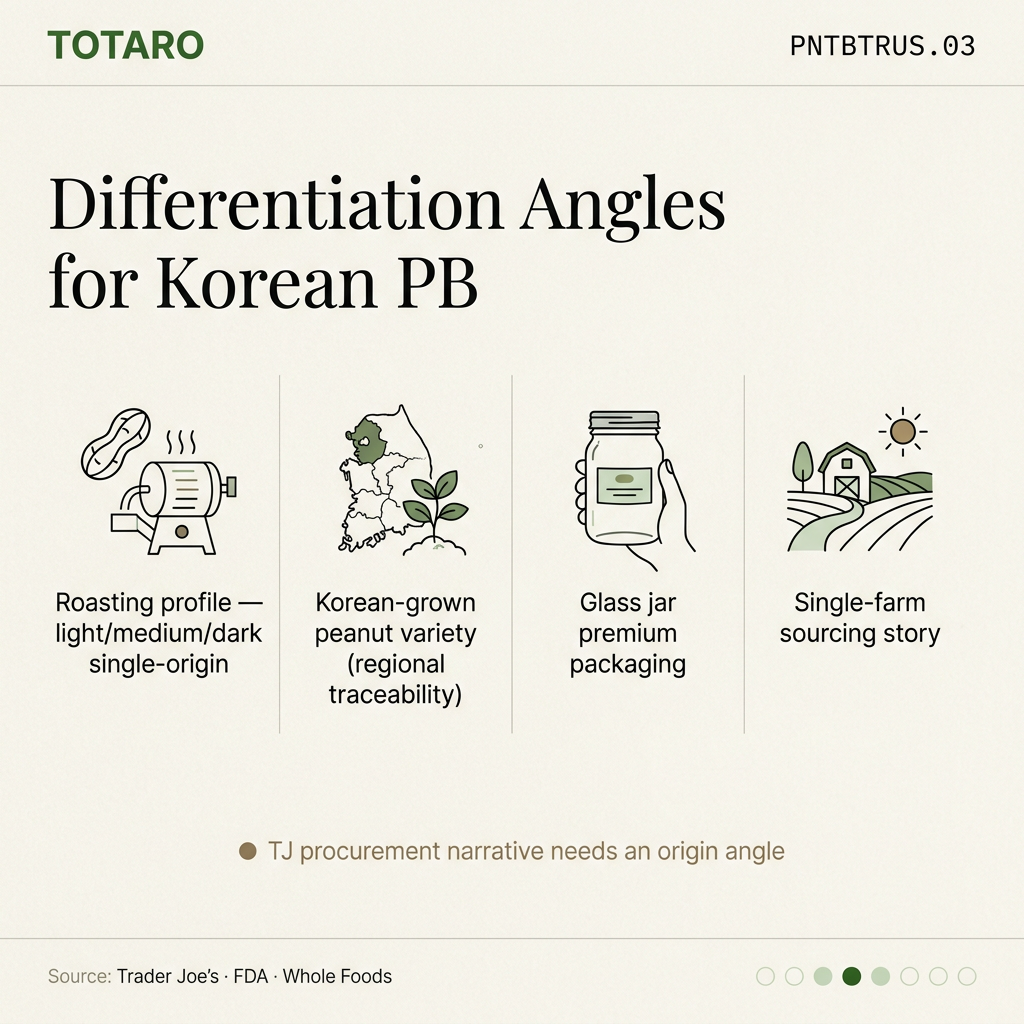
US buyers (Trader Joe's, Whole Foods, Sprouts, Erewhon) treat natural PB as a one-ingredient product. Any additive — even "natural flavors," stabilizers, or salt — pushes the product into mass-market PB (Skippy, Jif) where Korean suppliers cannot compete on price. The differentiation is roasting profile, peanut origin (Korean-grown vs imported), and packaging (glass jar vs PET).
2. FDA Requirements for PB Imports
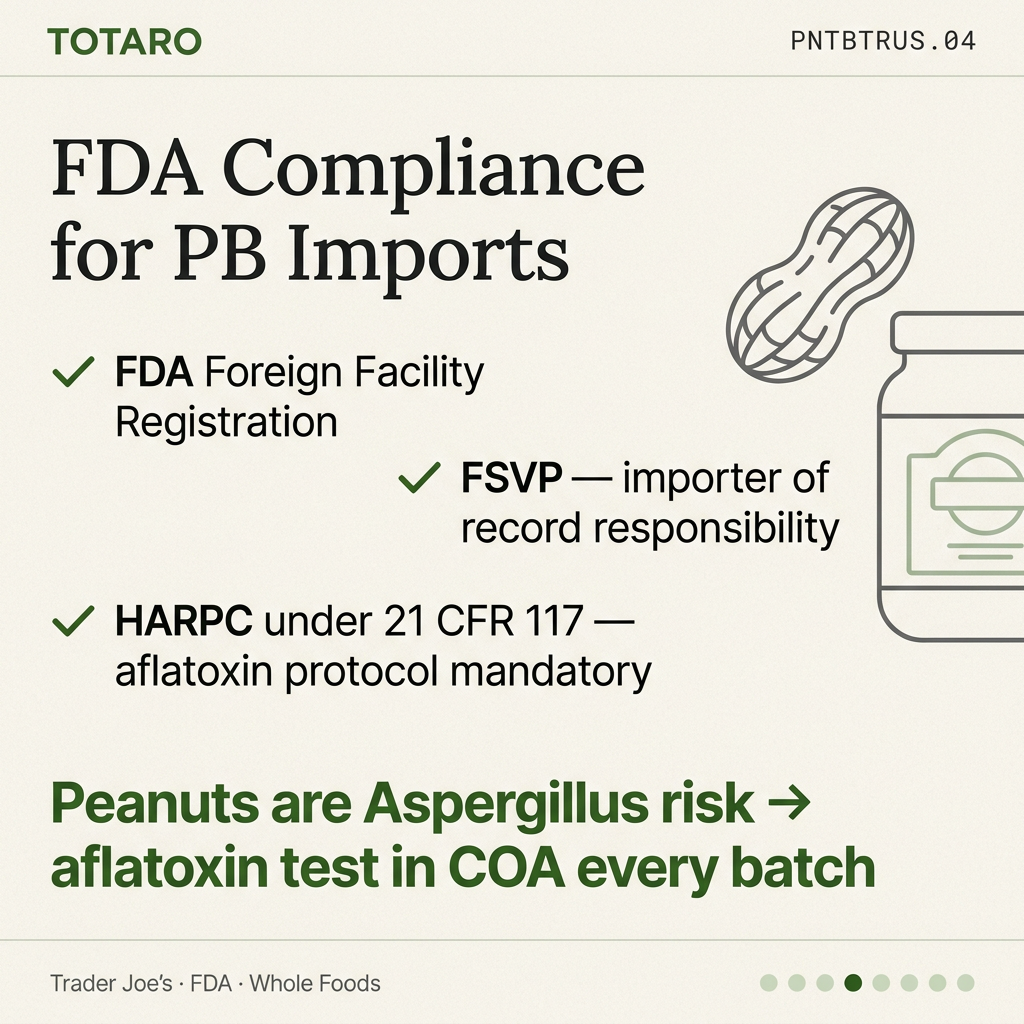
FDA Foreign Facility Registration is required (FDA — Online Registration), FSVP applies to the importer of record (FDA — FSVP), and HARPC requires a Food Safety Plan with aflatoxin testing protocol (peanuts are an Aspergillus risk category). 21 CFR 117 mandates this.
3. The Big 9 Allergen — Peanut Itself Is the Allergen
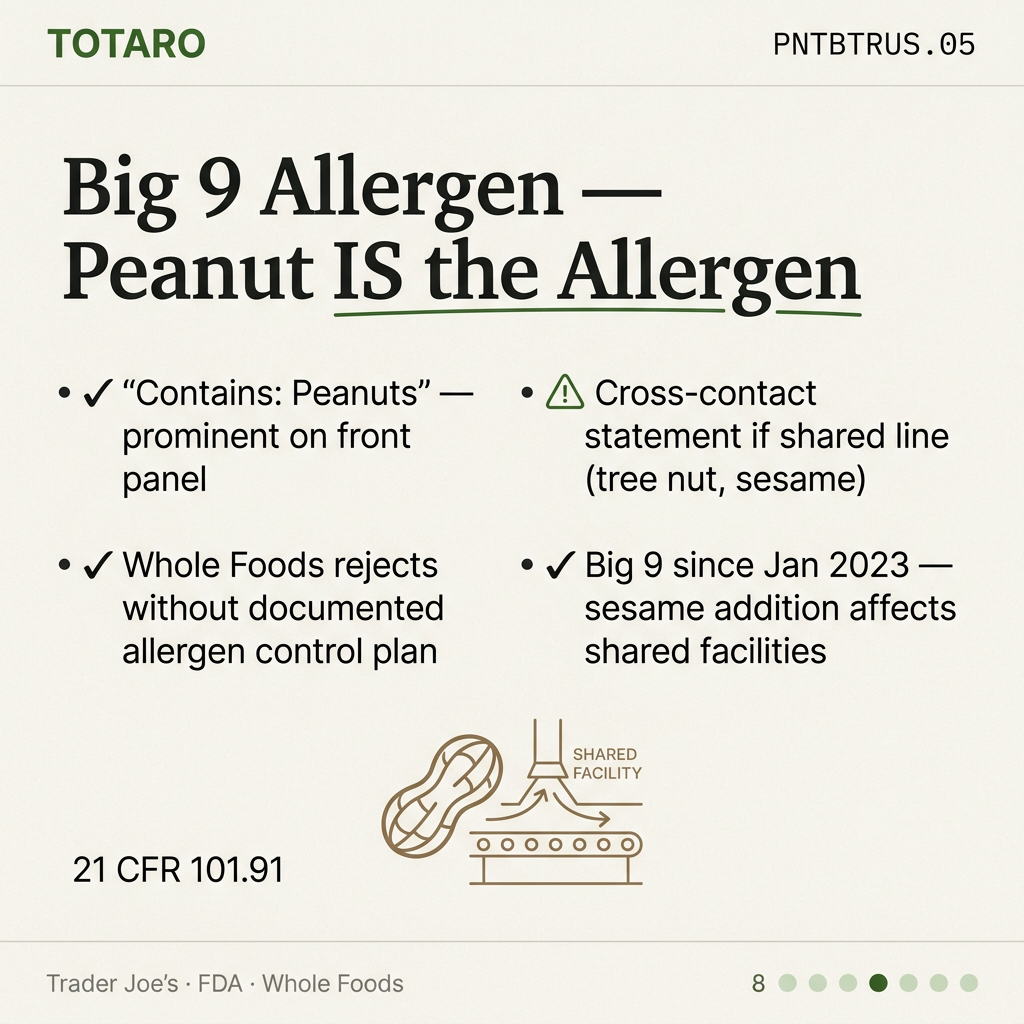
For PB, the product IS the allergen. The Big 9 allergen statement (21 CFR 101.91) requires "Contains: Peanuts" prominently. Cross-contact statements ("may contain tree nuts") become critical if the facility produces almond, hazelnut, or sesame products on shared lines. Whole Foods rejects suppliers without a documented allergen control plan.
4. Trader Joe's Sourcing Model
Trader Joe's runs a private-label model with a strict "one-ingredient when possible" philosophy across their PB line. They source globally but heavily prefer suppliers with regional traceability ("Valencia peanuts from Argentina," "Spanish peanuts from Texas"). A Korean PB supplier needs to define their origin story — Korean-grown peanut variety, single-farm sourcing, low-heat roasting — to fit the TJ procurement narrative.
5. Whole Foods Standards
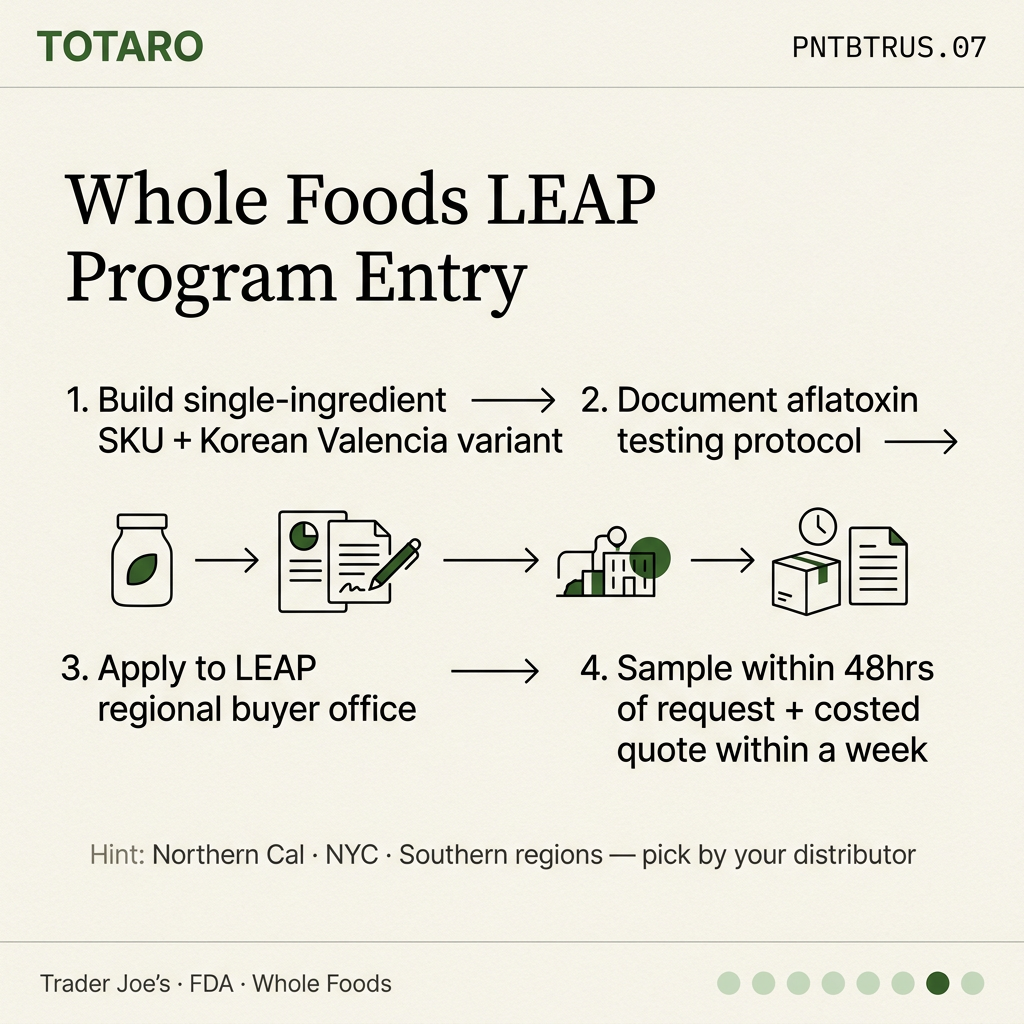
Whole Foods has its own Quality Standards (no artificial colors, flavors, preservatives, sweeteners, hydrogenated fats). Their supplier portal (LEAP — Local & Emerging Accelerator Program) is the entry point for smaller brands (Whole Foods Supplier Info). Buyers expect samples within 48 hours of request and a costed quote within a week.
6. Pricing Reality (MOQ / FOB)
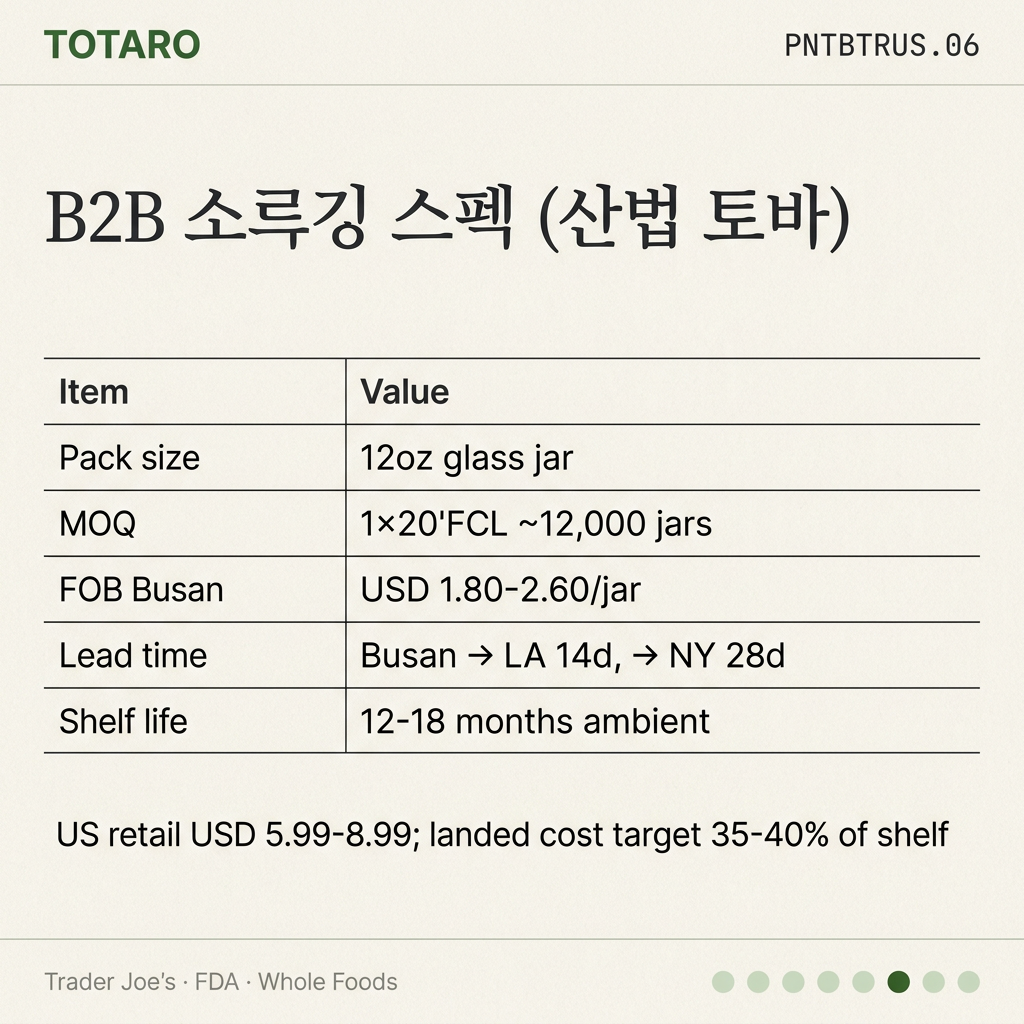
Industry estimate for 12oz glass jar natural PB: MOQ 1×20' FCL (~12,000 jars), FOB Busan to USWC USD 1.80–2.60 per jar in early 2026 — actual numbers require direct RFQ. US retail shelf price for natural PB sits at USD 5.99–8.99; landed cost target is typically 35–40% of shelf.
What to Do This Week
(1) Build a single-ingredient SKU and a "Korean Valencia" variant. (2) Get aflatoxin testing protocol documented. (3) Apply to Whole Foods LEAP for the regional buyer's office (Northern Cal, NYC, or Southern). The Korean PB opportunity is real but requires clean-label discipline matched to US buyer expectations.
Sources
Related Guides
Korean Jerusalem Artichoke + Psyllium Husk Halal Enzyme Supplement for the US: The SlimFox-Style Constipation + Weight Management Combo (2026)
Related Guides →Korean Jerusalem Artichoke for Constipation: 14-19% Inulin Content and Clinical Evidence on Gut Health (2026)
Related Guides →How to Import Korean Food into the USA: Complete 2026 Guide
Related Guides →Ask AI to find your Korean food supplier
Describe what you need in plain language — get matched with verified suppliers in seconds.
Try AI Supplier Search