카드 1 / 8
Korean Natural Peanut Butter to the EU: Bio Supermarkets, EU Organic Cert, and the Clean-Label Wave (2026)
TL;DR
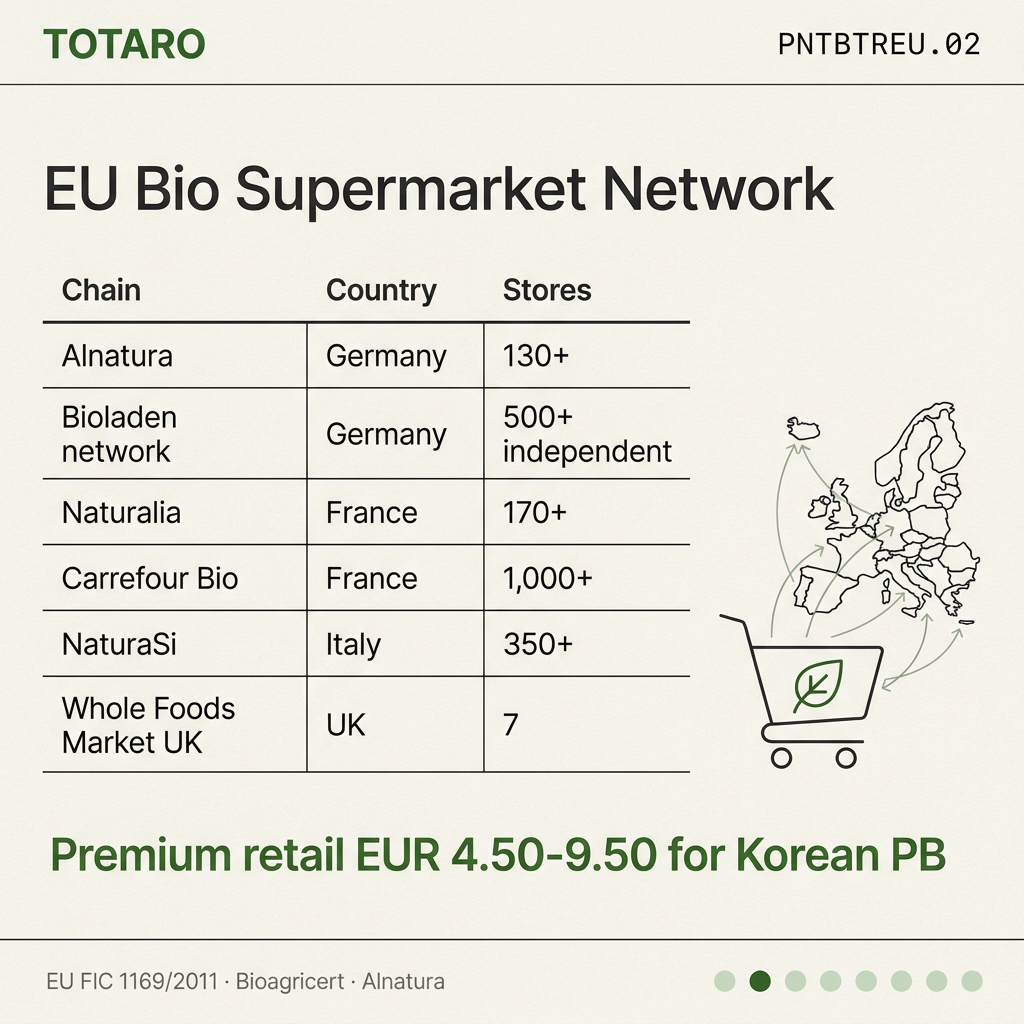
EU bio supermarkets — Alnatura (Germany, 130+ stores), Bioladen (independent network 500+), Naturalia (France, 170+ stores), Whole Foods Market UK (7 stores), Carrefour Bio (1,000+ stores), REWE Bio integration — demand EU Organic certification (Eurolab certified) + clean-label format (one ingredient: peanuts). Korean natural peanut butter that hits both = real EU shelf opportunity at premium retail EUR 4.50-9.50.
1. EU Organic Certification — The Mandatory Gateway
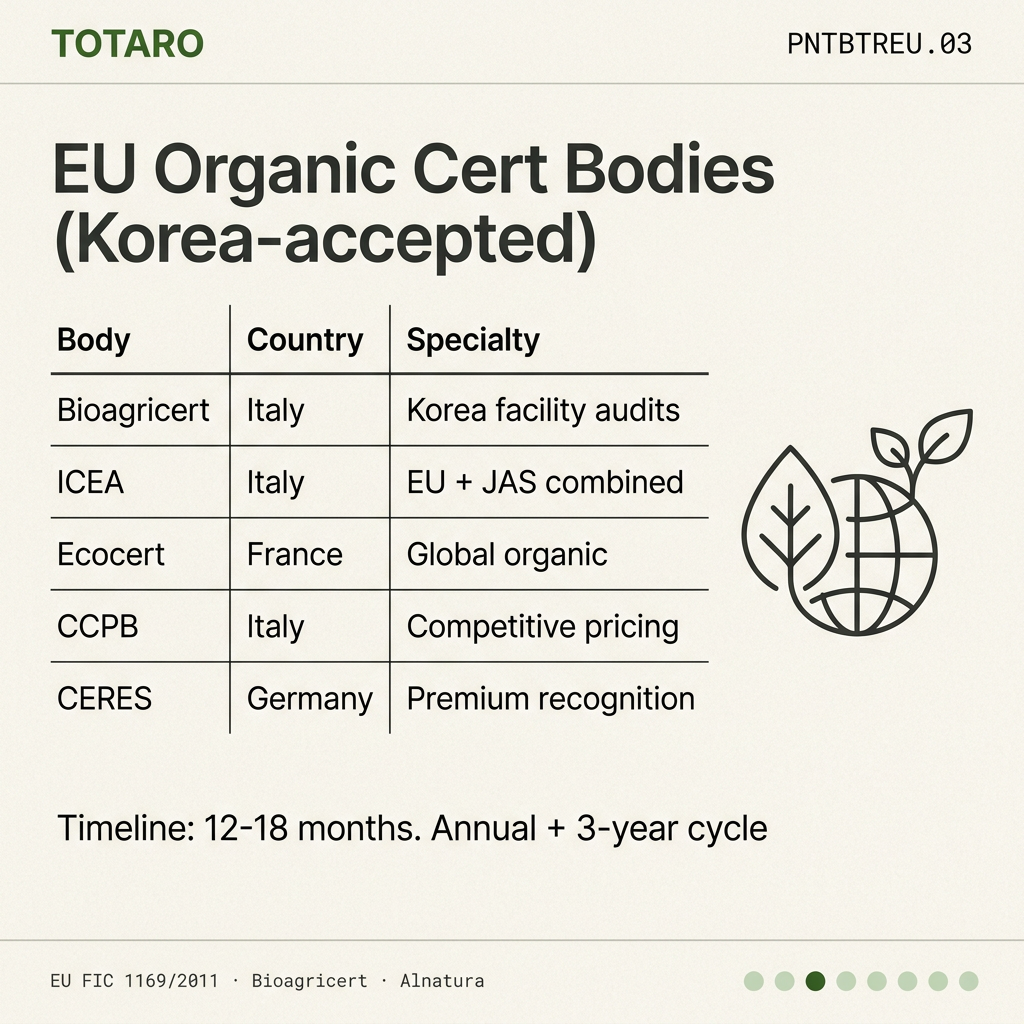
EU Organic (logo: green leaf) certification is mandatory for any "organic" or "bio" claim in the EU. Korean MFDS organic does NOT have EU equivalence — Korean facilities need a separate EU-accredited certification body audit:
- Bioagricert (Italy) — covers Korean facilities
- ICEA (Italy) — EU + JAS Japan combined audits
- Ecocert (France) — global organic certification
- CCPB (Italy) — competitive pricing
- CERES (Germany) — strict but premium recognized
Timeline: 12-18 months from kickoff. Annual recertification + 3-year cycle.
2. Clean Label Standard — One Ingredient or Two
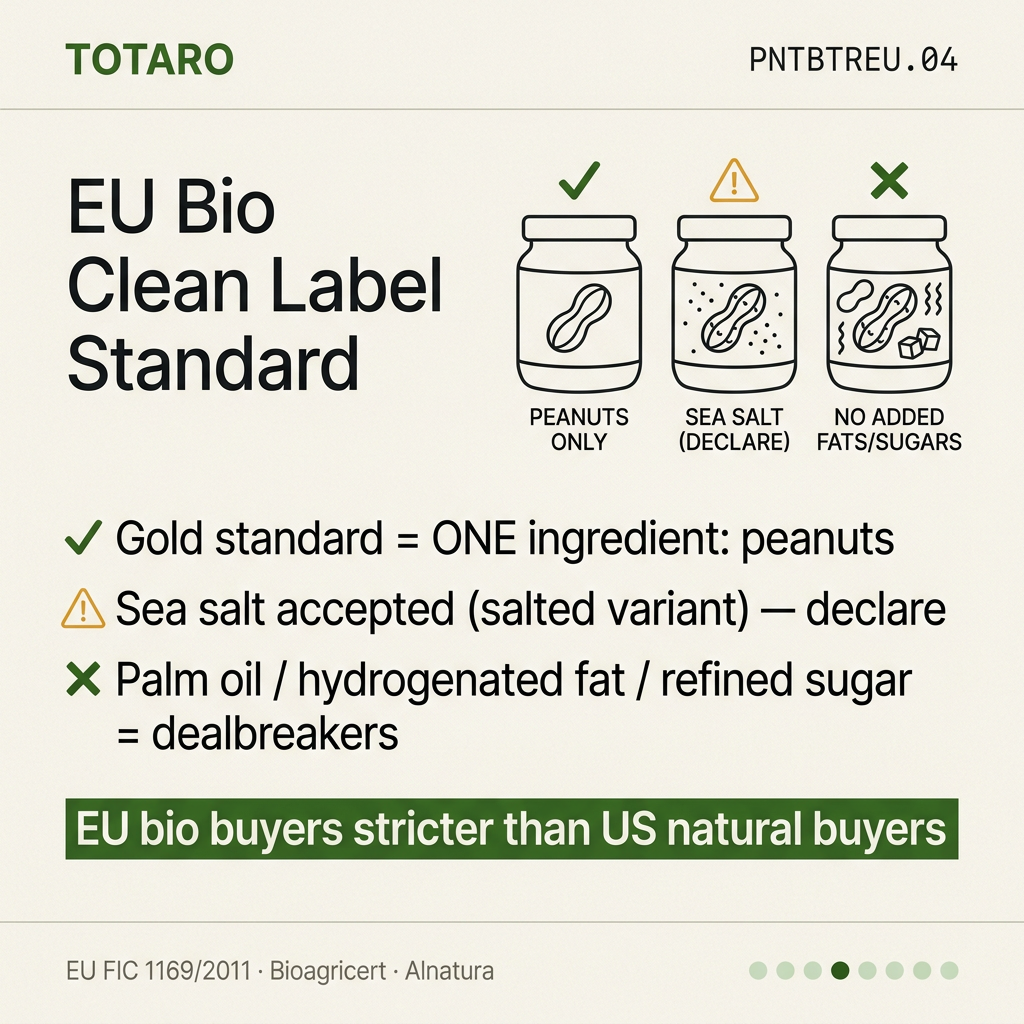
EU bio consumers are even stricter than US natural buyers. The gold standard is single ingredient: peanuts. Acceptable additions:
- Sea salt (if salted variant) — must be declared
- Sunflower oil — generally rejected by purists
- Honey or maple — niche "sweetened" variant
- Cocoa or vanilla — "chocolate / vanilla" extensions
Palm oil, hydrogenated fat, refined sugar, mono- and diglycerides are dealbreakers at every EU bio supermarket buyer.
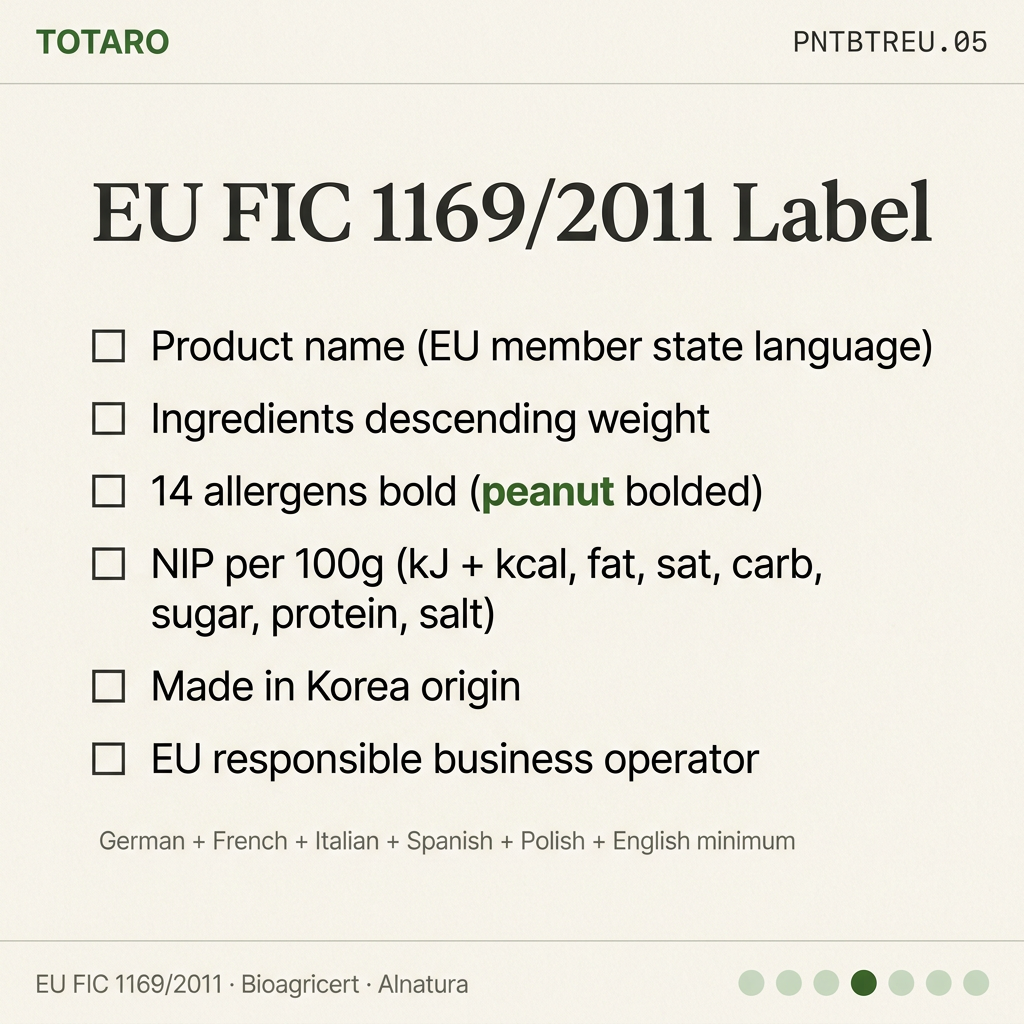
3. FIC 1169/2011 Labelling Stack
EU FIC 1169/2011 mandates (EUR-Lex — Regulation 1169/2011):
- Product name (in EU member state language)
- Ingredients in descending order by weight
- 14 allergen highlights (peanut = the product itself, bolded)
- Nutrition Information Panel per 100g (kJ + kcal, fat, saturated fat, carbohydrates, sugars, protein, salt)
- Country of origin (Made in Korea)
- EU responsible business operator (EU importer name + address)
- Date of minimum durability (Best before DD/MM/YYYY)
- Storage conditions
- Net weight
- Lot identification
Korean exporters need multi-language label panels: typically German + French + Italian + Spanish + Polish + English minimum.
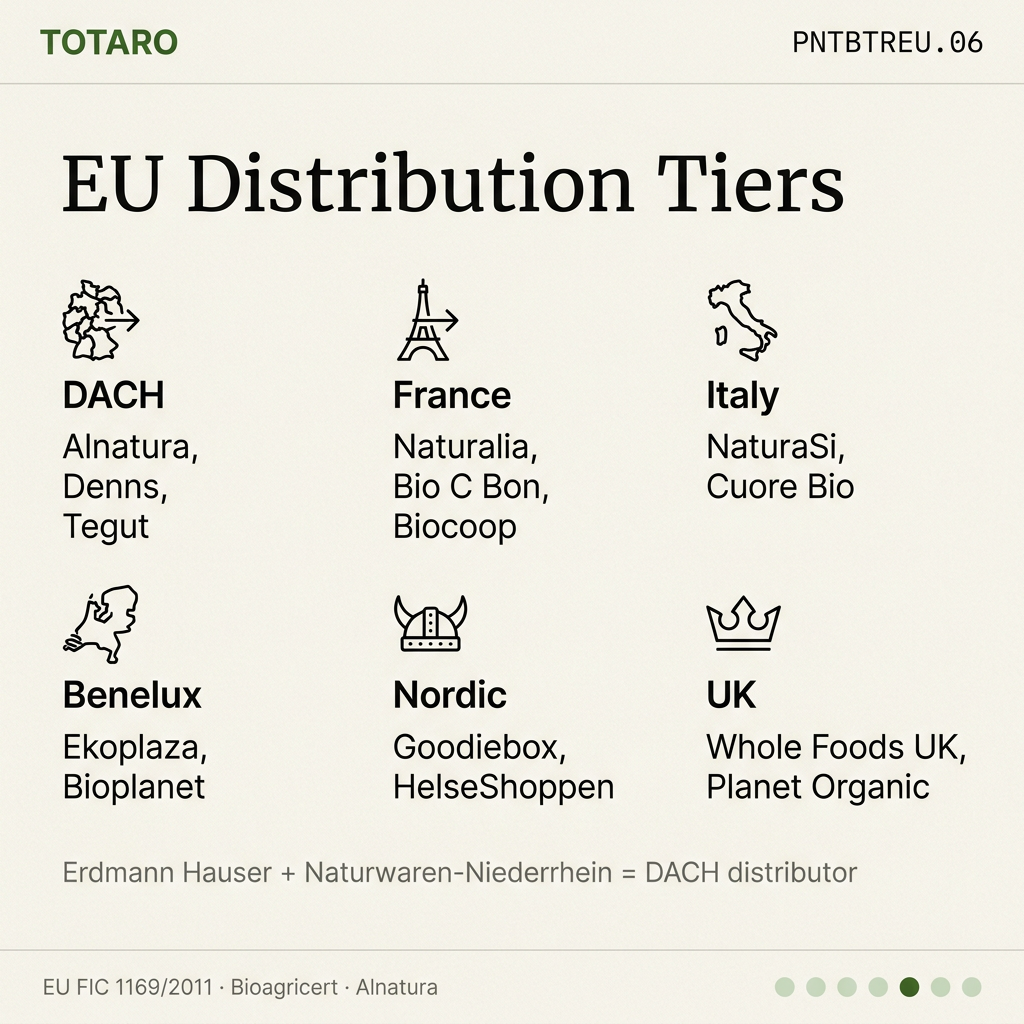
4. EU Distribution Tiers
(1) DACH region (Germany, Austria, Switzerland) — largest bio market in EU. Alnatura, Denns BioMarkt, Tegut, Demeter network.
(2) France — Naturalia (Monoprix Group), Bio C Bon, Carrefour Bio, Biocoop cooperative.
(3) Italy — NaturaSi (largest organic chain), Cuore Bio.
(4) Benelux — Ekoplaza (Netherlands), Bioplanet (Belgium).
(5) Nordic — Goodiebox (Denmark), HelseShoppen (Norway).
(6) UK (post-Brexit, separate market) — Whole Foods Market UK, Planet Organic, Holland & Barrett.
5. Big 14 Allergen Strategy — Peanut Cross-Contact
Korean PB facilities producing only peanut products are EU clean. Facilities producing tree nuts, sesame, or wheat on shared lines must declare cross-contact ("May contain traces of: "). EU bio consumers actively avoid cross-contact products — single-product facility = premium positioning.
6. Channel Strategy
(1) Alnatura own brand — Korean PB as Alnatura private label (B2B OEM, not retail brand). Volume but margin compressed.
(2) Branded entry through Bioladen network — independent bio shops, 500+ across Germany. Direct importer-to-store.
(3) EU-wide distributor partner — Bioagency.de, Naturwaren-Niederrhein, Erdmann Hauser Getreideprodukte distribute multiple brands across DACH.
(4) DTC via Amazon DE/FR — Premium Gourmet category.
(5) Organic specialty stores in major cities (Paris Marais, Berlin Prenzlauer Berg, Amsterdam, Milan).
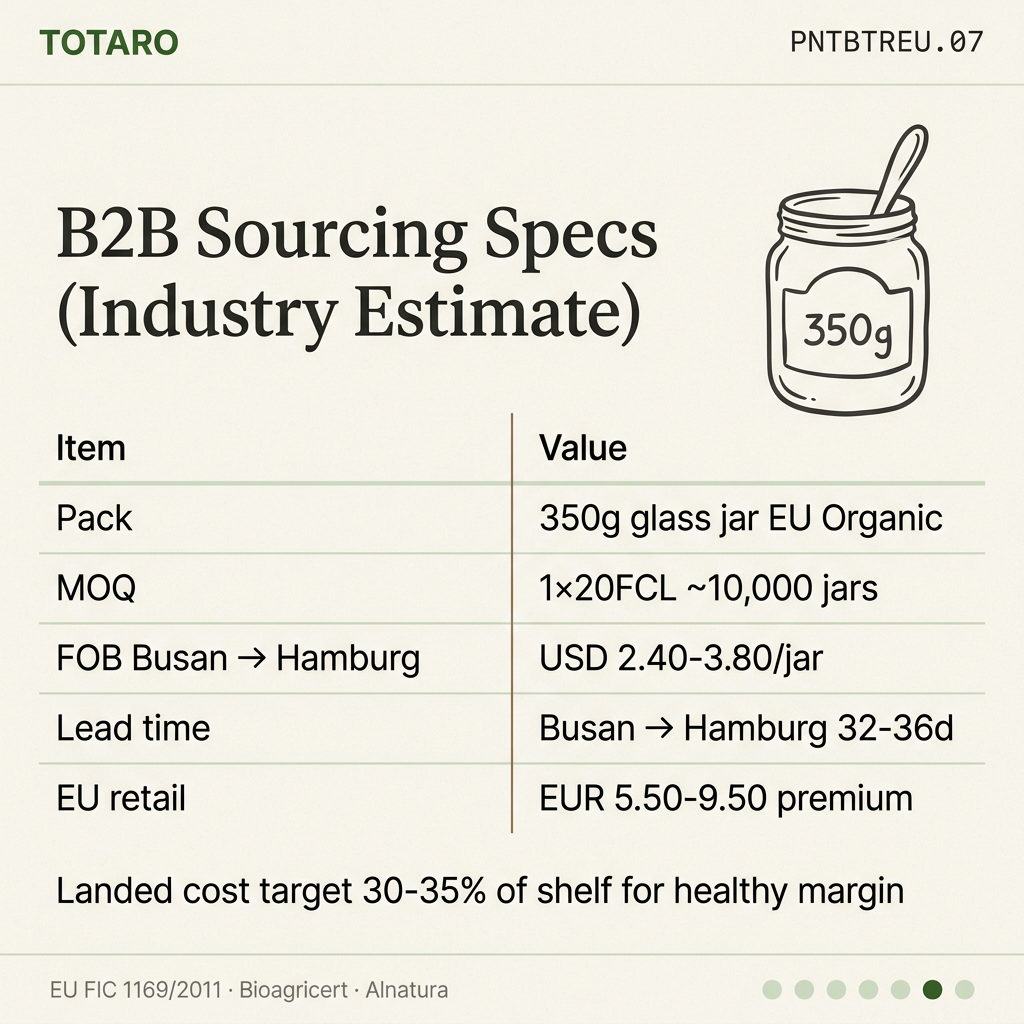
7. Pricing Reality (MOQ / FOB)
Industry estimate for 350g glass jar EU Organic certified: MOQ 1×20FCL (~10,000 jars), FOB Busan→Hamburg/Rotterdam USD 2.40-3.80/jar (early 2026, organic premium). Direct RFQ required. EU retail EUR 5.50-9.50 for premium Korean PB at Alnatura/Naturalia; landed cost target 30-35% of shelf.
Action Checklist
(1) Start EU Organic certification with Bioagricert or Ecocert (12-18 months), (2) Build single-ingredient SKU (peanuts only) + Korean Valencia variant, (3) Engage German bio distributor (Erdmann Hauser, Naturwaren-Niederrhein), (4) Develop EU FIC compliant multi-language label, (5) Apply to Alnatura private label OR independent Bioladen channel. EU bio market is 30%+ premium margin if Organic + clean-label are real.
Sources
Related Guides
Ask AI to find your Korean food brand
Describe what you need in plain language — get matched with verified brands in seconds.
Try AI Brand Search