카드 1 / 8
Korean Kimchi Suppliers: Export Sourcing Guide for USA/Japan
Korean Kimchi Suppliers: Export Sourcing Guide
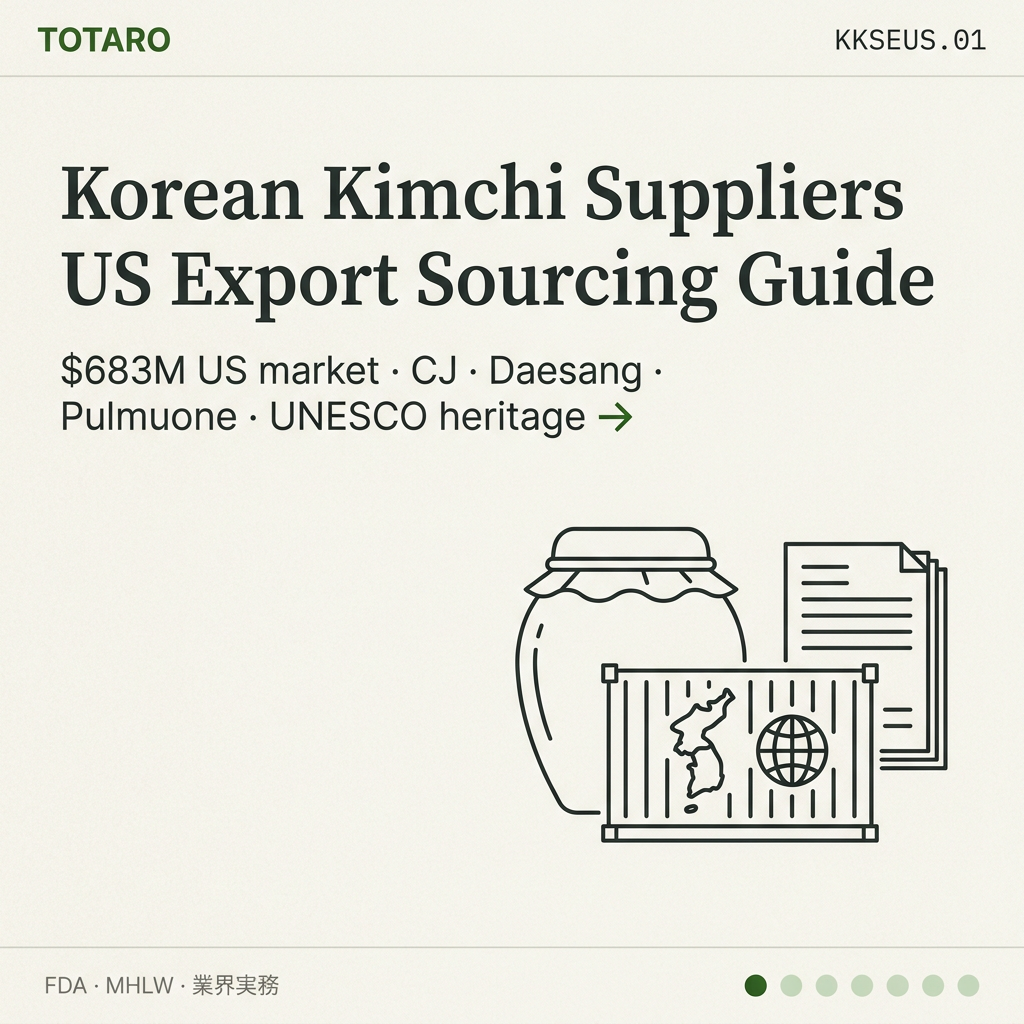
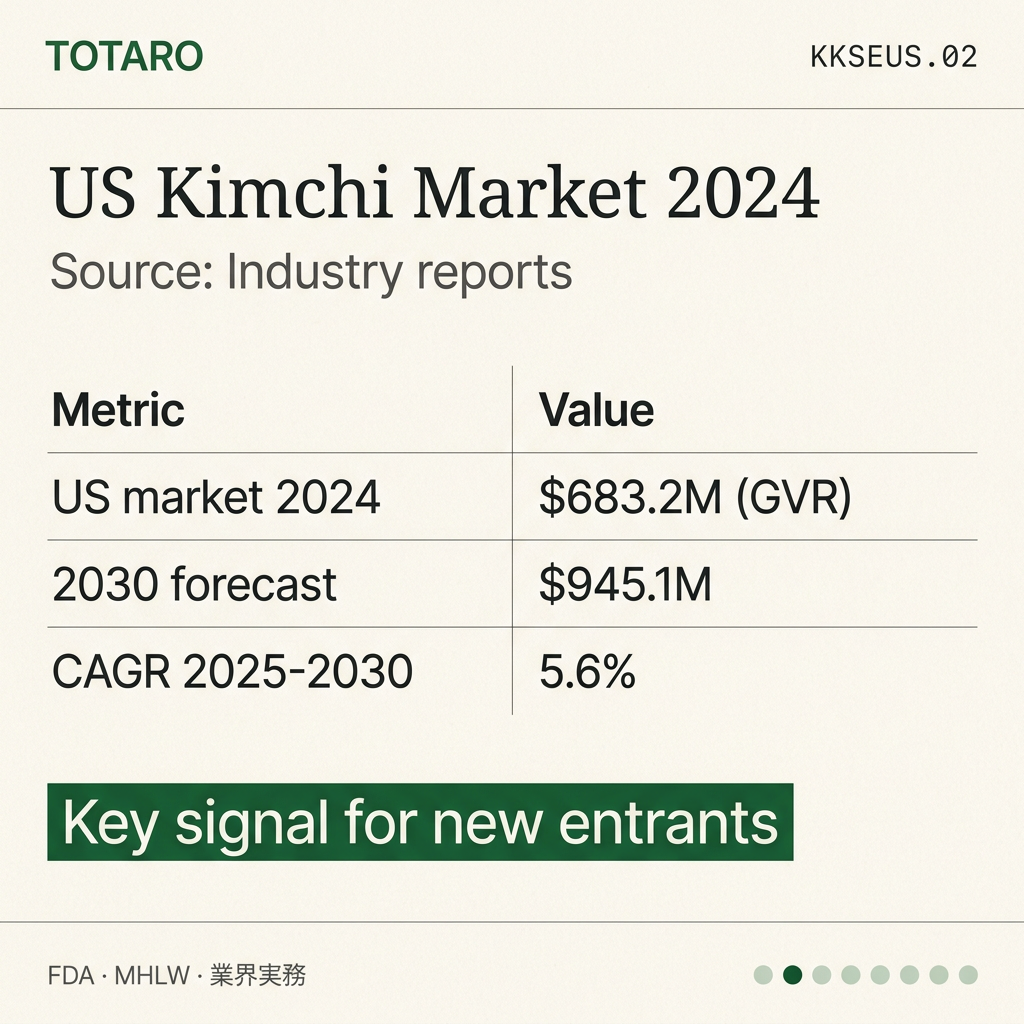
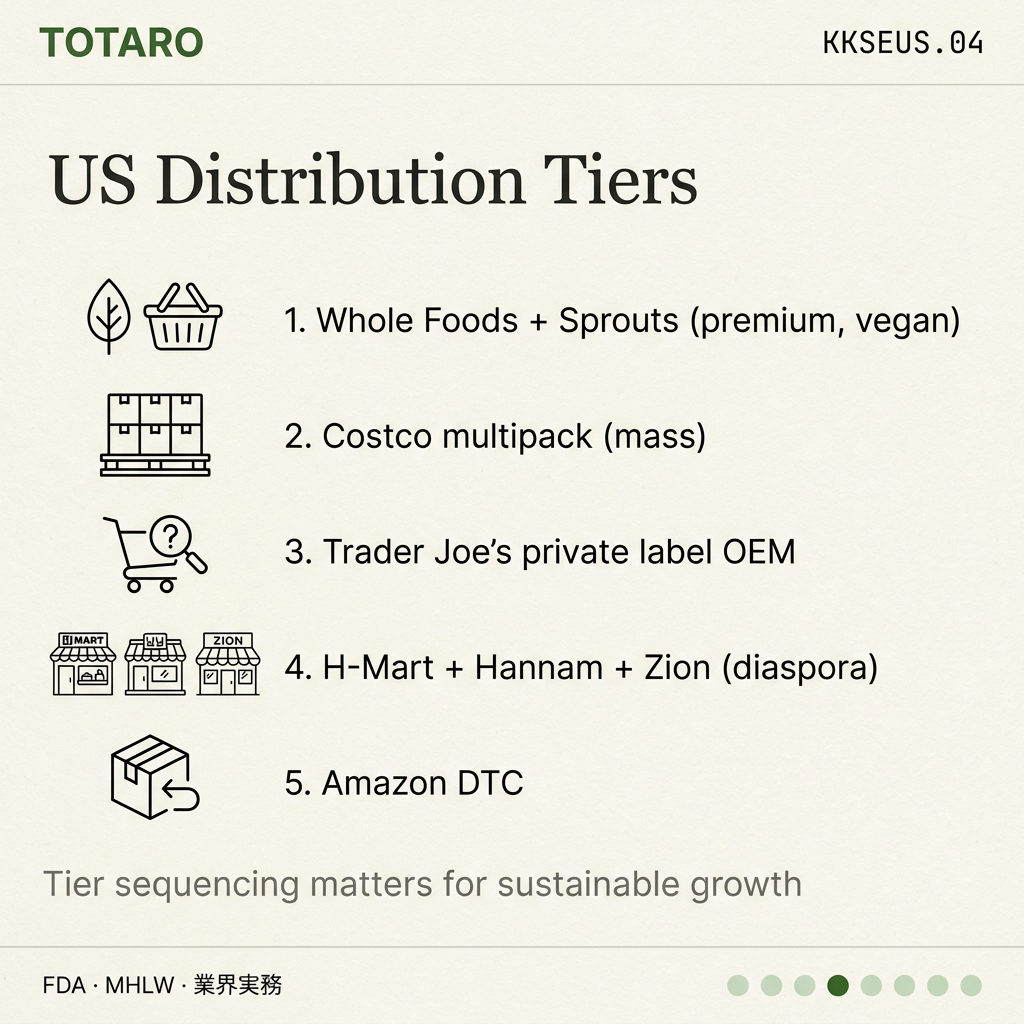
Korean kimchi exports hit $182M in 2025 (+34% YoY), with USA leading at $68M. The driver: kimchi as a Whole Foods staple, Costco bulk packs, and Korean restaurant boom in mid-tier US cities.
If you're sourcing kimchi for retail, food service, or e-commerce — here's the map.
Fermentation levels (critical decision)
| Level | Days | Profile | Best for |
|---|---|---|---|
| Light (geut-jeori) | 1-3 days | Crisp, fresh, mildly sour | Salad-style, fresh retail |
| Medium | 7-14 days | Balanced sour/spicy | Mainstream retail |
| Mature (mukge-jeori) | 21+ days | Tangy, complex | Cooking ingredient |
| Aged (mukeun) | 90+ days | Funky, intense | Specialty, restaurant supply |
Most Western retailers want light to medium for first launch. Mature/aged is for niche channels.
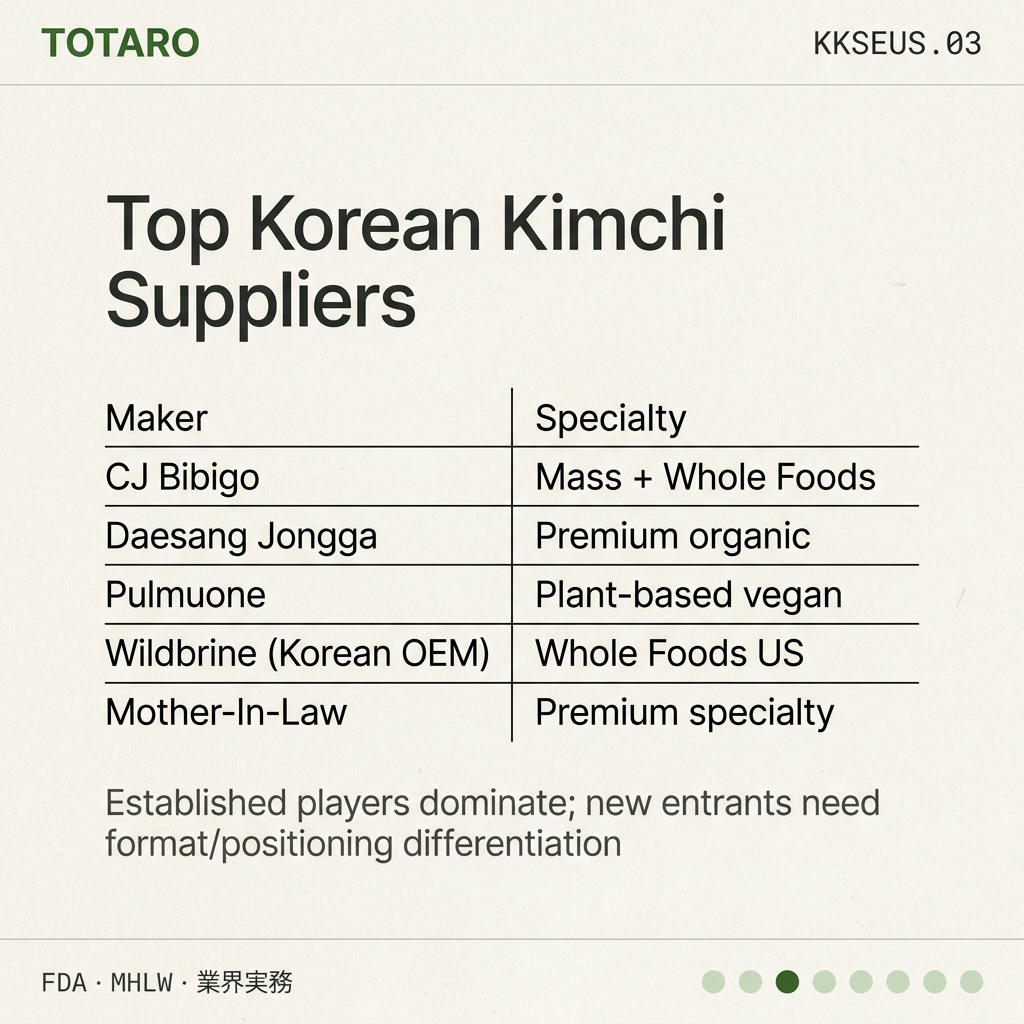
Top Korean kimchi OEMs
Tier 1:
- Daesang (청정원) — Largest exporter. Crisp standardized fermentation.
- Pulmuone Foods — Premium positioning, EU/USDA Organic.
- CJ CheilJedang (Bibigo) — Modern packaging, USA dominant.
- Hansung Food — Multi-SKU, flexible OEM.
Tier 2 (artisan/specialty):
- Doosan Bears Kimchi — Premium small-batch
- Local Jeolla-do producers — Authentic regional style
- Sajo Hae Pyo — Frozen kimchi, processed kimchi specialty
Packaging options
| Format | Use case | Shelf life |
|---|---|---|
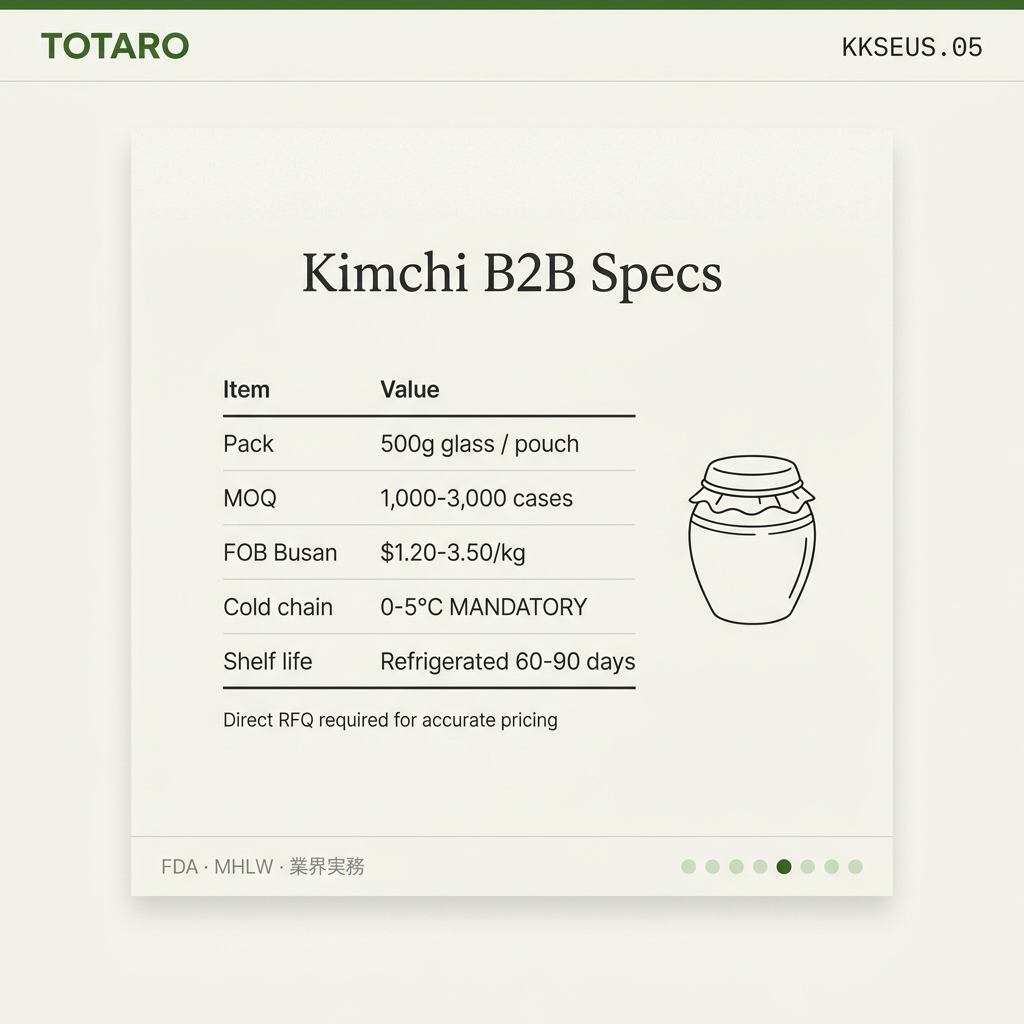
| 200g pouch | Retail trial size | 60-90 days refrigerated |
| 1kg jar | Mainstream retail | 90-180 days |
| 5kg pail | Restaurant supply | 90-180 days |
| Vacuum-sealed bulk | Food service | 120-365 days |
| Frozen kimchi | Long-distance shipping | 12+ months |
Critical export specifications
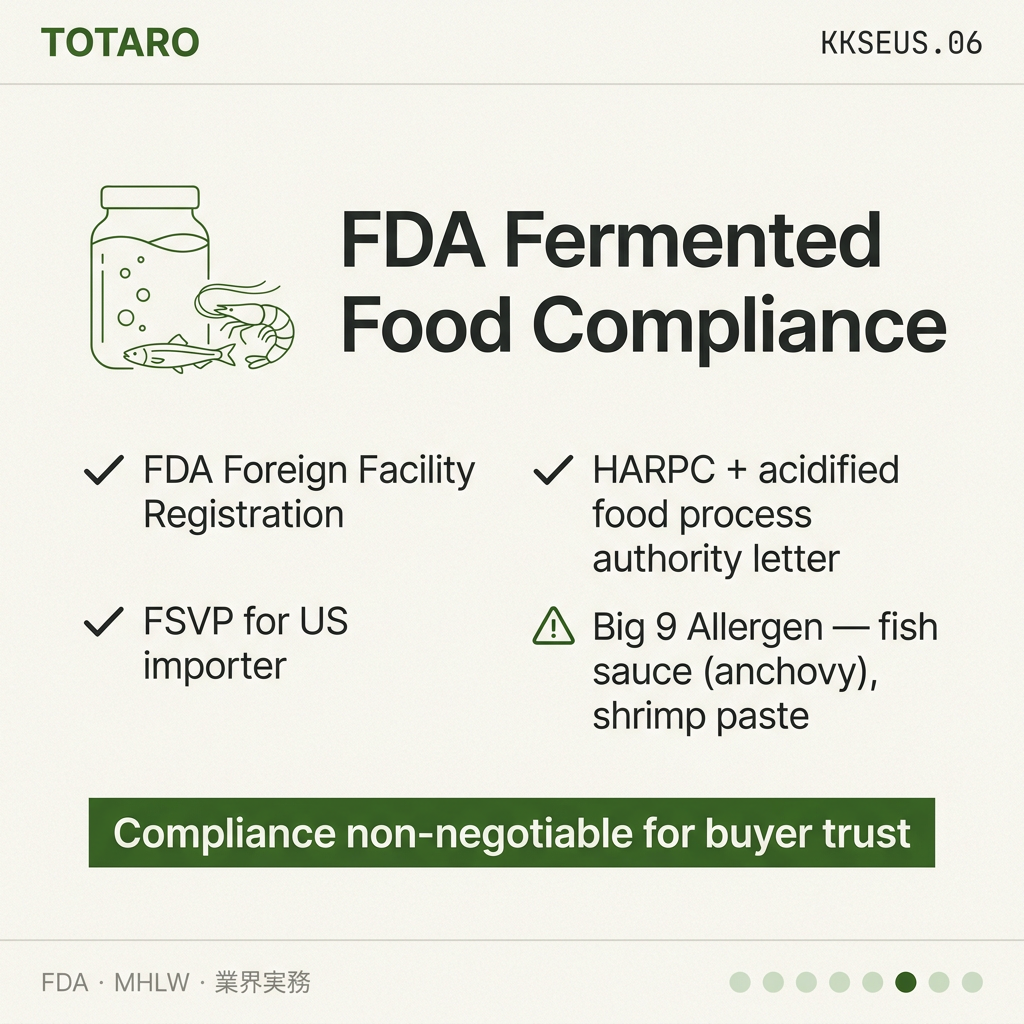
- Fish sauce / shrimp paste: verify if buyer needs vegan/Halal version (different fermentation).
- Salt content: typical 3-4%; some markets prefer lower (2.5-3%) for health positioning.
- Sugar content: typically <2g per 100g; verify on label for diabetic-friendly claims.
- Spice level: dialed for Western markets typically 30-50 SHU; authentic Korean is 50-100 SHU.
Cold chain requirements
- Shipping temperature: 0-4°C
- Storage at retail: 0-4°C
- Display refrigeration: 4°C max
- Breach tolerance: <2 hours above 7°C before quality concern
See our Cold Chain Logistics guide for export-specific detail.
What to do this week
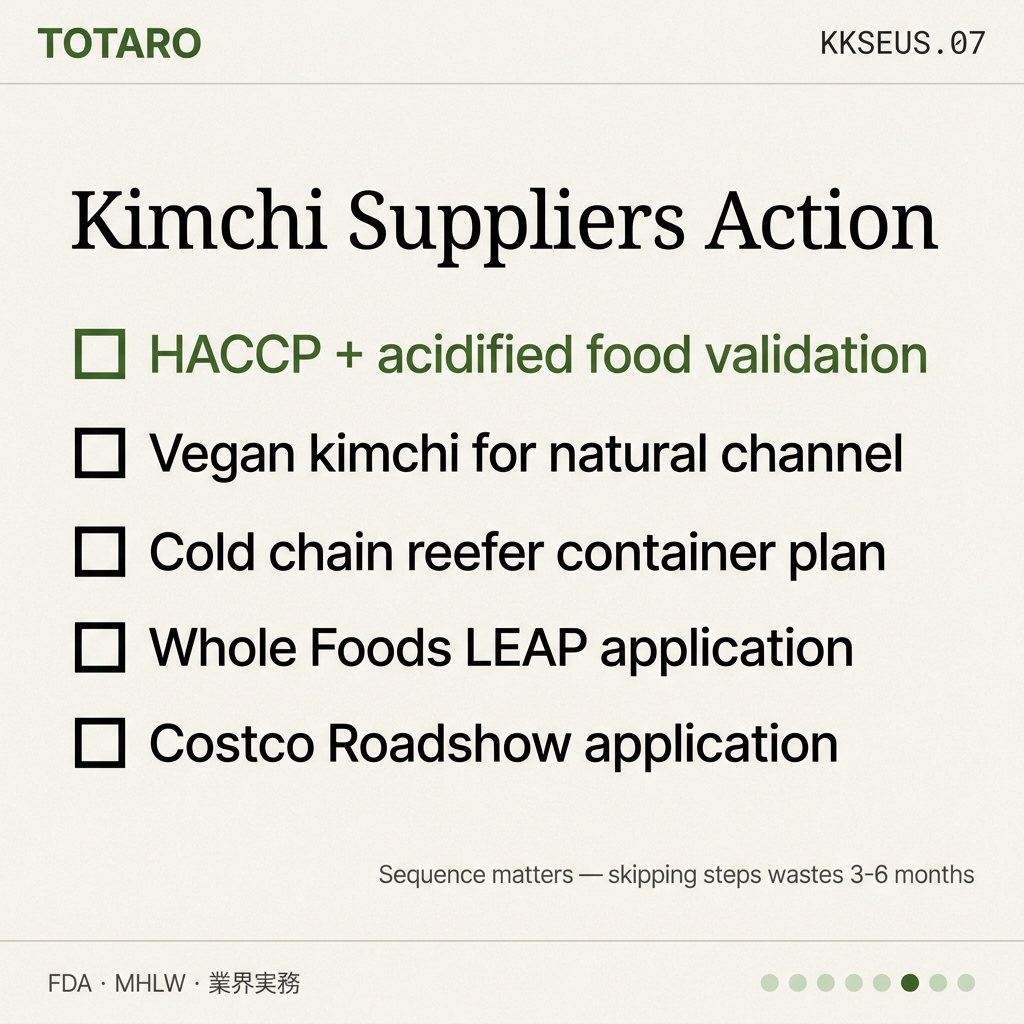
- Pick fermentation level first. Light/Medium for retail, Aged for specialty.
- Decide packaging strategy. Premium = jar; mainstream = pouch; bulk = pail.
- Verify Halal/Vegan compliance (matters for EU/Middle East/USA Whole Foods).
- Test 1-pallet first (3-5 cases) before container-scale order.
How TOTARO can help
TOTARO indexes 20+ Korean kimchi exporters by fermentation level, packaging, certification, and minimum order flexibility.
Find verified kimchi suppliers: TOTARO →
Related Guides
Korean Gochujang Wholesale — OEM, Private Label, USDA Organic
Related Guides →Korean Jerusalem Artichoke + Psyllium Husk Halal Enzyme Supplement for the US: The SlimFox-Style Constipation + Weight Management Combo (2026)
Related Guides →Korean Jerusalem Artichoke for Constipation: 14-19% Inulin Content and Clinical Evidence on Gut Health (2026)
Related Guides →Ask AI to find your Korean food supplier
Describe what you need in plain language — get matched with verified suppliers in seconds.
Try AI Supplier Search