카드 1 / 8
Korean Keto and Low-Carb Meals for the US: A $15.7B Market and the Whole Foods Entry Path (2026)
TL;DR
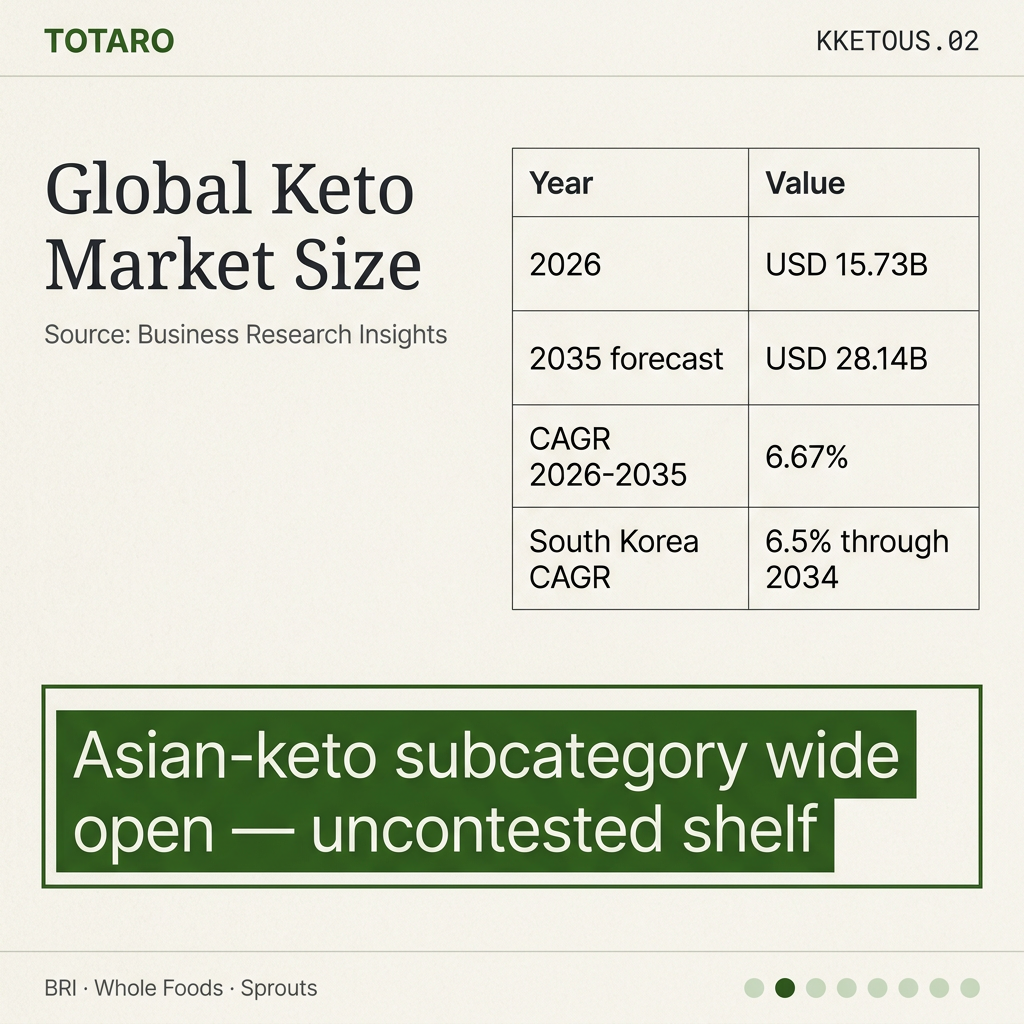
The global keto diet market is valued at USD 15.73 billion in 2026 and projected to reach USD 28.14 billion by 2035 at a 6.67% CAGR (Business Research Insights). South Korea's own keto food market grows at 6.5% CAGR through 2034 (Expert Market Research). Korean keto products — keto kimbap, konjac rice, almond flour pancake mix, low-carb tteokbokki — have a clean-ingredient story that fits Whole Foods and Sprouts.
1. Why Korean Keto Has a US Angle
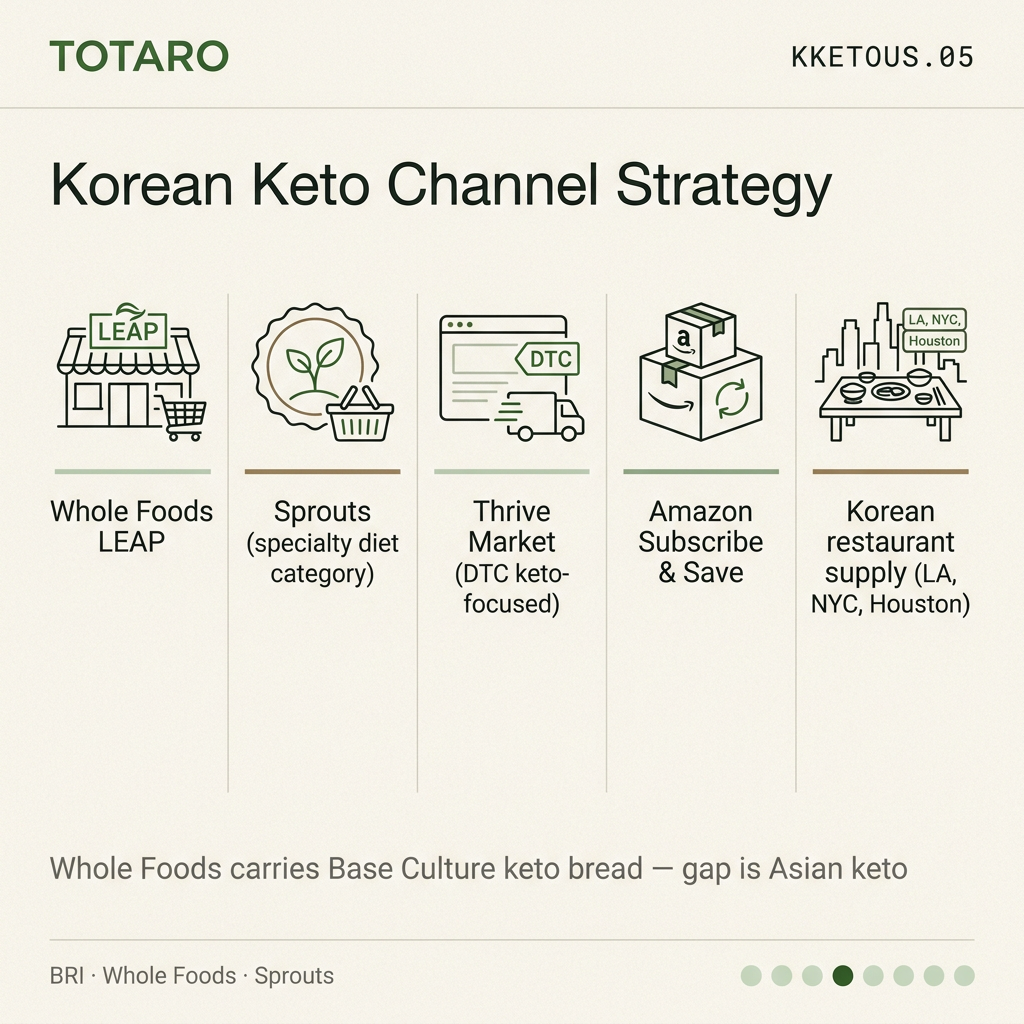
US keto consumers have been served by Atkins, Quest, Keto Krate — Western-style snacks and protein bars. Korean keto sits in a different niche: Asian-meal-format keto (rice substitutes, noodle alternatives, banchan-style sides). This is uncontested shelf space. Whole Foods carries Base Culture keto bread (Whole Foods Base Culture) and 50+ keto-friendly items (Whole Foods Keto List) but the Asian-keto subcategory is wide open.
2. Product-Market Fit Categories
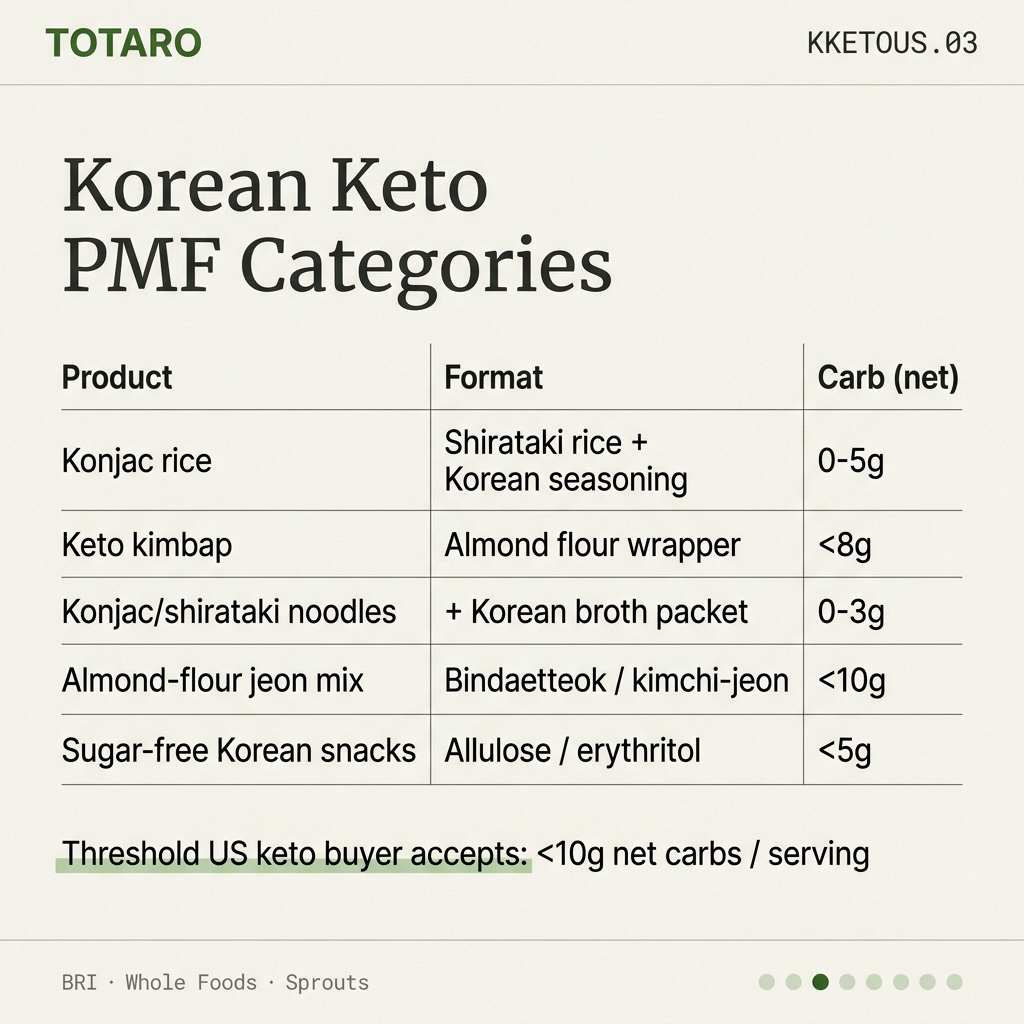
(1) Konjac rice (shirataki rice format with Korean seasoning) — direct rice replacement, 0–5g net carb. (2) Keto kimbap — almond flour or egg-roll wrapper, sushi-rice-replacement. (3) Konjac/shirataki noodles with Korean broth packets — japchae replacement. (4) Almond-flour Korean pancake (jeon) mix — bindaetteok, kimchi-jeon. (5) Sugar-free Korean snacks — yakgwa, hodu-gwaja with allulose or erythritol.
3. Net Carb Math the US Consumer Tracks
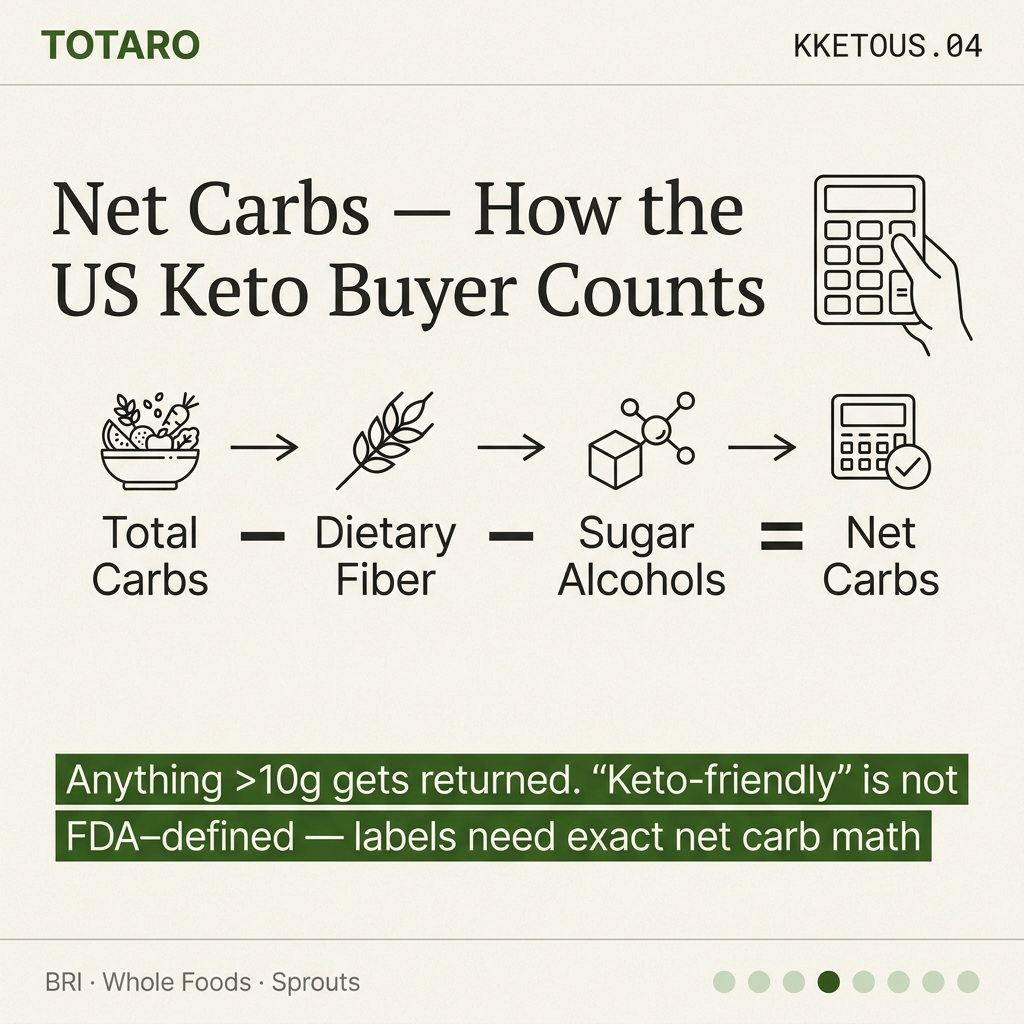
US keto consumers count net carbs (total carbs minus fiber minus sugar alcohols). The label spec needs: total carbs, dietary fiber, sugars, sugar alcohols, protein, fat. "Keto-friendly" is not an FDA-defined term but the threshold consumers accept is <10g net carbs per serving. Anything higher gets returned.
4. Channel Strategy
(1) Whole Foods Market — LEAP program (Whole Foods Supplier) accepts emerging brands; their keto category buyer is regional. (2) Sprouts Farmers Market — strong specialty diet category. (3) Thrive Market — DTC keto-focused, accepts smaller brands. (4) Amazon Subscribe & Save — repeat purchase keto buyers. (5) Restaurant supply for keto-focused Korean restaurants in LA, NYC, Houston.
5. FDA Compliance for Keto-Specific Products
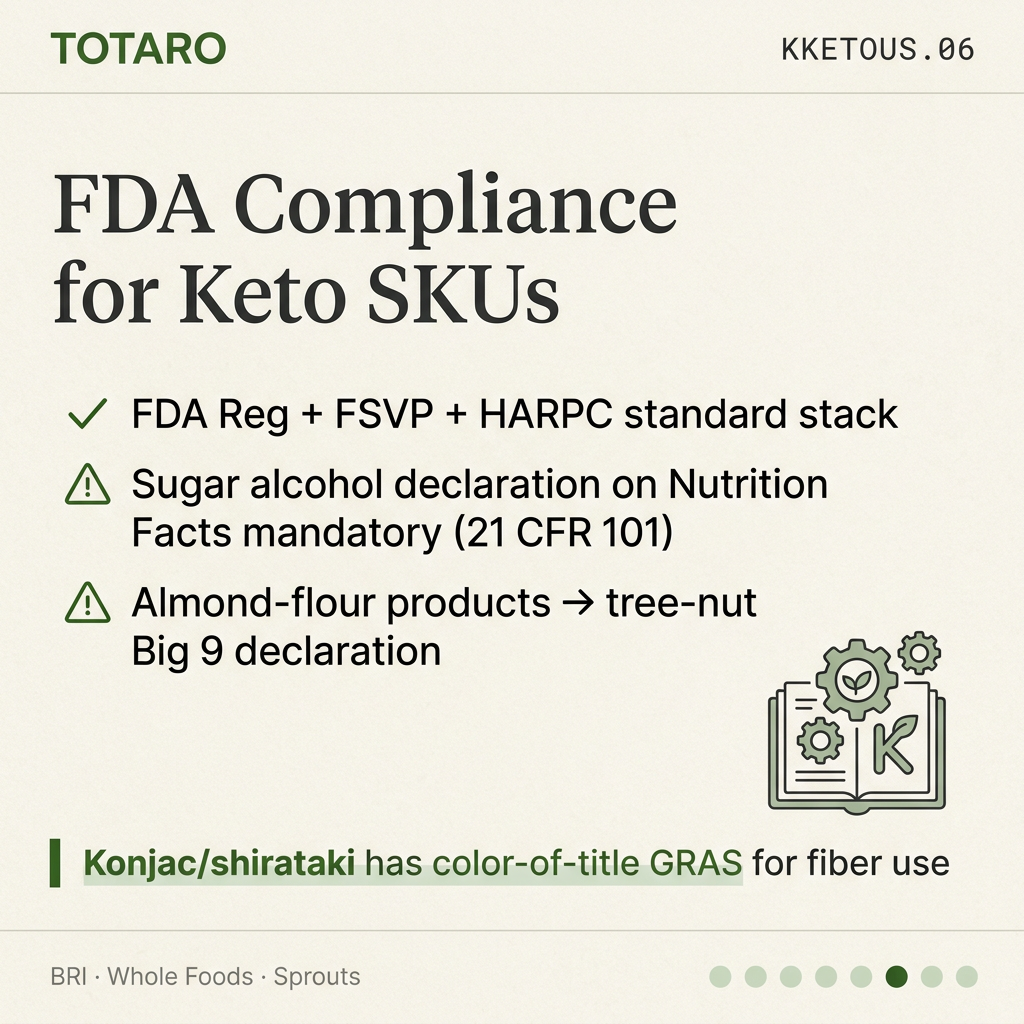
Standard FDA Reg + FSVP + HARPC stack. Sugar alcohol declaration on Nutrition Facts is mandatory (21 CFR 101). Allergens — almond-flour products trigger the tree-nut Big 9 declaration. Konjac/shirataki has FDA color-of-title GRAS for use as fiber.
6. Pricing Reality (MOQ / FOB)
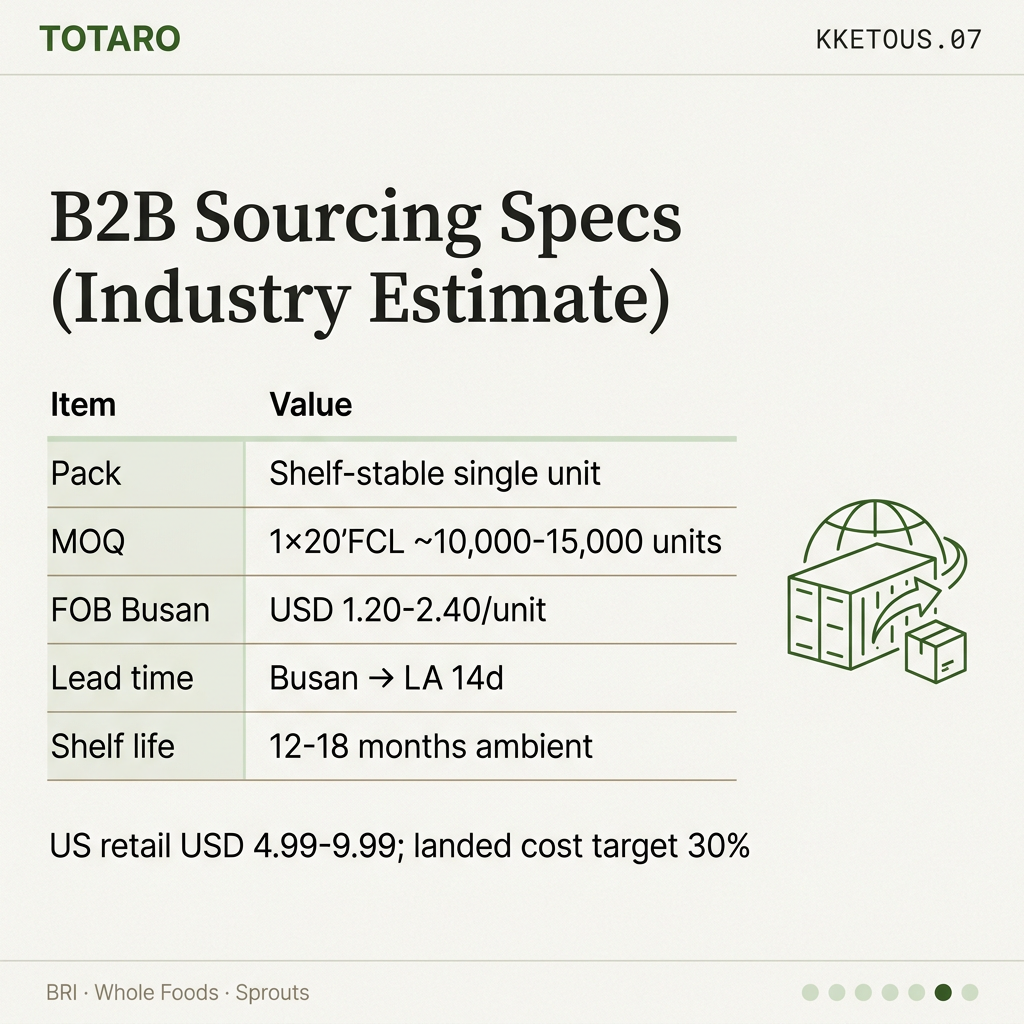
Industry estimate for shelf-stable keto SKU (konjac rice / keto bread): MOQ 1×20' FCL (~10,000–15,000 units), FOB Busan→USWC USD 1.20–2.40 per unit (2026 early). Direct RFQ required. US retail shelf USD 4.99–9.99; landed cost target 30% of shelf for healthy margin.
What to Do This Week
(1) Confirm sugar alcohol & fiber spec for net-carb <10g positioning. (2) Apply to Whole Foods LEAP for regional buyer access. (3) Build a sample box of 4–6 SKUs for Thrive Market and DTC buyers. The Korean Asian-keto category is not yet occupied. Move fast.
Sources
Related Guides
Ask AI to find your Korean food brand
Describe what you need in plain language — get matched with verified brands in seconds.
Try AI Brand Search