카드 1 / 8
Korean Halal Health Functional Foods for UAE and GCC: KMF Certification, MOIAT Recognition, and the Saudi $18.7B Market (2026)
TL;DR
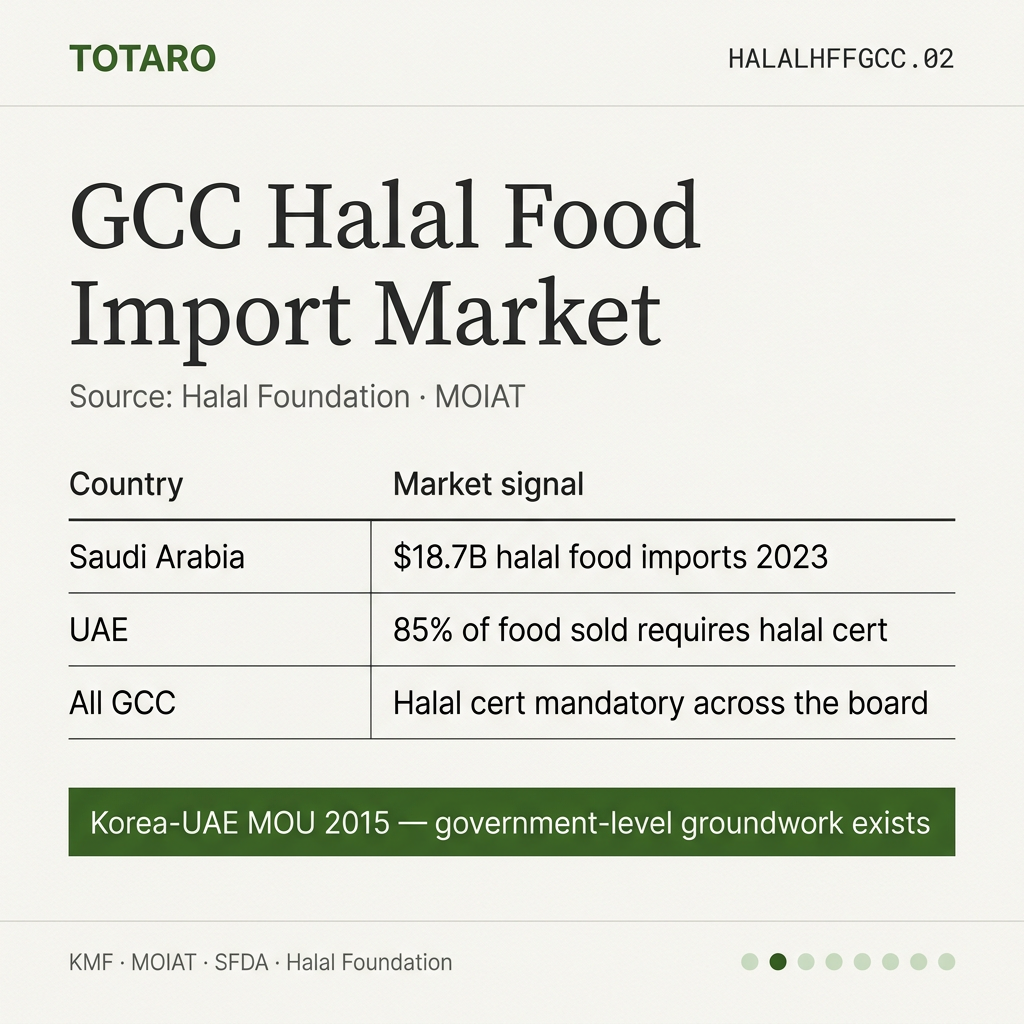
Saudi Arabia's halal food imports reached USD 18.7 billion in 2023 (Halal Foundation — Saudi & UAE Export). Over 85% of food products sold in UAE and Saudi Arabia require halal certification. Korean halal HFF (Health Functional Food) — collagen, vitamin B, propolis, red ginseng — has product-market fit, but KMF (Korea Muslim Federation) certification alone is not recognized by UAE MOIAT. Korean exporters need a recognized certification body partnership.
1. KMF Recognition Map — The Hard Truth
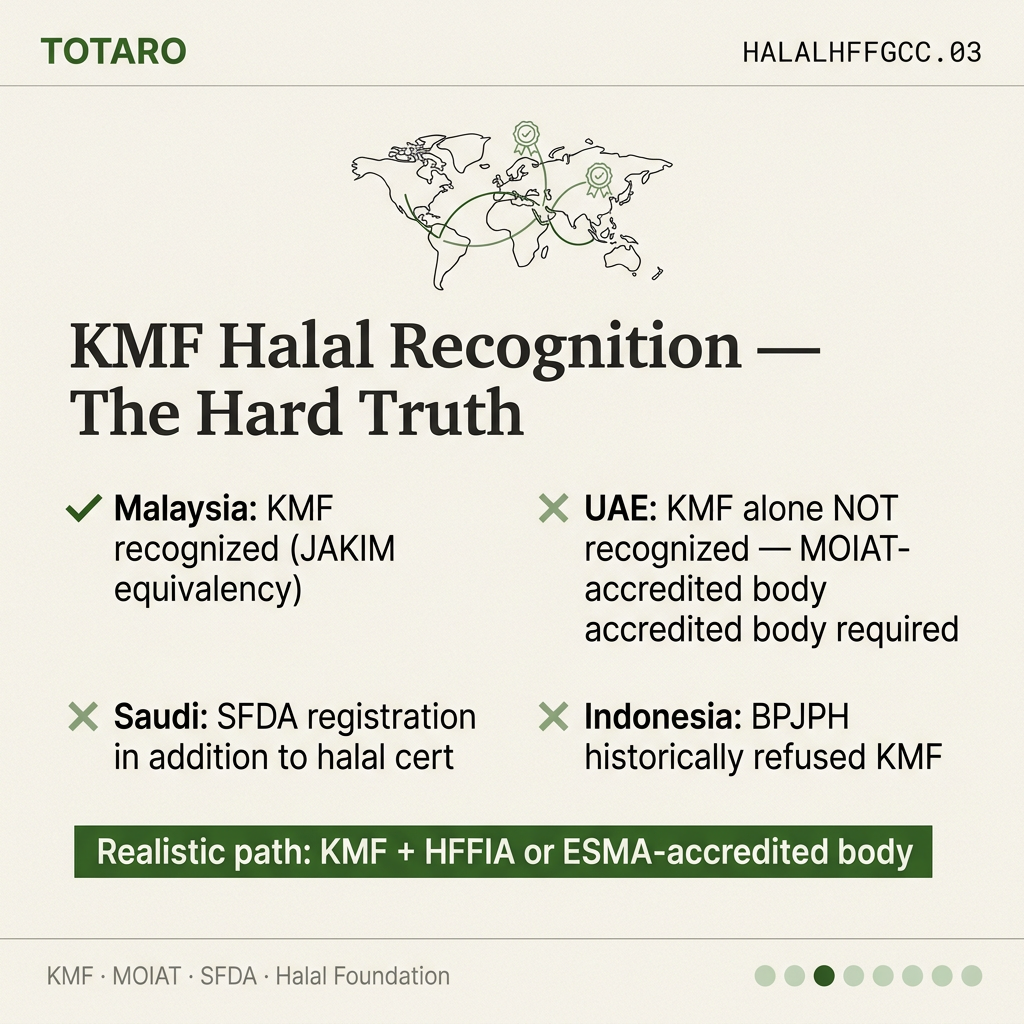
KMF Halal Certification is recognized in Malaysia (JAKIM equivalency) but not automatically in UAE, Saudi Arabia, or Indonesia (KMF Halal Cert). Indonesia's BPJPH has historically refused KMF accreditation, and UAE's MOIAT requires the certifying body to be accredited by MOIAT itself or recognized through the Emirates Authority for Standardization and Metrology (ESMA). The realistic path is dual certification: KMF + an internationally-recognized partner (HFFIA, ESMA-accredited body, or IFANCA).
2. UAE — The Gateway to the GCC
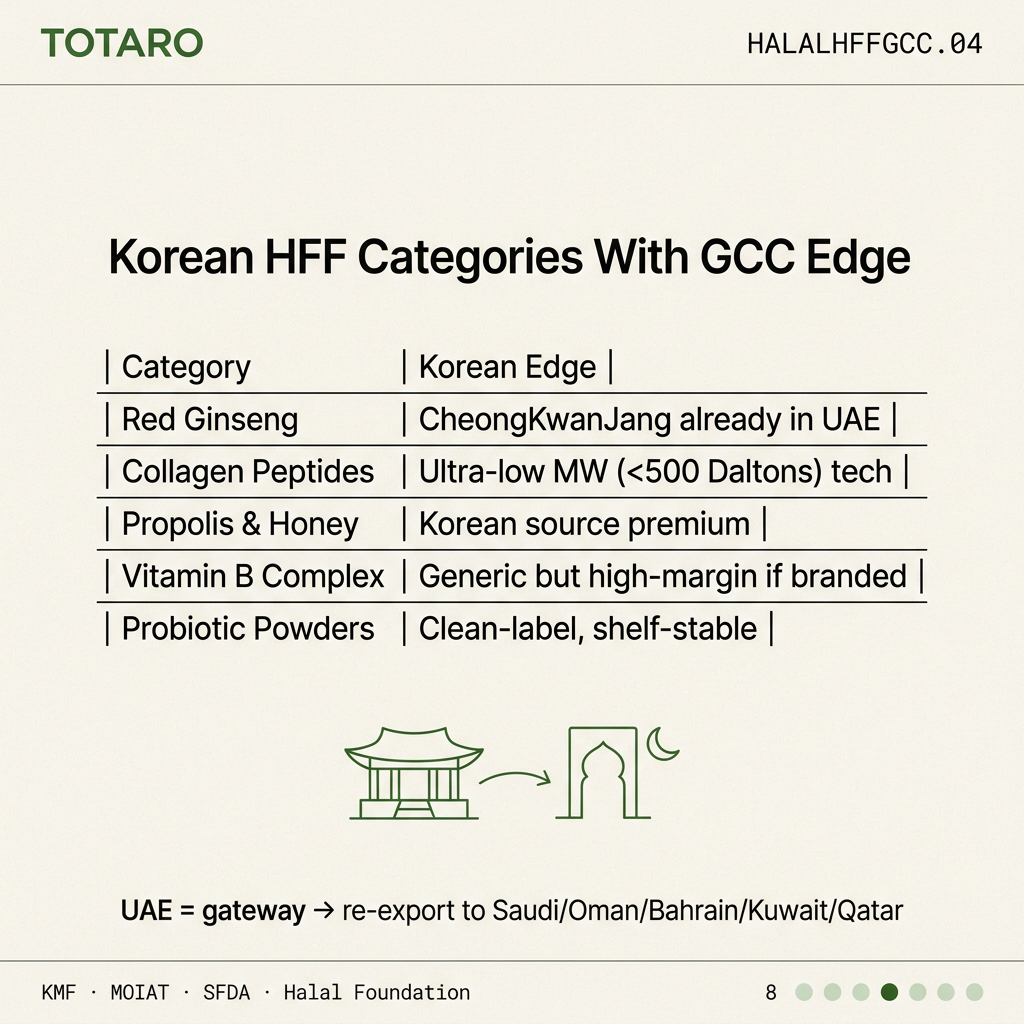
UAE is the natural gateway because of (1) logistics (Jebel Ali Port, Dubai Airport), (2) MOIAT process maturity, and (3) re-export to Saudi, Oman, Bahrain, Kuwait, Qatar. UAE halal certification requirements come from MOIAT and the certificate must come from an accredited body (Halal Cert in UAE — Freyr). Korea signed an MOU on halal food and agriculture cooperation with UAE in 2015 — government-level groundwork exists.
3. Saudi Arabia — The Volume Market
Saudi Vision 2030 actively encourages food imports, including HFF. SFDA (Saudi Food and Drug Authority) regulates HFF separately from food. Registration takes 6–12 months. Saudi's market is more competitive than UAE because local producers (Sadafco, Almarai) hold the domestic shelf. Imported HFF wins on premium positioning (Korean ginseng, Jeju-grown collagen source).
4. Categories With Korean Edge
(1) Red Ginseng — Korean Heritage; CheongKwanJang already exports to UAE. (2) Collagen peptides — Korean ultra-low MW (300–500 Daltons) tech is competitive. (3) Propolis & honey — Korean source story for premium positioning. (4) Vitamin B complex — Generic but high-margin if branded right. (5) Probiotic powders — clean-label, shelf-stable formats only.
5. Regulatory Stack — What HFF Specifically Needs
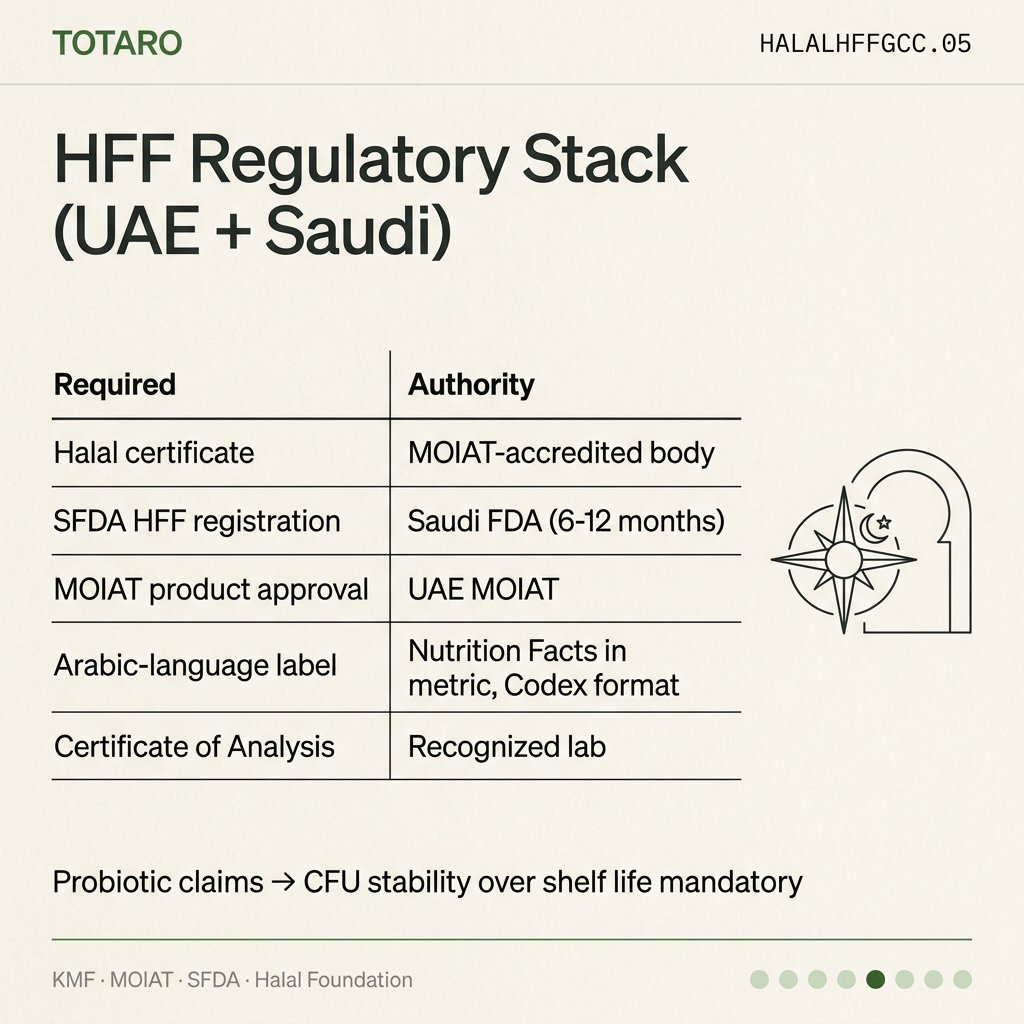
Beyond halal: SFDA HFF registration (Saudi), MOIAT product approval (UAE), Arabic-language labeling with Nutrition Facts in metric, ingredient list per Codex Alimentarius, and a Certificate of Analysis from a recognized lab. Probiotic claims require CFU stability data over shelf life.
6. Pricing Reality (MOQ / FOB)
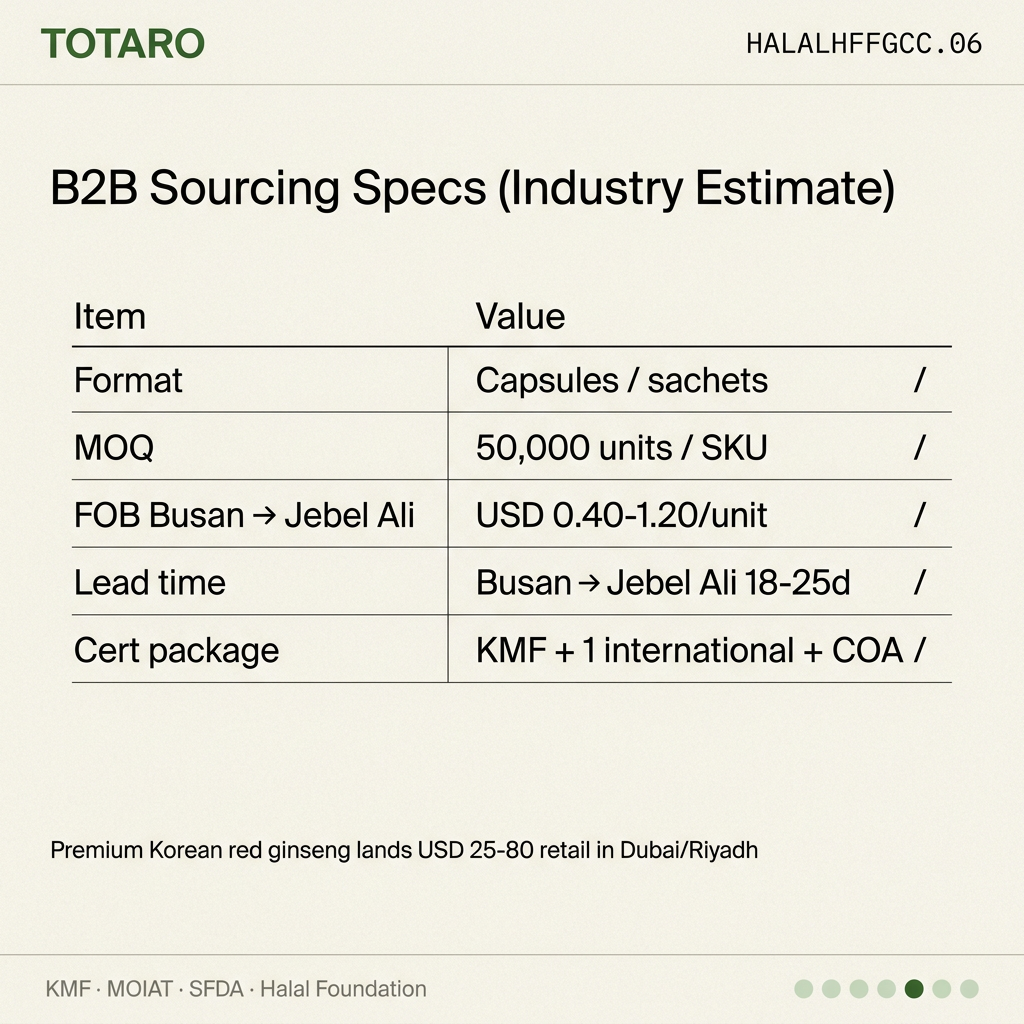
Industry estimate for HFF capsules/sachets: MOQ 50,000 units per SKU, FOB Busan→Jebel Ali USD 0.40–1.20 per unit (raw material grade dependent), 2026 early estimates. Direct RFQ required. Premium Korean red ginseng products land USD 25–80 retail in Dubai/Riyadh.
What to Do This Week
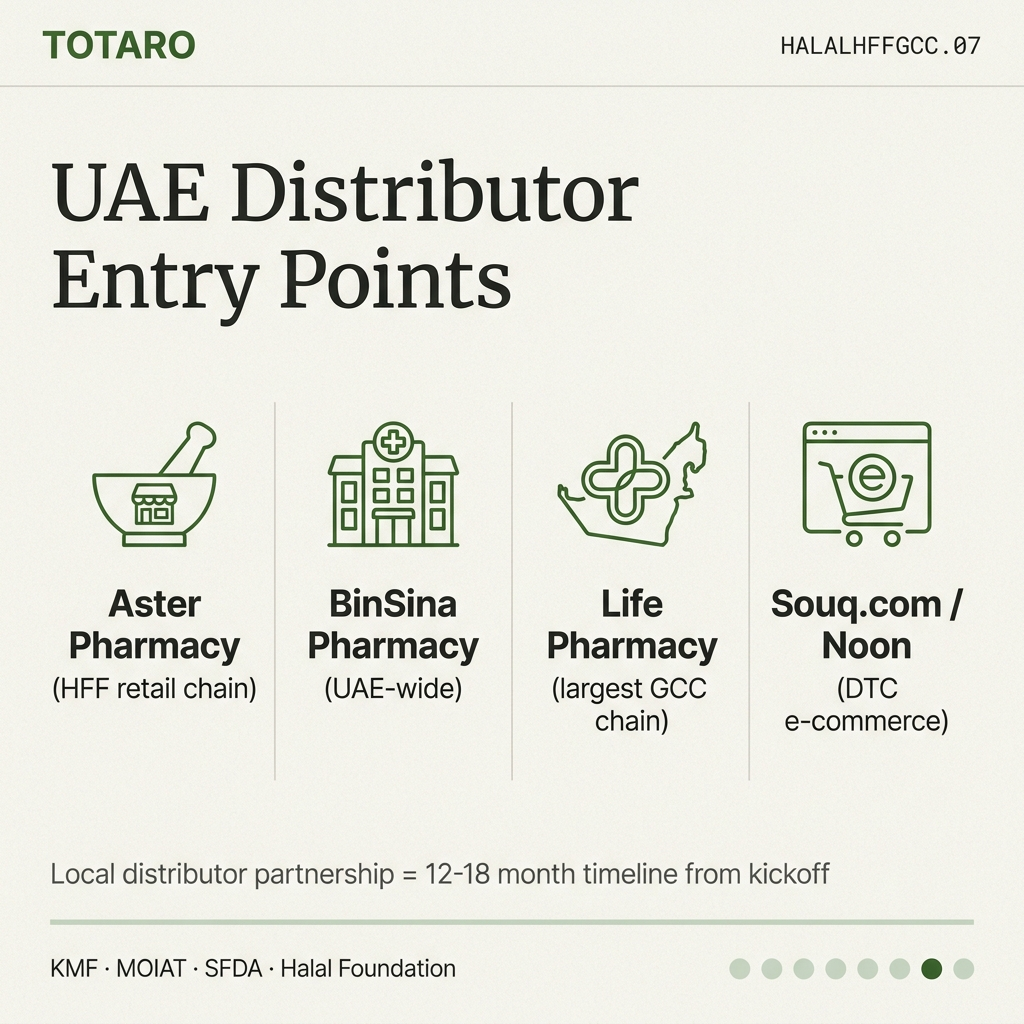
(1) Apply for dual halal certification (KMF + HFFIA or ESMA-accredited). (2) Identify a UAE distributor partner — Aster Pharmacy, BinSina, Life Pharmacy chains are the HFF retail entry points. (3) Prep Arabic-language label artwork. The Korean halal HFF opportunity is structurally real but takes 12–18 months from kickoff. Start now.
Sources
Related Guides
Korean Jerusalem Artichoke + Psyllium Husk Halal Enzyme Supplement for the US: The SlimFox-Style Constipation + Weight Management Combo (2026)
Related Guides →Korean Jerusalem Artichoke for Constipation: 14-19% Inulin Content and Clinical Evidence on Gut Health (2026)
Related Guides →How to Import Korean Food into the USA: Complete 2026 Guide
Related Guides →Ask AI to find your Korean food supplier
Describe what you need in plain language — get matched with verified suppliers in seconds.
Try AI Supplier Search