카드 1 / 8
Beyond Kimchi: How Korean Fermented Banchan Can Enter Whole Foods and Sprouts in 2026
TL;DR
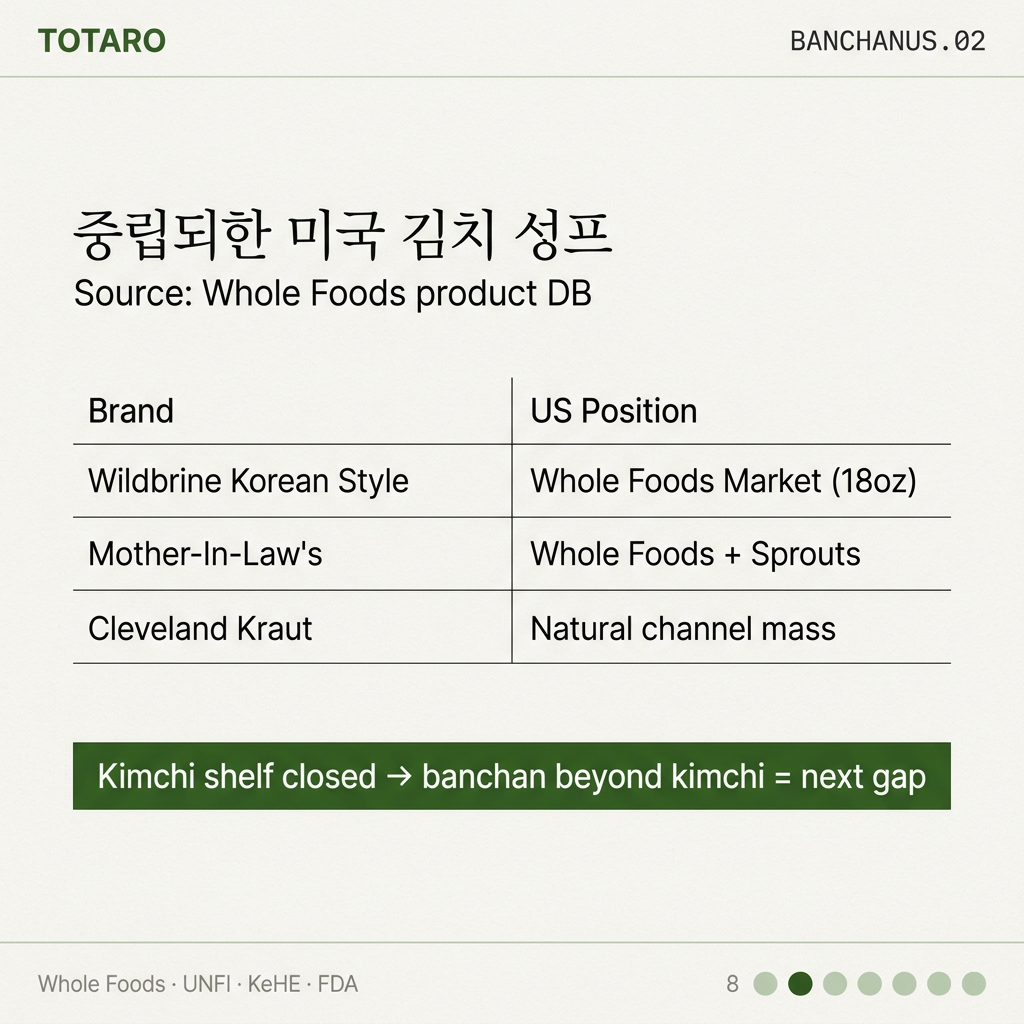
Whole Foods already carries Korean kimchi (Wildbrine, Mother-In-Law's, Cleveland Kraut). The kimchi shelf is established. The next wave — fermented Korean banchan beyond kimchi — has clean-label, gut-health, K-food-adjacent positioning that fits Whole Foods buyer mandates. New Korean fermented food exporters should target this open subcategory.
1. The Established Kimchi Shelf
Wildbrine Korean Style Kimchi (18oz) is on Whole Foods Market (Whole Foods Wildbrine). Mother-In-Law's brand reaches Whole Foods and Sprouts. These brands set the clean-label baseline: raw, unpasteurized, no preservatives, glass jar (some PET). New entrants in kimchi face brand-loyal shoppers and need a differentiation hook (organic, regional Korean style, ultra-spice/no-spice, vegan).
2. The Open Banchan Categories
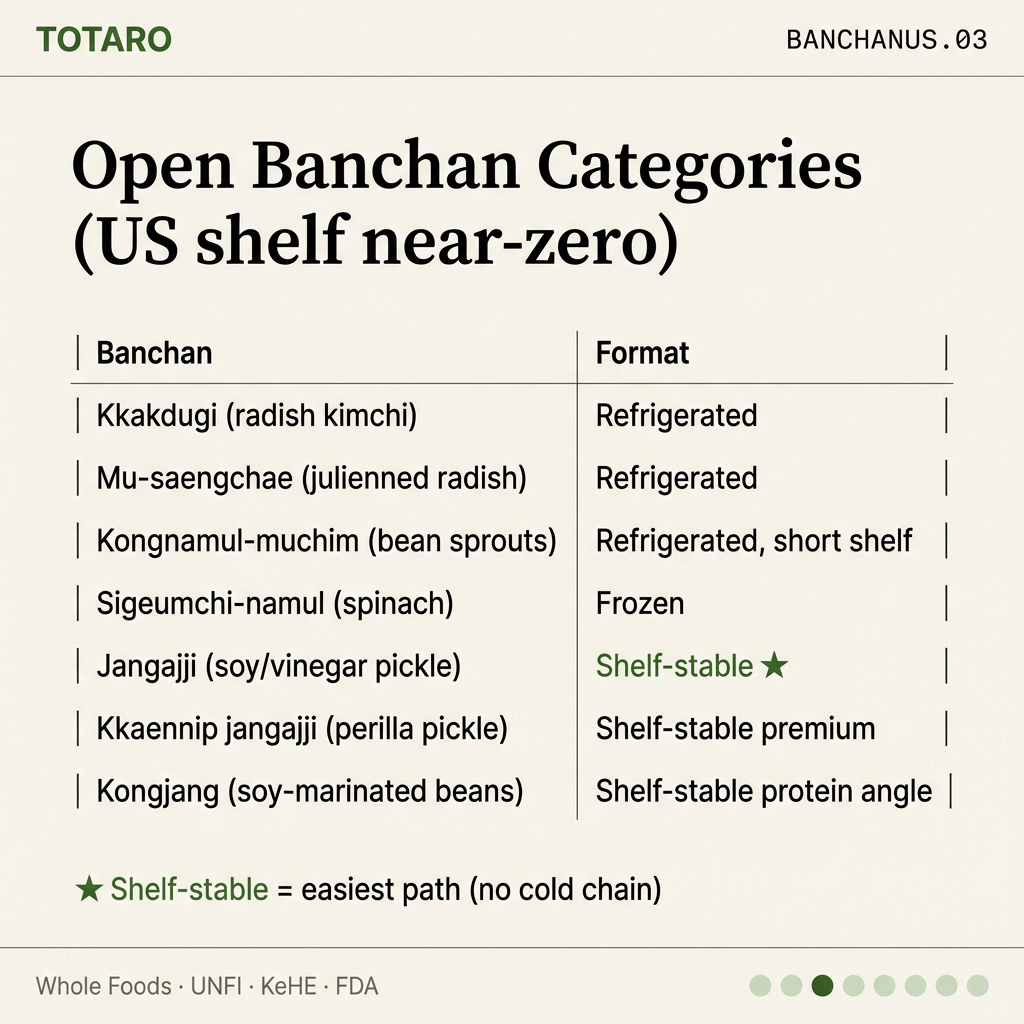
A typical Korean meal includes 3–12 banchan side dishes alongside rice and soup. US shelf coverage of banchan beyond kimchi is near-zero. The open categories: (1) Kkakdugi (cubed radish kimchi) — different texture/format. (2) Mu-saengchae (julienned radish, mild) — entry-spice level. (3) Kongnamul-muchim (seasoned bean sprouts) — refrigerated, short shelf. (4) Sigeumchi-namul (seasoned spinach) — frozen format viable. (5) Jangajji (soy/vinegar pickles) — shelf-stable, long shelf life. (6) Kkaennip jangajji (perilla leaf pickle) — niche, premium positioning. (7) Kongjang (soy-marinated black beans) — shelf-stable, protein-rich angle.
3. Why Shelf-Stable Jangajji Has the Easiest Path
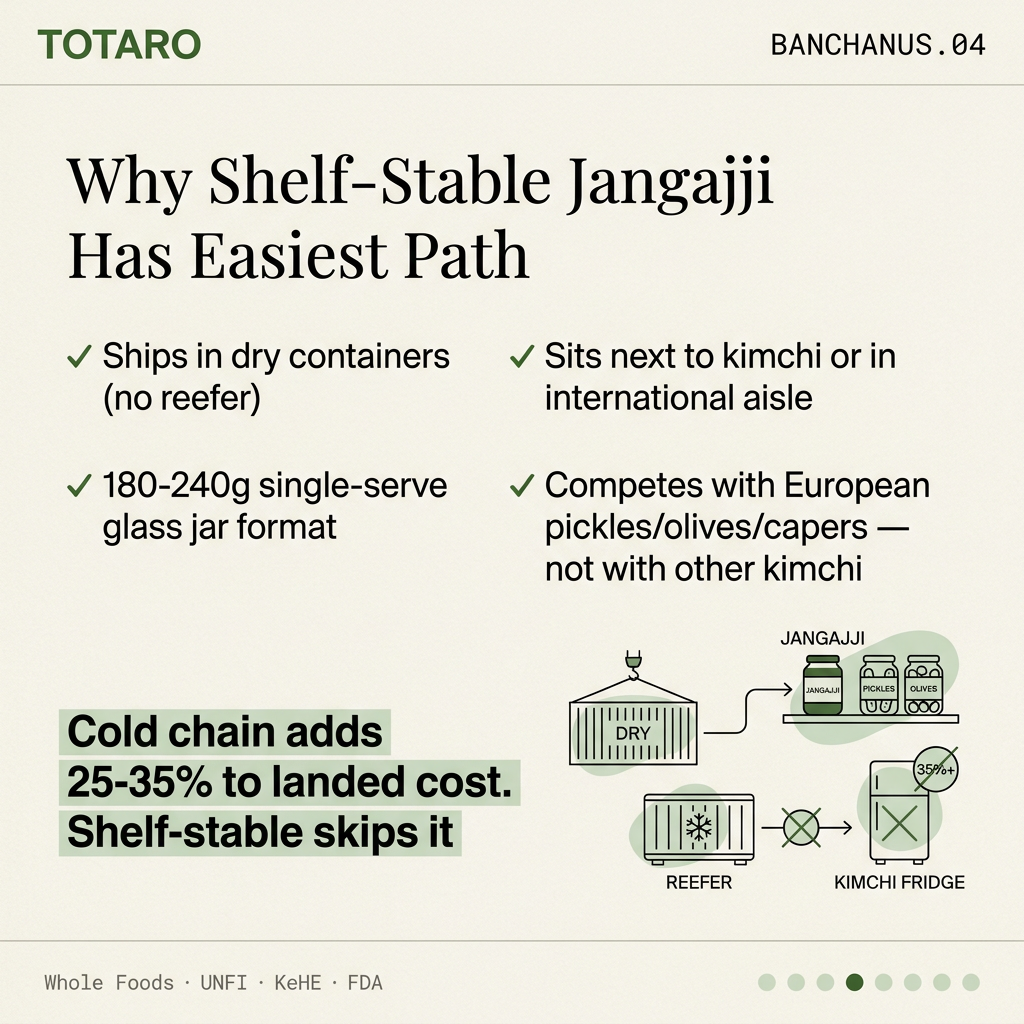
Refrigerated banchan needs cold chain (FOB→reefer container→retailer cooler) — adds 25–35% to landed cost. Jangajji (pickled in soy or vinegar brine) is shelf-stable, ships in dry containers, sits next to the kimchi shelf or in the international aisle. The single-serve glass jar (180–240g) format competes with European pickles, olives, capers — not other kimchi.
4. Whole Foods Quality Standards
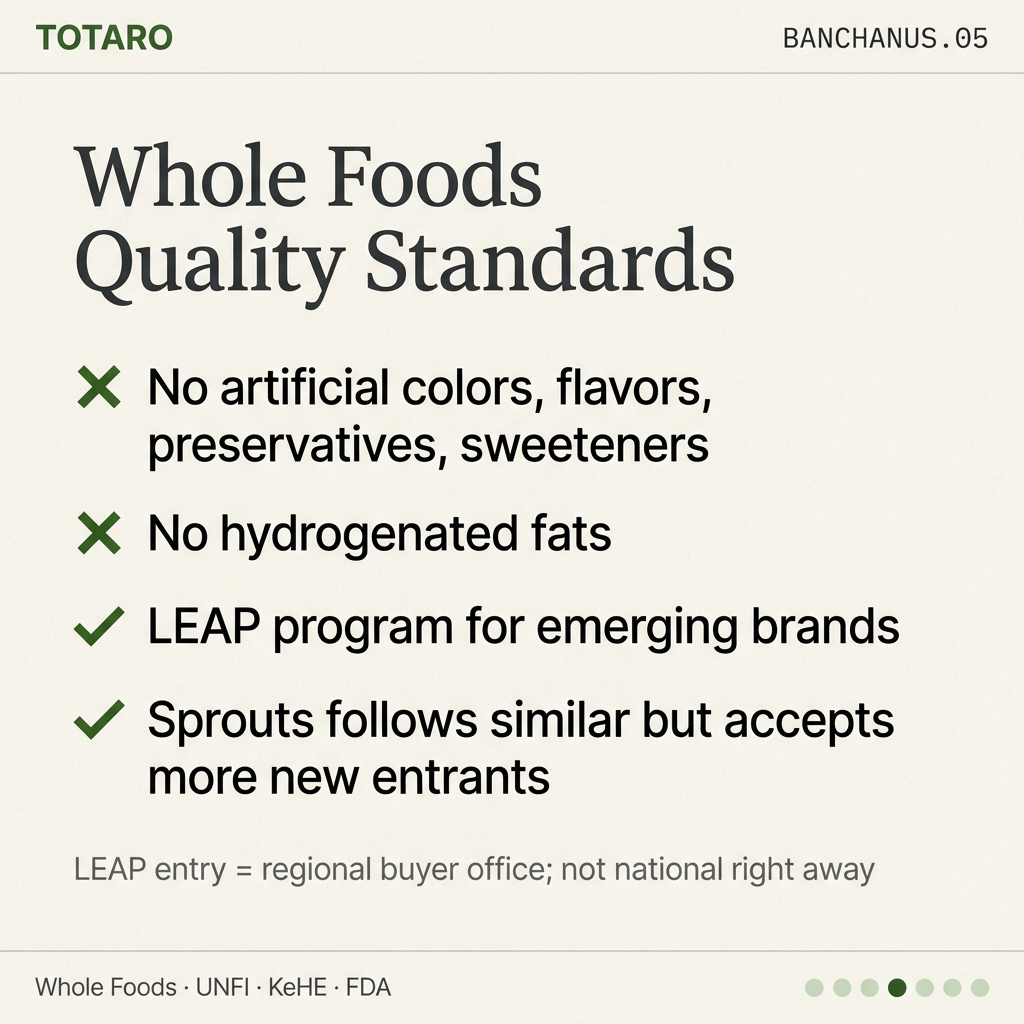
Whole Foods bans artificial colors, flavors, preservatives, sweeteners, hydrogenated fats. Their supplier entry is the LEAP program (Local & Emerging Accelerator Program — Whole Foods Supplier Info) for emerging brands or direct buyer pitch for established ones. Sprouts Farmers Market follows similar but slightly looser rules and accepts more new entrants.
5. Distribution Stack
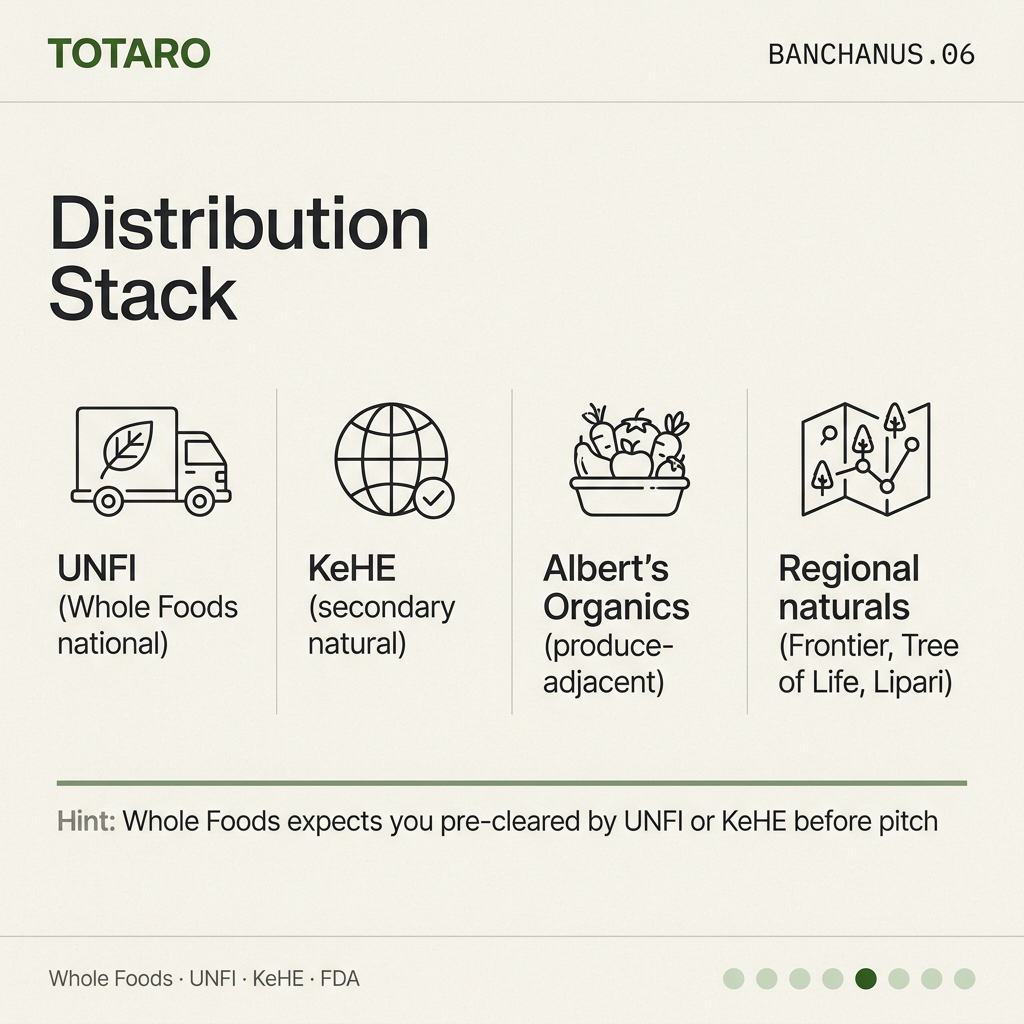
(1) UNFI (UNFI) — primary distributor to Whole Foods national. (2) KeHE (KeHE) — secondary natural channel. (3) Albert's Organics — Whole Foods produce-adjacent. (4) Regional natural distributors (Frontier, Tree of Life, Lipari). Whole Foods buyers expect you to be pre-cleared by UNFI or KeHE before category pitch.
6. FDA Compliance for Fermented Foods
FDA Foreign Facility Registration (FDA), FSVP, HARPC under 21 CFR 117 (21 CFR 117). Fermented vegetables typically classify as acidified foods — pH log, fermentation time/temperature documentation required. Salt-brined or vinegar-brined products have different process authority requirements.
7. Pricing Reality (MOQ / FOB)
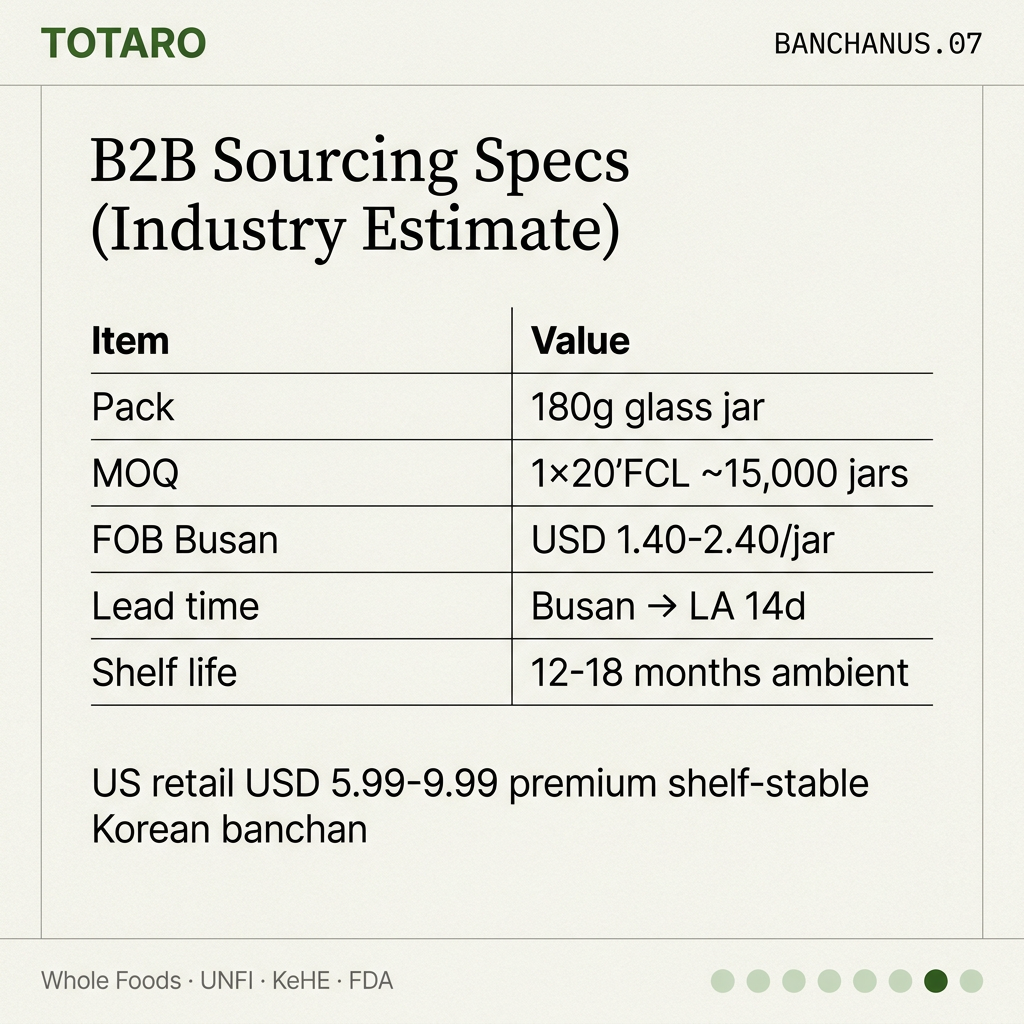
Industry estimate for jangajji 180g glass jar: MOQ 1×20'FCL (~15,000 jars), FOB Busan→USWC USD 1.40–2.40 per jar (early 2026). Direct RFQ required. US retail USD 5.99–9.99 for premium shelf-stable Korean banchan.
What to Do This Week
(1) Pick one jangajji SKU for shelf-stable trial. (2) Engage UNFI or KeHE for category placement screening. (3) Apply to Whole Foods LEAP for regional buyer access. The K-food momentum is real; banchan beyond kimchi is the next gap.
Sources
Related Guides
Ask AI to find your Korean food brand
Describe what you need in plain language — get matched with verified brands in seconds.
Try AI Brand Search