카드 1 / 8
Korean Keto & Low-Carb HMR — US Wholesale Import Guide
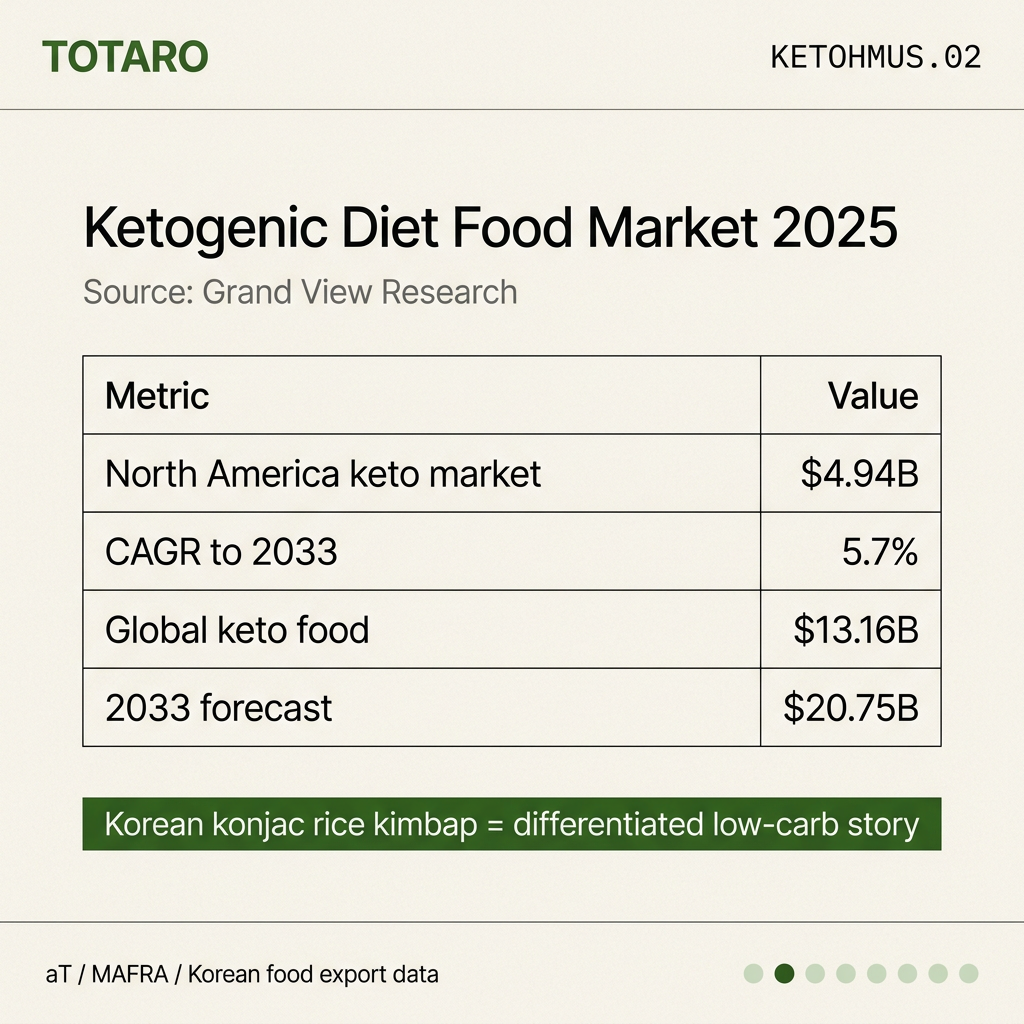
The North America ketogenic diet food market reached $4.94 billion in 2025 and is projected to grow at 5.7% CAGR through 2033 (Grand View Research, 2025). The global ketogenic diet market sits at $13.16B in 2025 with US as the dominant share. Korean keto kimbap, low-carb bibimbap, and konjac rice meal products fit this North American demand at a differentiated category position — Asian-format low-carb HMR.
Korean Keto HMR Product Design
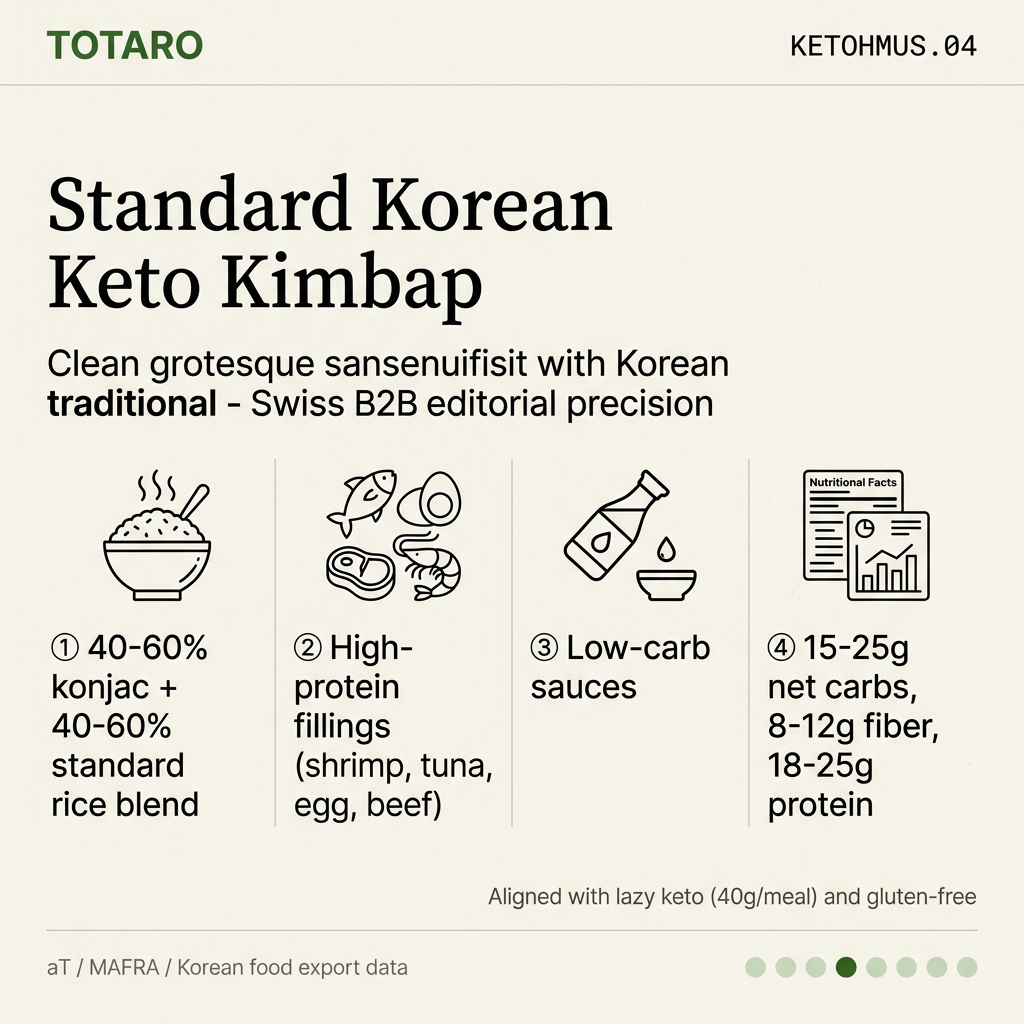
Standard Korean keto kimbap construction: ① 40-60% konjac rice + 40-60% standard rice blend, ② high-protein fillings (shrimp, tuna, egg, beef), ③ low-carb sauces. Typical macros per serving: 15-25g net carbs, 8-12g fiber, 18-25g protein. Aligns with 'lazy keto' positioning (40g net carbs/meal allowance) and gluten-free positioning — both growth segments in US specialty retail and meal-kit delivery.
(Macros and serving composition are industry-typical pattern observation; verify specifications with each supplier directly.)
Major Korean Manufacturers
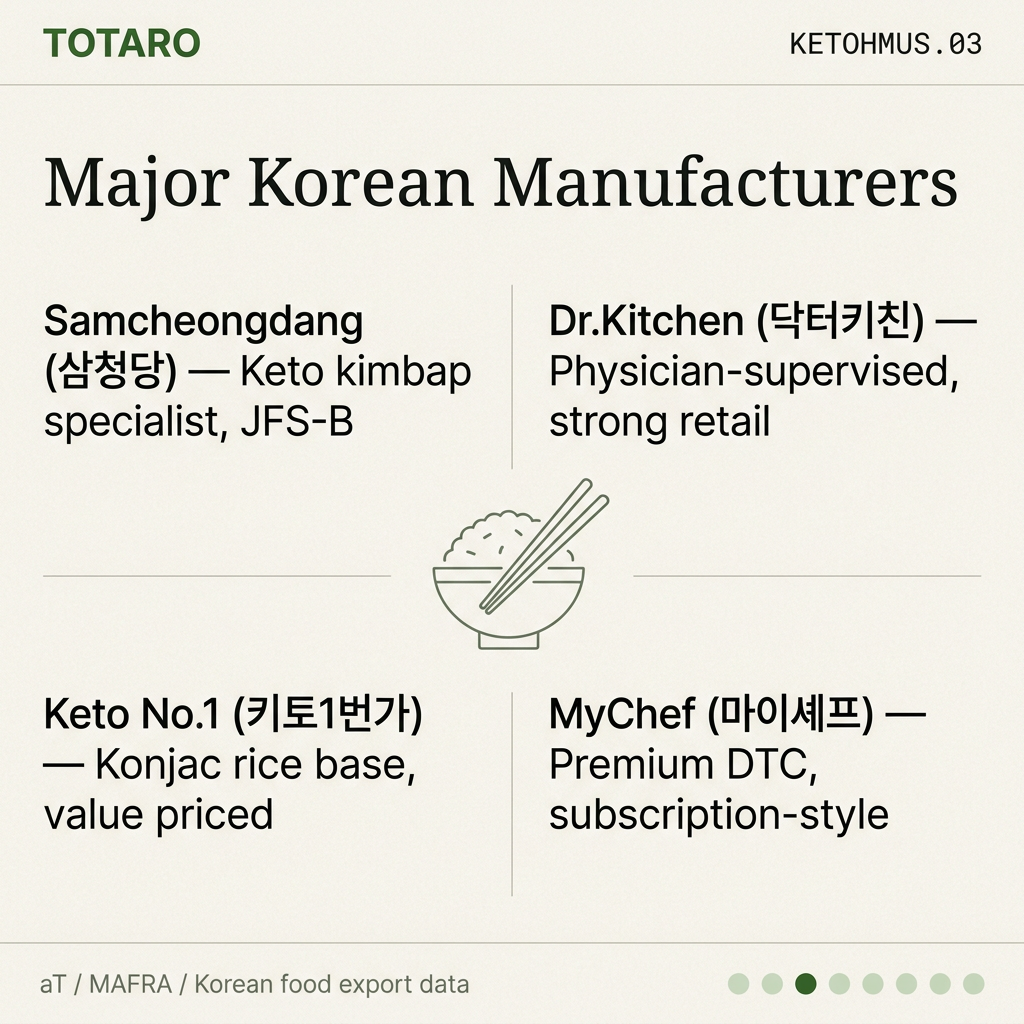
| Manufacturer | Specialty | Position |
|---|---|---|
| Samcheongdang (삼청당) | Keto kimbap + low-carb meals | Specialty keto focus, JFS-B certified |
| Dr.Kitchen (닥터키친) (dr-kitchen.com) | Physician-supervised health HMR | Major Korean retail presence |
| Keto No.1 (키토1번가) | Konjac rice based products | Value tier positioning |
| Pulmuone (풀무원) (pulmuone.com) | Plant-based HMR major | Large-volume supplier |
| MyChef (마이셰프) | Premium subscription HMR | DTC-focused |
US Market Opportunity
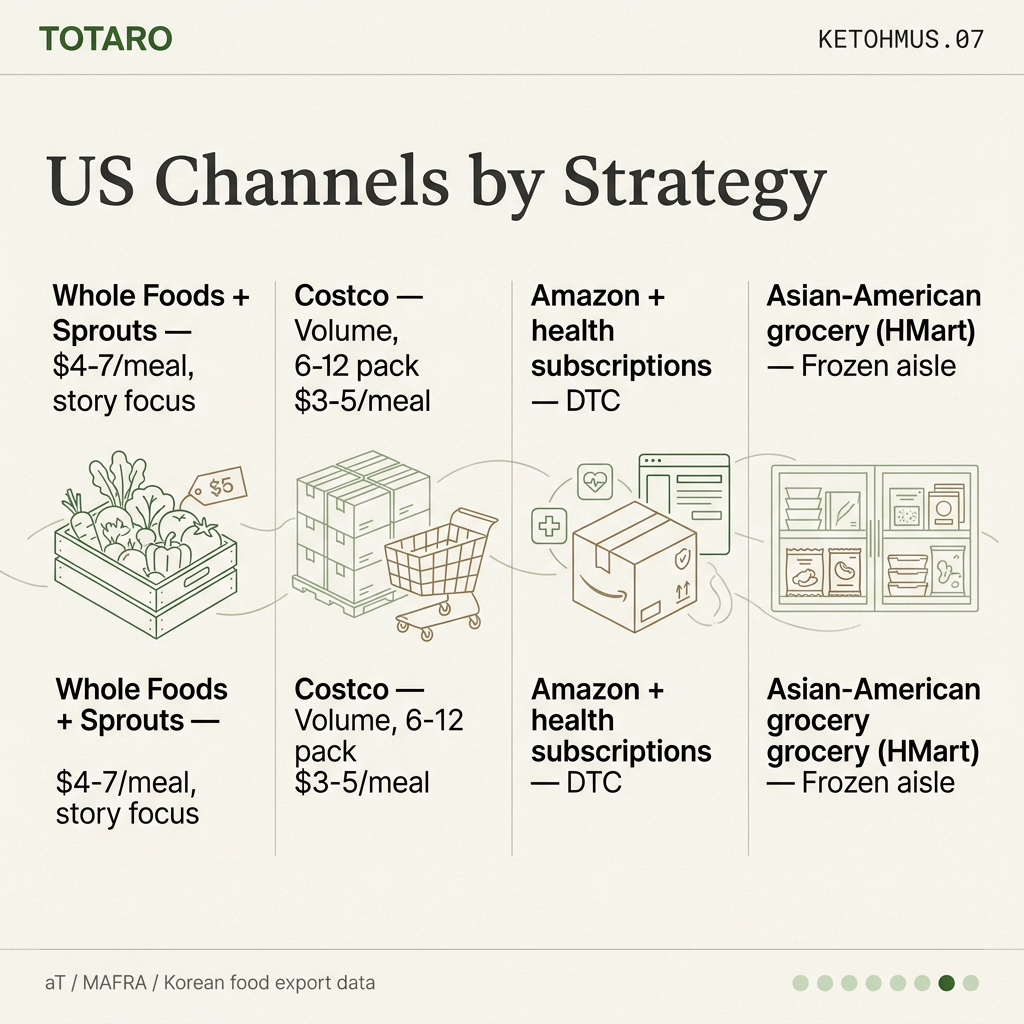
US HMR/prepared foods category sits at $30B+ with 8-12% growth in 'health/keto/low-carb' segments. Key channels for Korean keto HMR positioning:
- Whole Foods + Sprouts: Natural channel, $4-7/meal retail
- Costco: Volume play, $3-5/meal in 6-12 pack format
- Amazon DTC + health meal subscriptions: MyProtein, Quest competitors
- Asian-American grocery: HMart, 99 Ranch frozen aisle
'Korean keto kimbap' carries differentiated story value vs generic low-carb wraps in the natural channel.
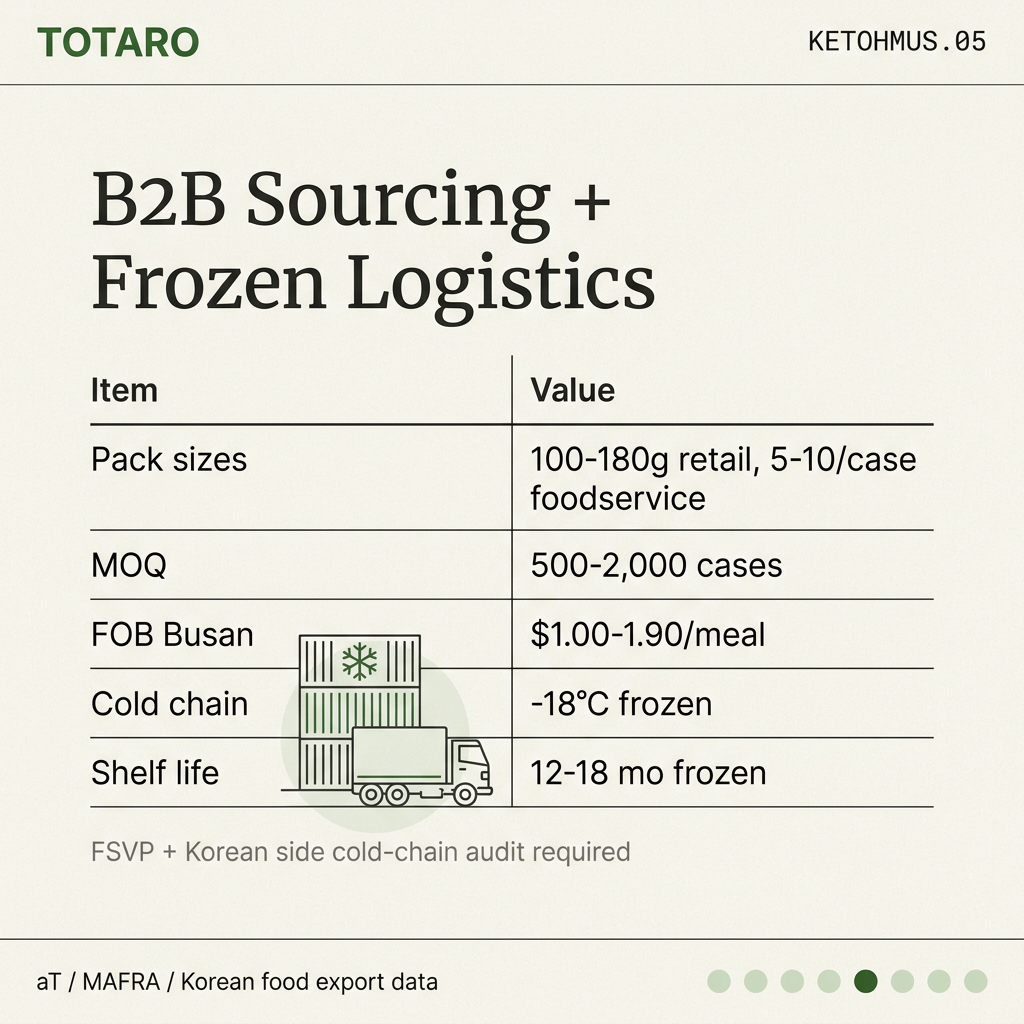
B2B Sourcing and Frozen Logistics
| Spec | Value |
|---|---|
| Pack sizes | 100-180g retail; 5-10/case foodservice bulk |
| MOQ | 500-2,000 cases (industry estimate, requires RFQ) |
| FOB Busan | $1.00-1.90/meal (industry estimate) |
| Cold chain | -18°C frozen mandatory |
| Shelf life | Frozen 12-18 months |
| Lead time | Busan → Long Beach 14 days; → NY 28 days |
US importer requires FDA FSVP compliance and Korean supplier-side cold-chain verification audit before first shipment. Reefer container handling and cold-chain integrity documentation required per FDA Food Defense for Refrigerated Imports.
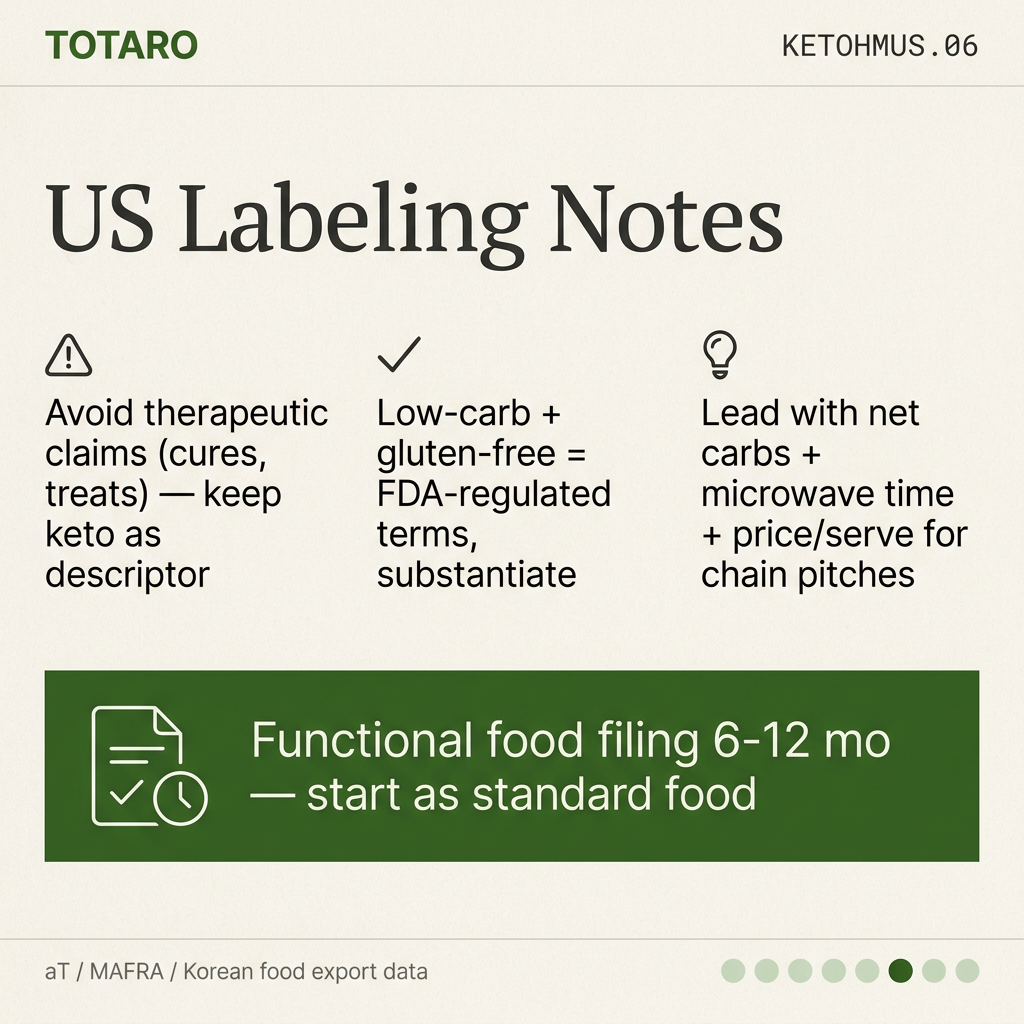
US Labeling and FDA Compliance
Keto labeling: 'Keto' as category descriptor is acceptable; therapeutic disease-treatment claims are NOT acceptable per FDA Structure/Function Claims guidance.
Low-carb and gluten-free are FDA-regulated terms requiring specific net carb thresholds and verifiable testing:
- Gluten-free: Per 21 CFR 101.91, <20 ppm gluten
- Low-carb claim: Per FDA Health Claims Reference, requires substantiation
Nutrition Facts Panel: Mandatory per 21 CFR 101.9 with serving size and complete macros.
Retail pitch to US chains prioritizes: net carb count visibility, microwave time, price/serving ratio, and proven shelf rotation data from Korean and Japanese launches.
FAQ
Q1. Will US consumers accept konjac rice texture? A. Blended (40-60% konjac + standard rice) products show industry-typical acceptance in sensory testing. 100% konjac rice products work for medical and diabetic positioning but not mainstream retail.
Q2. Private label for US specialty retail chains? A. Industry pattern: Samcheongdang and Dr.Kitchen accept private label at 3,000-5,000 cases minimum. Custom recipe, packaging, English-compliance labeling. Development cycle 3-4 months. Verify minimum and timeline with direct RFQ.
Q3. Can we make 'keto' health claims on packaging? A. 'Keto' as category descriptor is acceptable; 'cures' or 'treats' disease is NOT — per FDA structure/function claims rules. Safer: 'low-carb' with specific net carb count + 'gluten-free' with FDA-required substantiation. Skip therapeutic claims.
Q4. Foodservice and institutional channels? A. Growing segment — corporate cafeterias, hospitals, weight-loss medical practices, and school meal programs increasingly testing low-carb Korean meal kits. Bulk pack (10-30 meals) format is the institutional differentiation play.
This article verified with Grand View Research, FDA, and CFR primary sources. MOQ, FOB, and macro ranges marked as industry estimates pending direct supplier RFQ.
Sources
Related Guides
Ask AI to find your Korean food supplier
Describe what you need in plain language — get matched with verified suppliers in seconds.
Try AI Supplier Search